How Philadelphia Became the Birthplace of American Democracy
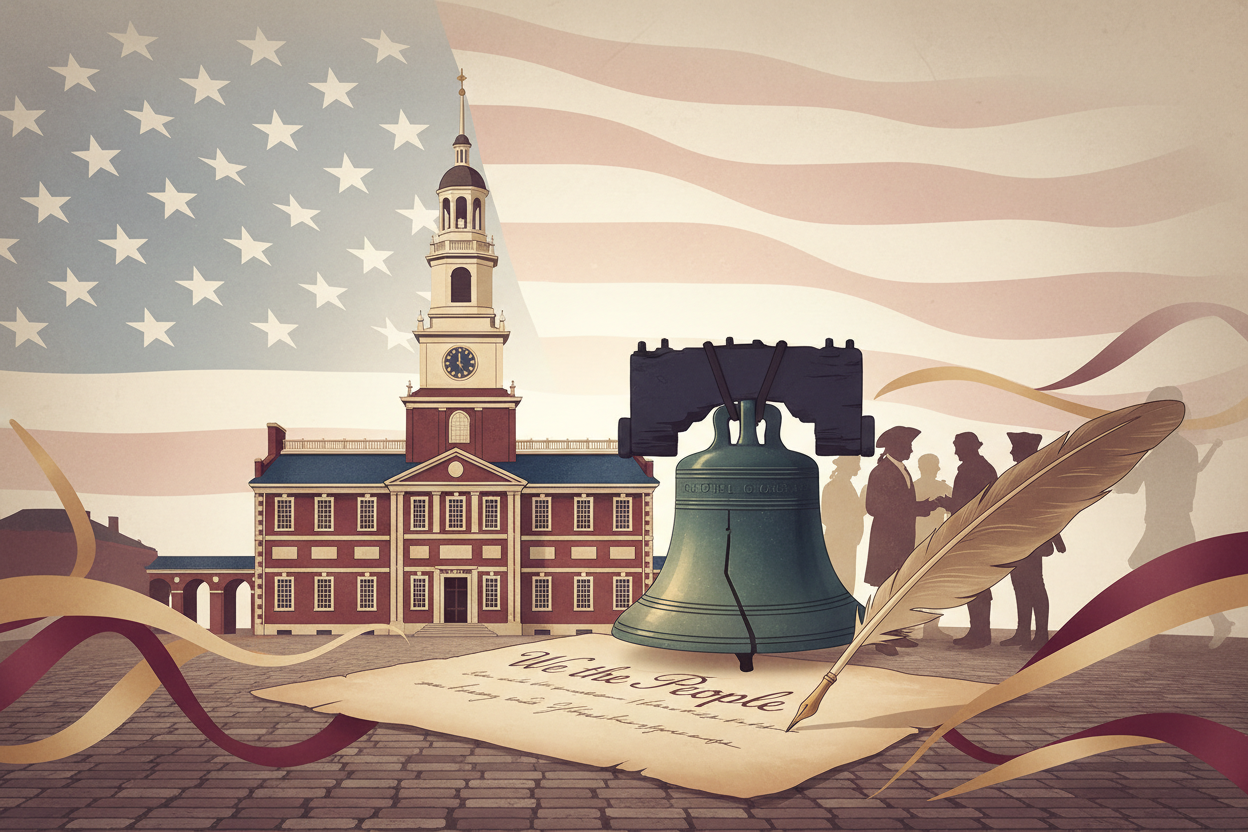
When you walk through the cobblestone streets of Philadelphia today, it’s hard not to feel the weight of history beneath your feet. This isn’t just any American city – it’s the place where the very foundations of our democracy were laid, where revolutionary ideas transformed into the governing principles that would shape a nation. Philadelphia’s journey to becoming the birthplace of American democracy wasn’t accidental; it was the result of unique circumstances, visionary leadership, and a perfect storm of historical events that converged in this Pennsylvania city during the 18th century.
The Colonial Foundation: Why Philadelphia Was Uniquely Positioned
Philadelphia’s path to democratic prominence began long before the first Continental Congress convened. Founded by William Penn in 1682, the city was established on principles that were revolutionary for their time. Penn’s vision of religious tolerance and fair governance created an environment where diverse ideas could flourish – a stark contrast to the more rigid social structures found in other colonial settlements.
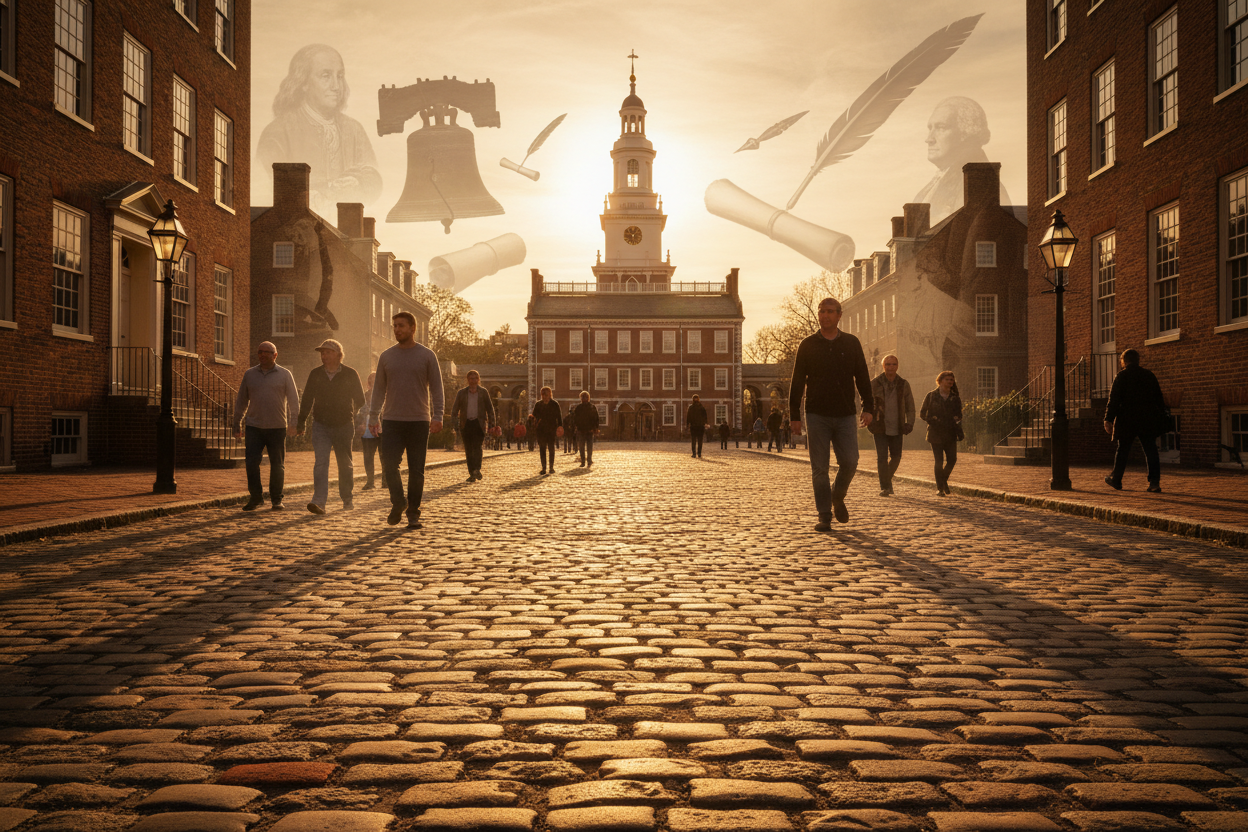
The city’s strategic location played a crucial role in its rise to prominence. Situated along the Delaware River, Philadelphia became a major port and commercial hub, attracting merchants, intellectuals, and craftsmen from across the colonies and Europe. This economic prosperity fostered a growing middle class that would become instrumental in the push for independence and democratic governance.
What truly set Philadelphia apart was its intellectual atmosphere. The city became home to the American Philosophical Society, founded by Benjamin Franklin in 1743, which served as a meeting ground for the colonies’ greatest minds. Libraries, printing presses, and coffeehouses created spaces where political ideas could be debated and refined. This culture of intellectual exchange would prove essential when the time came to draft the documents that would define American democracy.
The Continental Congress: Democracy Takes Root
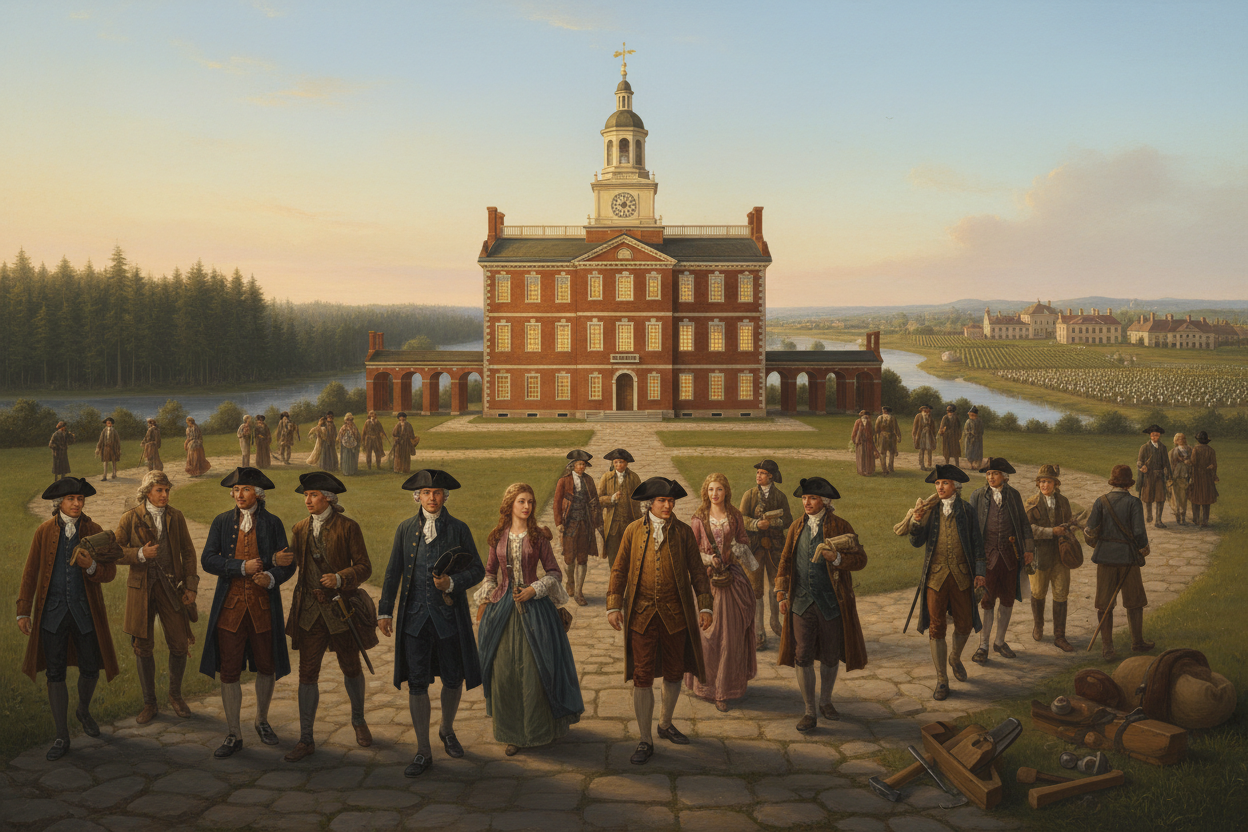
The transformation of Philadelphia into democracy’s birthplace began in earnest with the First Continental Congress in 1774. Delegates from twelve of the thirteen colonies gathered at Carpenter’s Hall, not initially to declare independence, but to address grievances against British rule. However, the very act of colonial representatives meeting to coordinate a unified response marked a significant step toward democratic self-governance.
The choice of Philadelphia as the meeting location wasn’t arbitrary. The city’s central location made it accessible to delegates from both northern and southern colonies, while its reputation for tolerance and intellectual discourse made it an ideal neutral ground for potentially contentious discussions. The presence of skilled craftsmen, including the carpenters who built the hall where they met, symbolized the democratic ideal that governance should involve all social classes, not just the aristocracy.
When the Second Continental Congress convened in Philadelphia in 1775, the stakes had risen dramatically. The battles of Lexington and Concord had already been fought, and the colonies found themselves in open conflict with Britain. It was in Philadelphia’s State House – now known as Independence Hall – that delegates would make decisions that would forever change the course of human history.
The Declaration of Independence: Birthing a Democratic Nation
July 4, 1776, stands as perhaps the most significant date in the history of American democracy, and it belongs entirely to Philadelphia. The signing of the Declaration of Independence in Independence Hall wasn’t just a formal break from British rule – it was the articulation of democratic principles that would inspire democratic movements worldwide for centuries to come.
Thomas Jefferson, the document’s primary author, crafted words that would echo through history: “We hold these truths to be self-evident, that all men are created equal, that they are endowed by their Creator with certain unalienable Rights, that among these are Life, Liberty and the pursuit of Happiness.” These weren’t just lofty ideals; they were revolutionary concepts that challenged the very foundations of monarchical rule and aristocratic privilege.
The debates leading up to the Declaration’s adoption revealed the democratic process in action. Delegates engaged in passionate discussions, proposed amendments, and ultimately reached compromises that reflected the will of the majority while attempting to address minority concerns. This process of democratic deliberation, conducted in Philadelphia’s humid summer heat with windows closed to maintain secrecy, demonstrated that democracy was not just an abstract concept but a practical system of governance.
Constitutional Convention: Perfecting Democratic Government
While the Declaration of Independence established the philosophical foundation of American democracy, it was the Constitutional Convention of 1787 that created its practical framework. Once again, Philadelphia served as the stage for this crucial chapter in democratic history. The same Independence Hall that had witnessed the birth of the nation now hosted the debates that would determine how that nation would govern itself.
The Constitutional Convention brought together some of the most brilliant political minds in American history. George Washington presided over the proceedings with his characteristic dignity, while James Madison came prepared with extensive research on historical governments and detailed proposals for a new system. The debates were intense and sometimes heated, reflecting fundamental disagreements about the nature of democratic government.
The Great Compromise, which balanced the interests of large and small states through a bicameral legislature, exemplified the democratic principle of negotiation and compromise. The separation of powers into executive, legislative, and judicial branches, along with the system of checks and balances, created a framework designed to prevent the concentration of power that had characterized monarchical systems.
Perhaps most importantly, the Constitutional Convention established the principle that government derives its authority from the consent of the governed. The phrase “We the People” that opens the Constitution wasn’t just rhetorical flourish – it was a revolutionary declaration that ultimate political authority rested with the citizens, not with kings or nobles.
The Role of Philadelphia’s Citizens in Democratic Development
Philadelphia’s contribution to American democracy extended far beyond serving as a meeting place for political elites. The city’s ordinary citizens played crucial roles in developing and supporting democratic institutions. The city’s artisans, merchants, and laborers formed the backbone of the revolutionary movement, participating in protests, boycotts, and eventually military service.
The city’s vibrant print culture, centered around figures like Benjamin Franklin, ensured that democratic ideas reached beyond the elite circles. Newspapers, pamphlets, and broadsides spread throughout Philadelphia and beyond, carrying news of political developments and arguments for democratic governance. The famous “Common Sense” by Thomas Paine was published in Philadelphia in 1776, and its clear, accessible language brought complex political ideas to ordinary citizens.
Philadelphia’s religious diversity also contributed to its democratic character. Unlike other colonial cities dominated by single religious establishments, Philadelphia welcomed Quakers, Presbyterians, Anglicans, Catholics, and Jews. This religious pluralism fostered tolerance and the idea that people of different beliefs could coexist peacefully under a common government – a crucial component of democratic society.
The Lasting Legacy of Philadelphia’s Democratic Innovation
The democratic innovations that emerged from Philadelphia in the late 18th century continue to influence political systems around the world today. The concept of written constitutions, the separation of powers, federalism, and the protection of individual rights all trace their American origins to the work done in Philadelphia during this crucial period.
The city’s role as the nation’s capital from 1790 to 1800 allowed these democratic principles to be tested and refined in practice. The early sessions of Congress, the establishment of executive departments, and the development of judicial precedents all occurred in Philadelphia, providing practical experience in democratic governance that would prove invaluable as the nation expanded westward.
Modern Philadelphia takes pride in its democratic heritage, preserving the buildings and spaces where these historic events occurred. Independence Hall, the Liberty Bell, and Carpenter’s Hall serve not just as tourist attractions but as tangible connections to the birth of American democracy. These sites remind visitors that democracy isn’t an abstract concept but something that real people in a real place fought to create and preserve.
Conclusion: Philadelphia’s Enduring Democratic Spirit
Philadelphia’s emergence as the birthplace of American democracy wasn’t the result of chance or coincidence. It was the product of unique historical circumstances, visionary leadership, and a civic culture that valued intellectual discourse, religious tolerance, and political participation. The city provided the ideal environment for revolutionary ideas to develop and mature into practical systems of democratic governance.
From the colonial period through the Constitutional Convention, Philadelphia served as the laboratory where American democracy was conceived, debated, refined, and ultimately born. The principles established in this Pennsylvania city – popular sovereignty, separation of powers, individual rights, and the rule of law – became the foundation not just of American government but of democratic movements worldwide.
Today, as democracies around the world face new challenges, Philadelphia’s story offers both inspiration and instruction. It reminds us that democracy requires active participation, thoughtful deliberation, and the willingness to compromise for the common good. The city where American democracy was born continues to embody the spirit of civic engagement and political innovation that made that birth possible, serving as a living reminder of democracy’s revolutionary origins and enduring promise.