How Philadelphia’s Neighborhoods Got Their Names: Local History Explained
Philadelphia’s neighborhoods tell stories that stretch back centuries, each name carrying whispers of the past that shaped America’s birthplace. From the rolling hills of Chestnut Hill to the bustling streets of Fishtown, every corner of the City of Brotherly Love has a tale worth telling. Understanding how these neighborhoods earned their names isn’t just a lesson in local history – it’s a journey through the cultural tapestry that makes Philadelphia unique.
Whether you’re a longtime resident curious about your neighborhood’s origins or a newcomer eager to understand your new city, exploring these naming stories reveals fascinating insights into Philadelphia’s development. Native American heritage, colonial settlements, industrial growth, and waves of immigration have all left their mark on the city’s geographic identity.
The Foundation: William Penn’s Original Vision
Before diving into individual neighborhoods, it’s essential to understand William Penn’s master plan for Philadelphia. When Penn founded the city in 1682, he envisioned a “greene country towne” with wide streets and ample green spaces. His original city plan covered the area between the Delaware and Schuylkill rivers, roughly corresponding to today’s Center City.
Penn named many streets after trees – Chestnut, Walnut, Spruce, Pine, and others – establishing a botanical theme that would influence neighborhood naming patterns for generations. This systematic approach to naming reflected Penn’s Quaker beliefs in order and harmony, principles that would echo through Philadelphia’s urban development.
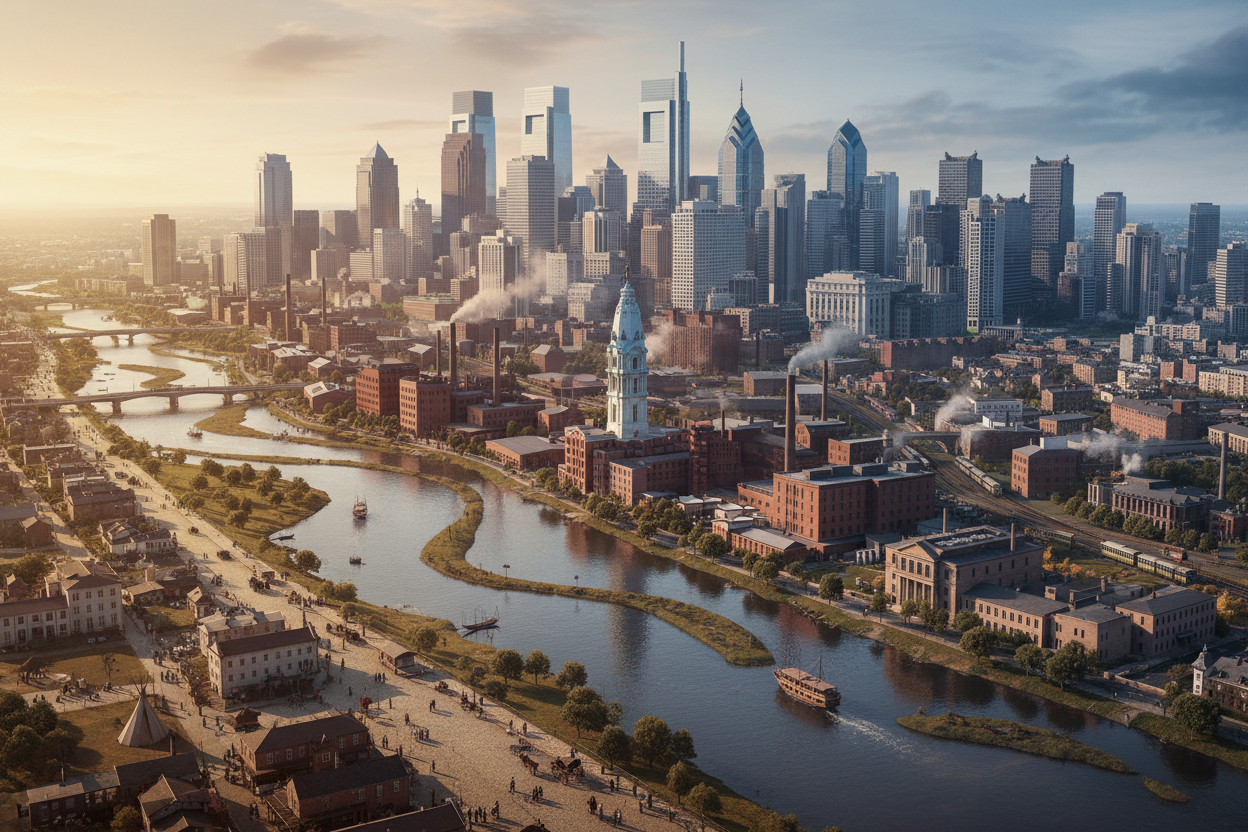
The numbered streets running north-south and the tree-named streets running east-west created a grid system that became the foundation for the city’s expansion. As Philadelphia grew beyond Penn’s original boundaries, new neighborhoods would often reference this original framework in their own naming conventions.
Native American Heritage in Philadelphia Neighborhood Names
Long before European settlement, the Delaware River valley was home to the Lenape people, whose influence on Philadelphia’s geography extends far beyond the city’s famous treaty elm. Several neighborhood names preserve this indigenous heritage, though sometimes in altered forms that reflect colonial pronunciation and spelling.
Passyunk, derived from the Lenape word “Passyunk,” meaning “in the valley,” gives its name to the Passyunk Square neighborhood in South Philadelphia. The area’s low-lying geography along the Delaware River perfectly matches this original description, showing how Native American place names often reflected practical geographic observations.
Wissinoming, in the far northeast, takes its name from another Lenape term meaning “place of the grapes.” Early European settlers noted the abundance of wild grapes in this area, and the Native Americans had long recognized this natural feature in their place naming. These names serve as living reminders of the land’s first inhabitants and their deep connection to the natural environment.
Colonial and Revolutionary War Influences
Philadelphia’s role as the cradle of American independence left an indelible mark on neighborhood naming throughout the city. Many areas commemorate figures, events, and ideals from the colonial period and Revolutionary War era, creating a geographic memorial to the nation’s founding.
Germantown earned its straightforward name from the German and Dutch settlers who established the area in 1683, just one year after Penn founded Philadelphia. These early immigrants created one of America’s first ethnic enclaves, and their influence extended far beyond the neighborhood’s borders. Germantown became known for its mills, craftsmanship, and later, as the site where the first formal protest against slavery in America was written in 1688.
Society Hill takes its name from the Free Society of Traders, a joint-stock company that William Penn established to promote trade and development in his new colony. The neighborhood’s colonial-era buildings and cobblestone streets still reflect this commercial heritage, making it one of Philadelphia’s most historically preserved areas.
Rittenhouse Square honors David Rittenhouse, a prominent Philadelphia astronomer, clockmaker, and treasurer of Pennsylvania during the Revolutionary War. The neighborhood surrounding the elegant park that bears his name became synonymous with Philadelphia high society, a reputation it maintains today.
Industrial Revolution and Working-Class Heritage
The 19th century transformed Philadelphia into an industrial powerhouse, and many neighborhood names reflect this manufacturing heritage. These areas often developed around specific industries, with names that celebrated either the work performed there or the entrepreneurs who built the factories.
Fishtown’s colorful name comes from the neighborhood’s role as a center for the shad fishing industry along the Delaware River. German and Irish immigrants settled here in large numbers during the 1800s, working in the fisheries and shipyards that lined the waterfront. The neighborhood’s industrial character persisted well into the 20th century, and today’s residents take pride in this working-class heritage even as gentrification changes the area’s character.
Brewerytown developed around the numerous breweries that German immigrants established in the area during the mid-1800s. The neighborhood’s location provided easy access to clean water from the Schuylkill River and transportation via the Pennsylvania Railroad, making it ideal for beer production. At its peak, Brewerytown housed over 30 breweries, earning its straightforward but evocative name.
Port Richmond reflects the neighborhood’s maritime heritage, named for its position as a major shipping port along the Delaware River. The area became home to waves of immigrants who worked in the nearby shipyards and factories, creating a diverse community that maintained strong ethnic enclaves well into the modern era.
Immigration Waves and Cultural Identity
Philadelphia’s neighborhoods often serve as living museums of American immigration history, with names that reflect the cultural groups who made each area home. These naming patterns show how different immigrant communities left lasting marks on the city’s geographic identity.
Italian Market, while not an official neighborhood name, refers to the South 9th Street corridor that became the heart of Philadelphia’s Italian-American community. The area earned this designation through the concentration of Italian immigrants who settled there in the early 1900s, opening shops, restaurants, and markets that served their community’s needs. The nickname stuck and eventually became the area’s primary identity.
Chinatown represents another example of ethnic naming, though Philadelphia’s Chinese community is relatively recent compared to other immigrant groups. The neighborhood developed in the mid-20th century as Chinese immigrants, many fleeing political upheaval in their homeland, established businesses and cultural institutions in the area near Center City.
Northern Liberties takes its name from colonial-era land designations, but the neighborhood’s character was shaped by successive waves of immigrants. Originally referring to land outside Philadelphia’s city limits where certain restrictions didn’t apply, Northern Liberties became home to German, Irish, and later Polish and Ukrainian immigrants who worked in nearby factories and shipyards.
Geographic Features and Natural Landmarks
Many Philadelphia neighborhood names derive from the area’s natural geography, reflecting hills, rivers, forests, and other landscape features that early settlers encountered. These names often provide clues about what the land looked like before urban development transformed the terrain.
Chestnut Hill’s name perfectly describes the neighborhood’s elevated location and the chestnut trees that once covered its slopes. The area’s higher elevation made it a popular summer retreat for wealthy Philadelphians seeking to escape the city’s heat and humidity. Today, the neighborhood maintains its leafy character and continues to attract residents who appreciate its suburban feel within the city limits.
Mount Airy takes its name from a colonial-era estate built on the area’s elevated terrain. The “mount” designation reflects the neighborhood’s position on higher ground northwest of Center City, while “airy” suggests the cooler temperatures and breezes that made the area attractive to early residents.
Manayunk comes from the Lenape word meaning “place where we go to drink,” referring to the area’s location along the Schuylkill River. The neighborhood’s dramatic topography, with steep hills rising from the river valley, made it an ideal location for water-powered mills during the Industrial Revolution. The name captures both the area’s Native American heritage and its relationship to the river that shaped its development.
Modern Developments and Changing Names
Philadelphia’s neighborhood naming continues to evolve, with some areas adopting new identities while others work to preserve historical designations. Real estate marketing, community organizing, and urban development all play roles in how neighborhood names develop and change over time.
The term “NoLibs” emerged as a modern shorthand for Northern Liberties, reflecting the area’s transformation from an industrial working-class neighborhood to a trendy destination for young professionals. This abbreviation follows naming patterns common in other major cities, showing how Philadelphia adapts national urban trends to its local context.
Graduate Hospital area exemplifies how institutional landmarks can give neighborhoods their identity. The neighborhood takes its name from Graduate Hospital, which served the area for decades before closing in 2007. Even after the hospital’s closure, residents continue to use the name, demonstrating how deeply institutional names can become embedded in community identity.
Some neighborhoods have experienced name changes that reflect shifting demographics and community preferences. Areas once known by names with negative connotations have successfully rebranded themselves, while others work to reclaim historical names that better reflect their heritage and aspirations.
Preserving Philadelphia’s Naming Heritage
Understanding how Philadelphia’s neighborhoods got their names helps residents and visitors appreciate the layers of history beneath their feet. These names represent more than mere geographic designations – they’re connections to the people, events, and forces that shaped one of America’s most historically significant cities.
Local historical societies, community organizations, and longtime residents serve as guardians of these naming stories, ensuring that the tales behind the names don’t disappear as neighborhoods change. Their efforts help maintain Philadelphia’s connection to its past while allowing for natural evolution and growth.
The stories behind neighborhood names also provide starting points for deeper exploration of Philadelphia’s history. Each name opens doors to understanding broader themes in American urban development, from colonial settlement patterns to industrial growth, immigration waves, and modern gentrification pressures.
Philadelphia’s neighborhood names create a unique geographic vocabulary that reflects the city’s role in American history. From William Penn’s original vision to modern urban development, these names tell the ongoing story of how communities form, evolve, and maintain their identities across generations. Whether derived from Native American words, colonial figures, industrial heritage, or geographic features, each neighborhood name contributes to Philadelphia’s rich tapestry of place and memory.
The next time you walk through Philadelphia’s diverse neighborhoods, remember that you’re traveling through layers of history embedded in the very names around you. These designations represent the dreams, struggles, and achievements of countless individuals who called Philadelphia home, making the city’s geography a living testament to the American experience.