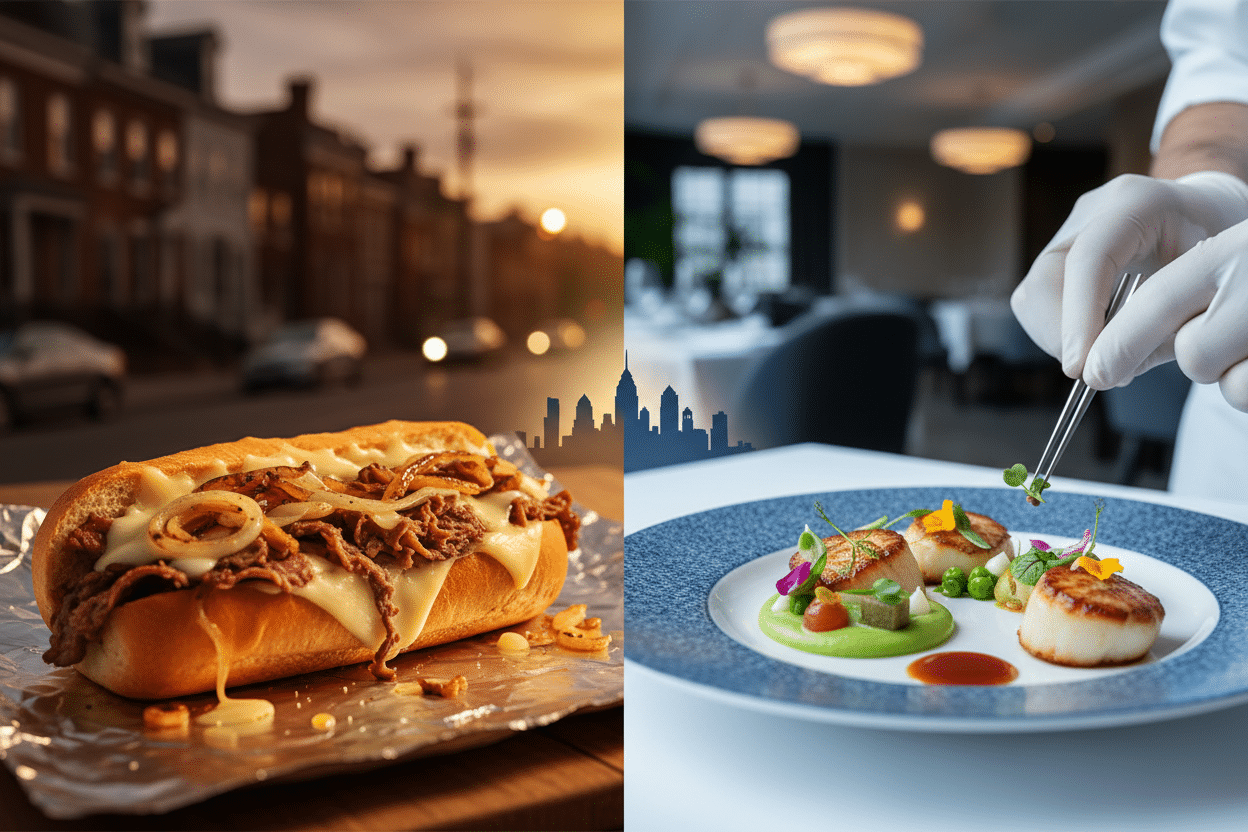
How Philadelphia’s Food Scene Went From Cheesesteaks to James Beard Awards
Philadelphia has always been a city that takes its food seriously. For decades, visitors flocked here for one iconic sandwich: the cheesesteak. Pat’s and Geno’s became household names, and the eternal debate over “wit or witout” onions became part of the city’s identity. But somewhere along the way, something remarkable happened. The City of Brotherly Love transformed from a one-trick culinary pony into a dining destination that now regularly produces James Beard Award winners and attracts food lovers from around the globe.
This evolution didn’t happen overnight. It’s been a gradual transformation spanning nearly three decades, driven by passionate chefs, changing demographics, and a city that finally learned to embrace its potential. Today, Philadelphia’s restaurant scene rivals those of New York, San Francisco, and Chicago, while still maintaining the unpretentious, neighborhood-focused character that makes it uniquely Philly.
The Foundation: Beyond the Cheesesteak Legacy
Let’s be clear about one thing: there’s absolutely nothing wrong with cheesesteaks. They’re delicious, they’re ours, and they’ll always be part of Philadelphia’s culinary DNA. But for too long, they were the only thing people knew about our food scene. When food writers visited Philadelphia in the 1980s and early 1990s, they’d hit Pat’s or Geno’s, maybe grab a hoagie, and call it a day.
What many outsiders didn’t realize was that Philadelphia already had incredible food traditions bubbling beneath the surface. The city’s diverse neighborhoods had been quietly nurturing authentic Italian markets in South Philly, vibrant Mexican communities in North Philly, and thriving Vietnamese enclaves in South Philadelphia. These weren’t tourist destinations—they were real communities with real food cultures that would eventually become the backbone of the city’s culinary renaissance.
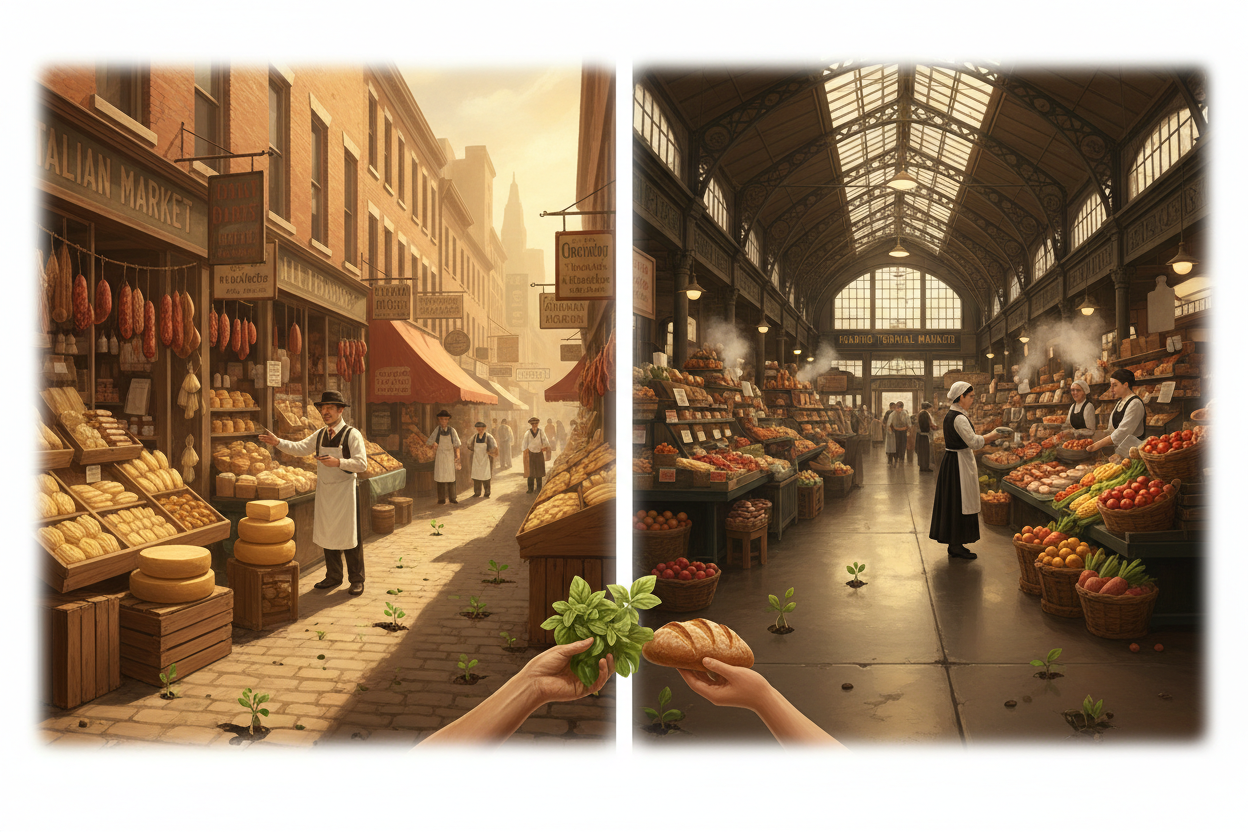
The Italian Market on 9th Street, for instance, had been operating since the early 1900s, providing fresh pasta, aged cheeses, and imported specialties to generations of families. Similarly, Reading Terminal Market, which opened in 1893, had always been a treasure trove of local producers, Amish vendors, and specialty food purveyors. The foundation for great food was already here; it just needed the right chefs and the right moment to flourish.
The Pioneers: Chefs Who Changed Everything
Every food revolution needs its pioneers, and Philadelphia’s transformation began with a handful of visionary chefs who saw potential where others saw limitations. In the late 1990s and early 2000s, these culinary trailblazers started opening restaurants that would fundamentally change how people thought about Philadelphia dining.
Stephen Starr emerged as perhaps the most influential figure in this transformation. His restaurant empire, which began with Continental Mid-town in 1995, brought a level of sophistication and theatricality to Philadelphia dining that had been largely absent. Starr understood that great food needed to be paired with great atmosphere, and his restaurants like Buddakan and The Continental became destinations that could compete with anything in New York or Los Angeles.
Around the same time, chefs like Jose Garces began exploring the possibilities of elevated Latin cuisine, while Marc Vetri was quietly perfecting his approach to Italian cooking at Vetri Cucina. These weren’t chefs trying to replicate what was happening in other cities—they were creating something distinctly Philadelphia, rooted in the city’s immigrant traditions but elevated through technique and creativity.
The breakthrough moment came when these chefs started receiving national recognition. When Vetri Cucina earned a James Beard Award nomination in 2005, and Jose Garces won Outstanding Chef in 2013, the food world finally started paying attention to what had been happening in Philadelphia all along.
The BYOB Revolution: Democratizing Fine Dining
One of the most significant factors in Philadelphia’s culinary evolution was something that might seem like a limitation: the city’s notoriously difficult liquor licensing system. Pennsylvania’s archaic alcohol laws made it expensive and complicated for restaurants to serve wine and spirits, but rather than seeing this as a barrier, innovative chefs turned it into an opportunity.
The BYOB (Bring Your Own Bottle) movement that emerged in Philadelphia was unlike anything happening in other major food cities. Suddenly, diners could enjoy restaurant-quality food without the markup on alcohol, making fine dining more accessible to a broader audience. Restaurants like Marigold Kitchen, Bibou, and Barbuzzo built devoted followings by focusing entirely on exceptional food while letting customers bring their own wine.
This model allowed young chefs to open restaurants with lower overhead costs, encouraging experimentation and risk-taking. It also created a more casual, neighborhood-focused dining culture that felt authentically Philadelphia. You might find yourself sitting next to a table sharing a bottle of wine they picked up at the corner store, creating an atmosphere that was both sophisticated and refreshingly unpretentious.
The James Beard Era: National Recognition Arrives
The James Beard Awards are often called the “Oscars of the food world,” and for Philadelphia, these accolades represented validation that the city’s culinary scene had truly arrived. The first major breakthrough came in 2003 when Judy Wicks of White Dog Cafe won the Outstanding Service Award, recognizing not just great food but the kind of community-focused dining that would become a Philadelphia hallmark.
But it was the chef awards that really put Philadelphia on the culinary map. Jose Garces’ 2013 win for Outstanding Chef was a watershed moment, followed by a steady stream of nominations and wins that continues today. Michael Solomonov of Zahav won Outstanding Chef in 2017, while restaurants like Vernick Food & Drink and K’Far Cafe have earned nominations for Outstanding Restaurant.
These awards didn’t just recognize individual excellence—they highlighted the diversity and depth of Philadelphia’s food scene. From Solomonov’s modern Israeli cuisine to the Italian perfection of Vetri to the innovative American cooking at restaurants like Friday Saturday Sunday, Philadelphia was proving it could excel across multiple cuisines and styles.
Neighborhood Gems: The Real Heart of Philly Dining
While the James Beard Awards brought national attention, the real magic of Philadelphia’s food scene has always been in its neighborhoods. This is a city where you can find incredible Vietnamese pho in South Philadelphia, authentic Mexican tacos in North Philly, and some of the best pizza outside of New York scattered throughout various neighborhoods.
The beauty of Philadelphia’s dining scene lies in its accessibility and authenticity. You don’t need a reservation made weeks in advance to eat well here. Some of the city’s best meals can be found at unassuming spots like Villa di Roma for old-school Italian-American comfort food, or K’Far Cafe for exceptional Ethiopian cuisine, or any number of taco trucks that have become neighborhood institutions.
This neighborhood-centric approach has created a dining culture that feels lived-in rather than manufactured. Restaurants succeed here not just because they’re trendy, but because they serve their communities day after day, building the kind of loyal customer base that sustains long-term success.
The New Generation: Innovation Meets Tradition
Today’s Philadelphia food scene represents a perfect balance between honoring tradition and embracing innovation. Young chefs like Greg Vernick, Michael Schulson, and Amanda Shulman are creating restaurants that feel both cutting-edge and deeply rooted in Philadelphia’s culinary heritage.
At Vernick Food & Drink, Greg Vernick serves dishes that could hold their own in any major food city while maintaining the warm, neighborhood feel that defines Philadelphia dining. Meanwhile, chefs like Amanda Shulman at Friday Saturday Sunday are exploring new ways to present familiar flavors, creating menus that surprise and delight while remaining approachable.
The current generation of Philadelphia chefs understands that innovation doesn’t mean abandoning what makes the city special. They’re building on the foundation laid by earlier pioneers while adding their own perspectives and techniques, creating a dining scene that continues to evolve while staying true to its roots.
Looking Forward: The Future of Philadelphia Dining
As Philadelphia’s food scene continues to mature, several trends are shaping its future direction. Sustainability has become increasingly important, with restaurants like Zahav leading the way in sourcing local ingredients and supporting regional producers. The city’s diverse immigrant communities continue to enrich the dining landscape, bringing new flavors and techniques that keep the scene dynamic and exciting.
The COVID-19 pandemic tested the resilience of Philadelphia’s restaurant industry, but it also demonstrated the strength of the community-focused approach that has always defined dining here. Restaurants pivoted to takeout and delivery, supported each other through difficult times, and emerged with an even stronger sense of what makes Philadelphia dining special.
Looking ahead, Philadelphia seems poised to continue its upward trajectory. The city offers something that’s increasingly rare in major food destinations: authenticity combined with excellence, innovation balanced with tradition, and sophistication that never loses sight of its neighborhood roots.
From the humble cheesesteak to James Beard Awards, Philadelphia’s culinary journey represents more than just an evolution in dining—it’s a story of a city that learned to embrace its potential while never forgetting its character. Today, when food lovers plan trips to Philadelphia, they come not just for the cheesesteaks (though those are still pretty great), but for a dining experience that’s uniquely, authentically, and deliciously Philadelphia. The city that once defined itself by a single sandwich now offers a feast for every palate, proving that sometimes the best transformations are the ones that honor the past while boldly embracing the future.