The Dark History of Eastern State Penitentiary: America’s Most Revolutionary Prison
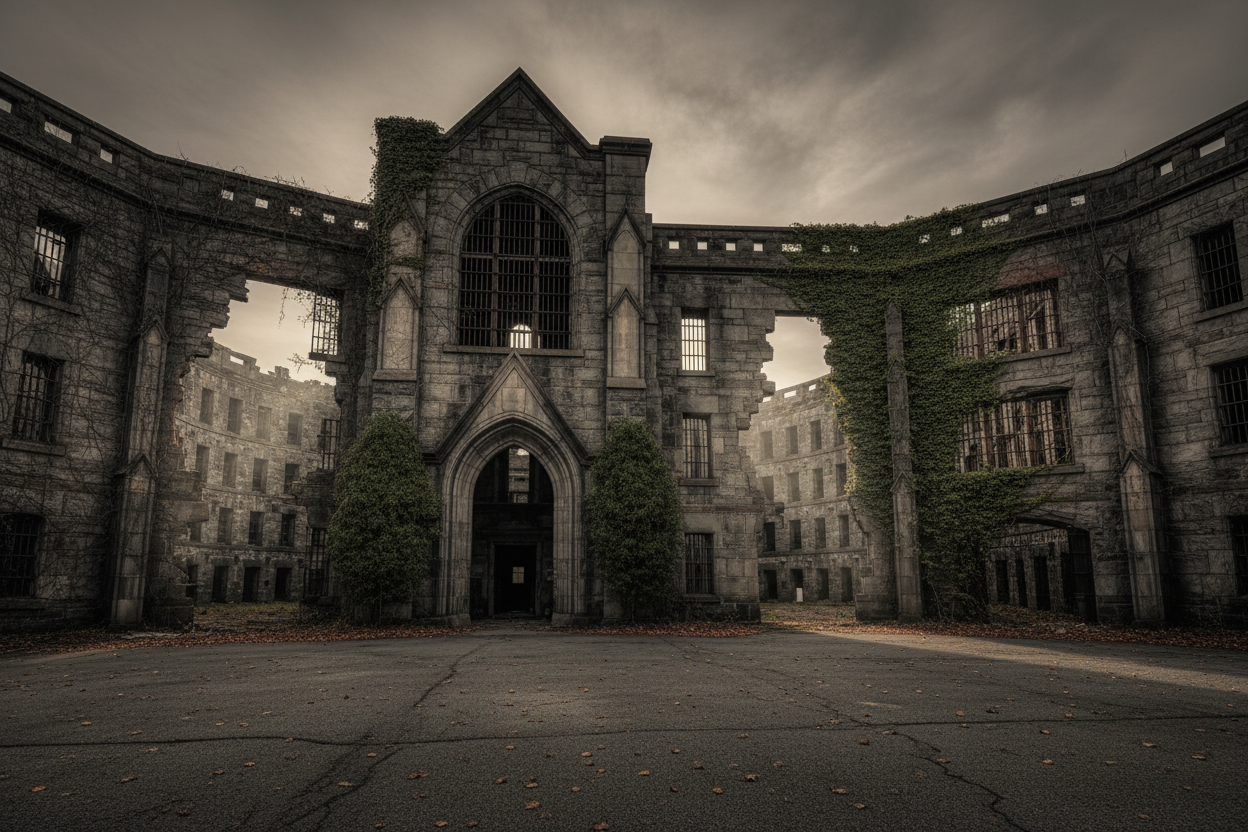
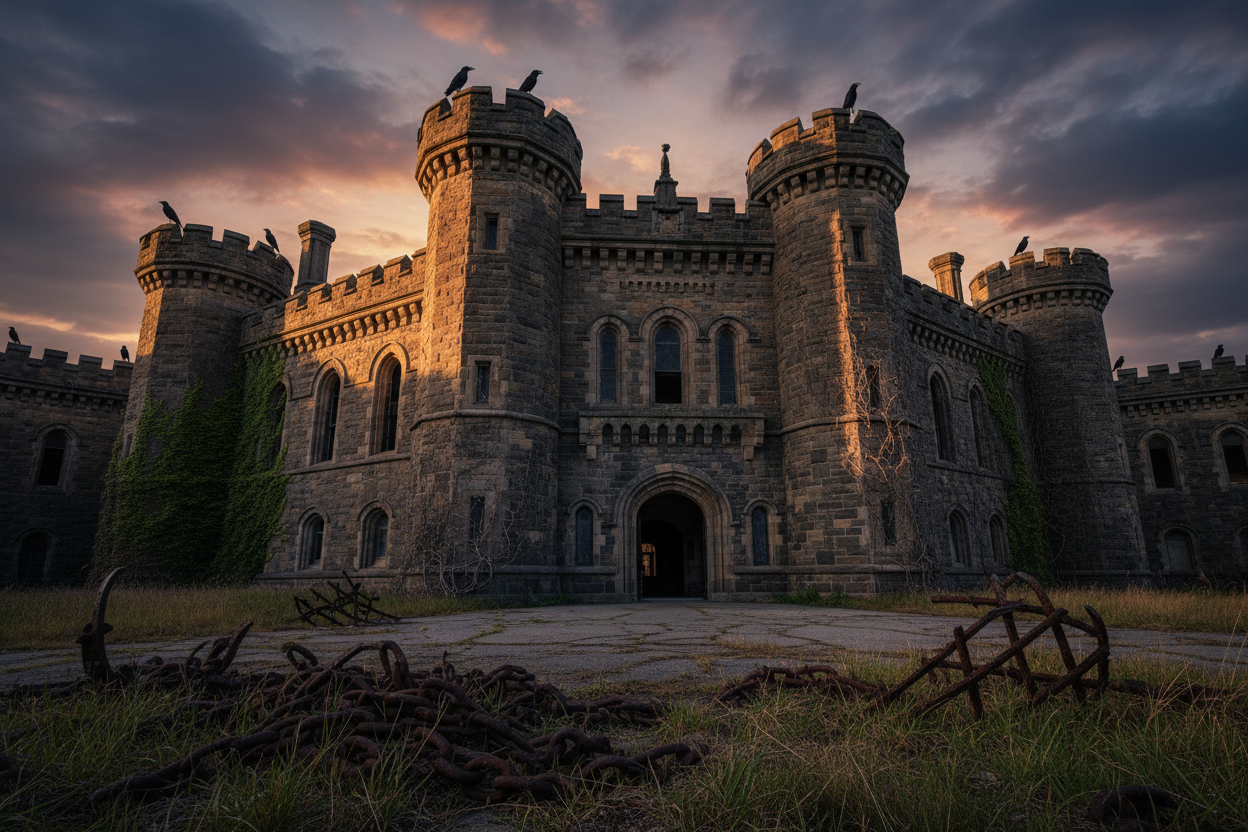
Standing like a medieval fortress in the heart of Philadelphia, Eastern State Penitentiary casts an imposing shadow that seems to whisper tales of its haunting past. This isn’t just another abandoned building—it’s a monument to one of America’s most ambitious and ultimately devastating experiments in criminal justice. For nearly 150 years, this revolutionary prison housed some of the country’s most notorious criminals while pioneering a system that would fundamentally change how we think about punishment and rehabilitation.
What makes Eastern State Penitentiary so fascinating isn’t just its crumbling cellblocks or the famous criminals who called it home, but the radical philosophy that shaped its very foundation. This was a place where good intentions collided with harsh realities, creating a legacy that continues to influence our prison system today.
The Birth of a Revolutionary Concept
When Eastern State Penitentiary opened its doors in 1829, it represented nothing short of a revolution in criminal justice. The brainchild of Philadelphia’s Quaker reformers, this institution was built on the radical belief that criminals could be reformed through solitary reflection and penitence—hence the term “penitentiary.”
The timing couldn’t have been more perfect. America was experiencing rapid urbanization and social upheaval, leading to rising crime rates that existing punishment methods simply couldn’t address. Public executions and physical punishments were becoming increasingly unpopular, and forward-thinking reformers saw an opportunity to create something entirely new.
Dr. Benjamin Rush, a signer of the Declaration of Independence and prominent prison reformer, championed the idea that crime was a disease that could be cured through proper treatment. This medical approach to criminal behavior was revolutionary for its time and formed the philosophical foundation of Eastern State’s design.
Architectural Innovation Meets Social Experiment
The physical structure of Eastern State Penitentiary was as revolutionary as its philosophy. Architect John Haviland designed a radial system with seven cellblocks extending like spokes from a central hub, allowing guards to observe all areas from a single vantage point. This design was so innovative that it influenced prison architecture worldwide for decades to come.
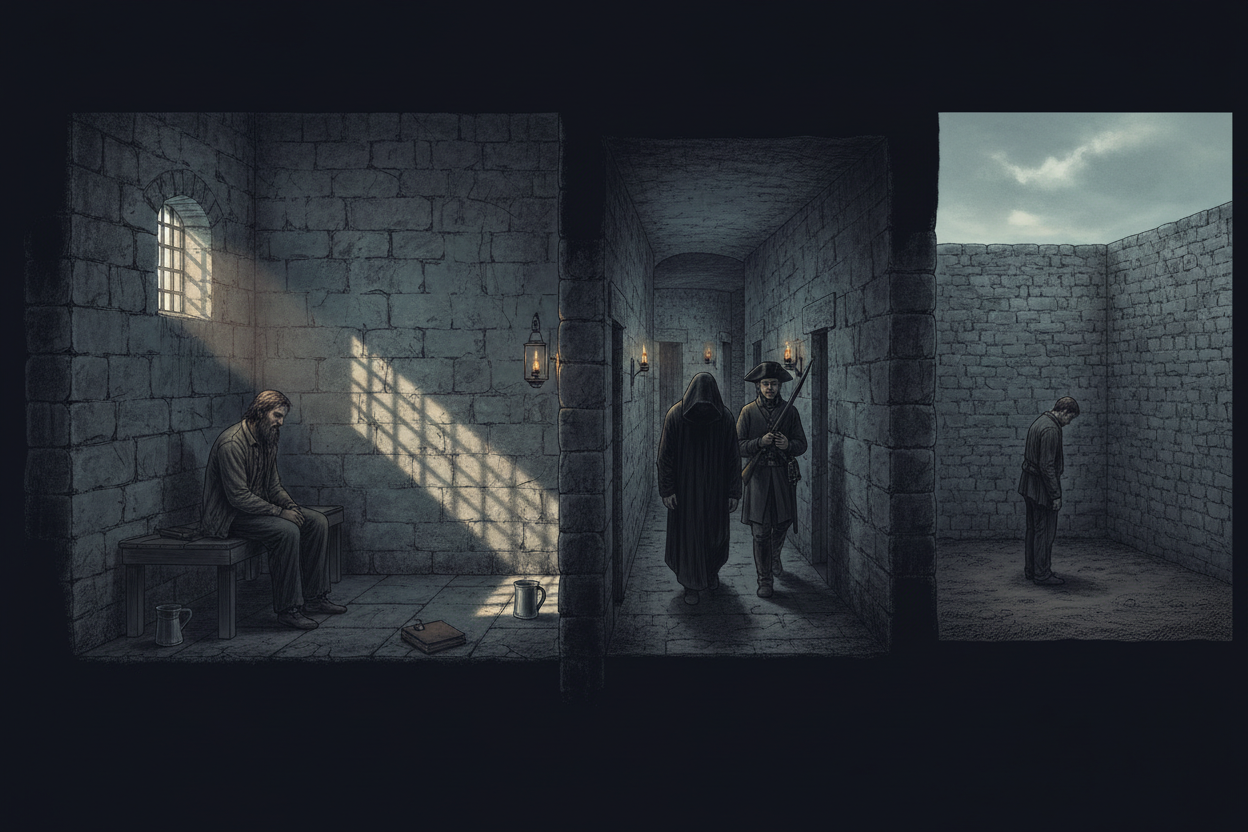
Each cell was a marvel of 1820s technology, featuring running water, central heating, and a private exercise yard—amenities that many free citizens of Philadelphia couldn’t afford. The cells measured 8 by 12 feet with 16-foot vaulted ceilings, creating an almost cathedral-like atmosphere that was intended to inspire contemplation and spiritual reflection.
But perhaps the most striking feature was the small skylight in each cell, designed to represent “the Eye of God” watching over each prisoner. This wasn’t just architectural drama—it was a deliberate psychological tool meant to encourage moral reflection and spiritual awakening.
The Pennsylvania System: Solitary Confinement as Reform
The Pennsylvania System, as it became known, was built around complete solitary confinement. Prisoners spent 23 hours a day alone in their cells, with only one hour of solitary exercise in their private yards. They weren’t allowed to see or communicate with other inmates, and when they were moved through the prison, they wore black hoods to prevent them from seeing anything beyond their immediate surroundings.
The theory seemed sound on paper: remove prisoners from corrupting influences, give them time to reflect on their crimes, and provide them with moral instruction through regular visits from clergy and prison officials. Supporters believed this system would produce genuine rehabilitation rather than simply punishment.
Work was provided to prevent idleness, but it was solitary work—weaving, shoemaking, or other crafts that could be performed alone in the cell. The goal was to teach useful skills while maintaining the isolation that reformers believed was essential for moral transformation.
The Psychological Toll of Isolation
What the well-intentioned reformers didn’t anticipate was the devastating psychological impact of prolonged isolation. Within years of opening, it became clear that the Pennsylvania System was causing severe mental health problems among prisoners. Reports of inmates talking to themselves, experiencing hallucinations, and attempting suicide began to mount.
Charles Dickens visited Eastern State in 1842 and was horrified by what he witnessed. He described the system as “cruel and wrong” and wrote extensively about prisoners who had clearly been driven to madness by their isolation. His account brought international attention to the dark side of this supposedly humane experiment.
Prison officials initially dismissed these concerns, arguing that apparent mental distress was actually evidence that the system was working—that prisoners were experiencing the moral awakening that solitude was meant to produce. This tragic misinterpretation led to decades of continued psychological torture disguised as progressive reform.
Famous Inmates and Notorious Escapes
Despite its grim reputation, Eastern State housed some of America’s most famous criminals, adding a layer of dark celebrity to its already complex legacy. Perhaps the most notorious resident was Al Capone, who served eight months there in 1929-1930 for carrying a concealed weapon.
Capone’s cell was far from typical—furnished with fine rugs, a radio, and other luxuries that his wealth and influence could buy. His comfortable accommodations highlighted the corruption that had begun to creep into the system by the 1920s, as the original reformist ideals gave way to more practical concerns about managing dangerous criminals.
The prison also witnessed several dramatic escape attempts, the most famous being the 1945 tunnel escape by twelve inmates, including the notorious bank robber Willie Sutton. The elaborate tunnel, which took over a year to dig, stretched from a cell to beyond the prison walls and demonstrated both the ingenuity of desperate men and the security vulnerabilities of the aging facility.
The Decline and Abandonment of Revolutionary Ideals
By the 1870s, the Pennsylvania System was already showing signs of failure. The psychological damage it caused was becoming impossible to ignore, and the system proved far more expensive than traditional prisons. More importantly, it simply wasn’t producing the reformed criminals that its designers had promised.
Gradually, Eastern State began abandoning its founding principles. Prisoners were allowed to work together in workshops, eat meals in common areas, and eventually even socialize during limited periods. The grand experiment in solitary rehabilitation was quietly abandoned, though the prison continued operating under increasingly traditional methods.
Overcrowding became a persistent problem as the prison’s population swelled far beyond its intended capacity. Cells designed for single occupancy housed two or three inmates, and the once-revolutionary amenities fell into disrepair. The prison that had once been a model for the world became just another overcrowded, underfunded correctional facility.
Closure and Transformation into a Historic Site
Eastern State Penitentiary finally closed its doors in 1971, ending 142 years of operation. The building sat abandoned for decades, slowly deteriorating as nature began to reclaim the once-imposing structure. Vines crept through broken windows, rain damaged the historic cellblocks, and the prison became a haunting reminder of a failed experiment.
In the 1990s, preservation efforts began in earnest. Rather than restore the prison to its original condition, conservators chose to stabilize the ruins and preserve them as they found them—a powerful testament to the passage of time and the failure of the Pennsylvania System. This approach, called “preserved ruins,” allows visitors to experience the authentic atmosphere of abandonment and decay.
Today, Eastern State operates as a museum and historic site, welcoming over 200,000 visitors annually. The prison offers regular tours, special exhibitions, and educational programs that explore not just the history of this particular institution, but broader questions about justice, punishment, and reform in American society.
The Lasting Legacy of America’s Prison Experiment
The story of Eastern State Penitentiary serves as a powerful reminder that good intentions don’t always lead to good outcomes. The Quaker reformers who designed this system genuinely believed they were creating a more humane alternative to the brutal punishments of their era. Their failure wasn’t due to malice, but to a fundamental misunderstanding of human psychology and the effects of prolonged isolation.
Ironically, many of the problems that plagued Eastern State—overcrowding, mental health issues, recidivism, and the tension between punishment and rehabilitation—continue to challenge our prison system today. The debates that raged around the Pennsylvania System echo in contemporary discussions about solitary confinement, prison reform, and the purpose of incarceration.
Modern research has vindicated the concerns raised by early critics like Charles Dickens. We now know that prolonged solitary confinement can cause lasting psychological damage and actually increases the likelihood of reoffending. Yet despite this knowledge, solitary confinement remains a common practice in American prisons, affecting tens of thousands of inmates at any given time.
Eastern State Penitentiary stands as both a monument to ambitious reform and a warning about the dangers of untested social experiments. Its crumbling walls remind us that the path to justice is never simple, and that even our most well-intentioned efforts to improve society can have devastating unintended consequences. As we continue to grapple with questions of crime and punishment in the 21st century, the dark history of this revolutionary prison offers valuable lessons about the complexity of human nature and the importance of evidence-based reform.