The Real Story Behind Philadelphia’s ‘City of Brotherly Love’ Nickname
When you think of Philadelphia, what comes to mind? Perhaps it’s the iconic Liberty Bell, the mouth-watering cheesesteaks, or maybe the passionate Eagles fans. But there’s one aspect of Philadelphia that has defined its identity for over three centuries: its endearing nickname, the “City of Brotherly Love.” While many people casually use this moniker, few truly understand the fascinating historical roots and profound meaning behind these four simple words.
The story of Philadelphia’s beloved nickname isn’t just a tale of clever marketing or modern branding. It’s a journey that takes us back to the very foundations of American religious freedom, urban planning, and the bold vision of one remarkable man who dared to dream of a different kind of city. Today, we’ll explore the genuine origins of this famous nickname and discover why it continues to resonate with millions of people around the world.
William Penn’s Revolutionary Vision
To understand Philadelphia’s nickname, we must first meet William Penn, the English Quaker who founded the city in 1682. Penn wasn’t your typical colonial leader. As a member of the Religious Society of Friends, commonly known as Quakers, he had experienced firsthand the brutal religious persecution that plagued 17th-century England. Quakers were considered radical for their beliefs in equality, pacifism, and direct spiritual connection with God without the need for formal clergy.
Penn’s father, Admiral Sir William Penn, had loaned a substantial sum to King Charles II. When the admiral died, the debt passed to his son, who made an extraordinary request: instead of monetary repayment, he wanted land in the New World. In 1681, King Charles II granted Penn a massive tract of land that would become Pennsylvania, literally meaning “Penn’s Woods.”
But Penn had grander ambitions than simply establishing another colonial settlement. He envisioned creating a “holy experiment” – a place where people of all religious backgrounds could live together in peace and harmony. This wasn’t just idealistic dreaming; it was a revolutionary concept that would challenge the very foundations of how societies were organized in the 17th century.
The Greek Origins of Philadelphia’s Name
When it came time to name his new city, Penn didn’t choose randomly. He deliberately selected “Philadelphia,” combining two Greek words: “philos” meaning love, and “adelphos” meaning brother. The literal translation is “brotherly love,” making Philadelphia the only major American city whose name explicitly embodies a moral principle.
Penn’s choice wasn’t merely linguistic creativity. The name Philadelphia appears in the New Testament, specifically in the Book of Revelation, where it refers to one of the seven churches of Asia Minor. This biblical Philadelphia was praised for its faithfulness and was promised that it would be kept safe from trials. For Penn, a deeply religious man, this biblical connection added spiritual significance to his earthly city.
The ancient city of Philadelphia in Asia Minor (modern-day Turkey) was itself named after its founder, Attalus II Philadelphus, who was known for his loyalty to his brother. This historical layering of meaning – from ancient loyalty between brothers to biblical faithfulness to Penn’s vision of religious tolerance – created a rich foundation for the city’s identity.
Putting Theory into Practice: Penn’s Great Experiment
Penn didn’t just give his city a meaningful name and hope for the best. He implemented specific policies and urban planning principles designed to foster the brotherly love he envisioned. His approach was remarkably progressive for its time and laid the groundwork for many principles we now consider fundamental to American democracy.
First, Penn established religious freedom as a cornerstone of his colony. His Charter of Privileges, granted in 1701, guaranteed liberty of conscience to all residents. This meant that Quakers, Anglicans, Catholics, Jews, and members of other faiths could worship freely without fear of persecution. In an era when religious wars were tearing Europe apart, this was nothing short of revolutionary.
Penn also insisted on fair treatment of Native Americans, a practice that was unfortunately rare among colonial settlements. He personally negotiated treaties with local tribes, paid fair prices for land, and established peaceful relationships that lasted for decades. This commitment to justice and fairness reflected his Quaker beliefs and his genuine desire to create a society based on brotherly love rather than conquest and exploitation.
The city’s physical design also reflected Penn’s values. He planned Philadelphia as a “greene country towne,” with wide streets, public squares, and ample space between buildings to prevent the overcrowding and disease that plagued European cities. The grid system he established, with its numbered streets and tree-named avenues, created an orderly, navigable urban environment that promoted civic harmony.
Early Challenges to the Brotherly Love Ideal
Despite Penn’s noble intentions, implementing brotherly love in practice proved challenging from the very beginning. The early years of Philadelphia were marked by conflicts between different groups of settlers, economic struggles, and political disagreements that tested the community’s commitment to Penn’s ideals.
One significant challenge came from within the Quaker community itself. While united in their basic beliefs, Quakers disagreed on various practical matters of governance and daily life. Some favored a more hierarchical approach to decision-making, while others insisted on pure consensus. These internal divisions sometimes led to bitter disputes that seemed to contradict the very principle of brotherly love the city was meant to embody.
Economic pressures also strained the community’s ideals. As Philadelphia grew and prospered, becoming one of the most important ports in colonial America, wealth disparities emerged. The gap between successful merchants and struggling laborers created social tensions that challenged the notion of universal brotherhood. Additionally, despite Penn’s opposition to slavery, the practice gradually took hold in Philadelphia, creating a fundamental contradiction with the city’s founding principles.
The relationship with Native Americans, initially so promising, also deteriorated over time. As more settlers arrived and demanded land, peaceful coexistence became increasingly difficult. Later generations of colonists didn’t share Penn’s commitment to fair dealing with indigenous peoples, leading to conflicts that betrayed the founder’s vision of universal brotherhood.
Philadelphia’s Role in Shaping American Ideals
Despite these early challenges, Philadelphia’s founding principles had a profound impact on the development of American democratic ideals. The city became a natural gathering place for those who shared Penn’s vision of religious freedom, tolerance, and equality. This atmosphere of openness and debate made Philadelphia the logical choice as the birthplace of American independence.
When the Continental Congress convened in Philadelphia in 1774, delegates from across the colonies brought their grievances against British rule to a city that had been founded on principles of justice and fair treatment. The Declaration of Independence, drafted primarily by Thomas Jefferson but debated and approved by the Continental Congress in Philadelphia’s Independence Hall, echoed many of the same ideals that Penn had embedded in his “holy experiment” nearly a century earlier.
The Constitution, too, was drafted and debated in Philadelphia in 1787. The document’s emphasis on religious freedom, checks and balances, and protection of individual rights reflected the same spirit of tolerance and fairness that had inspired the city’s founding. In many ways, the Constitutional Convention was an attempt to create Penn’s vision of brotherly love on a national scale.
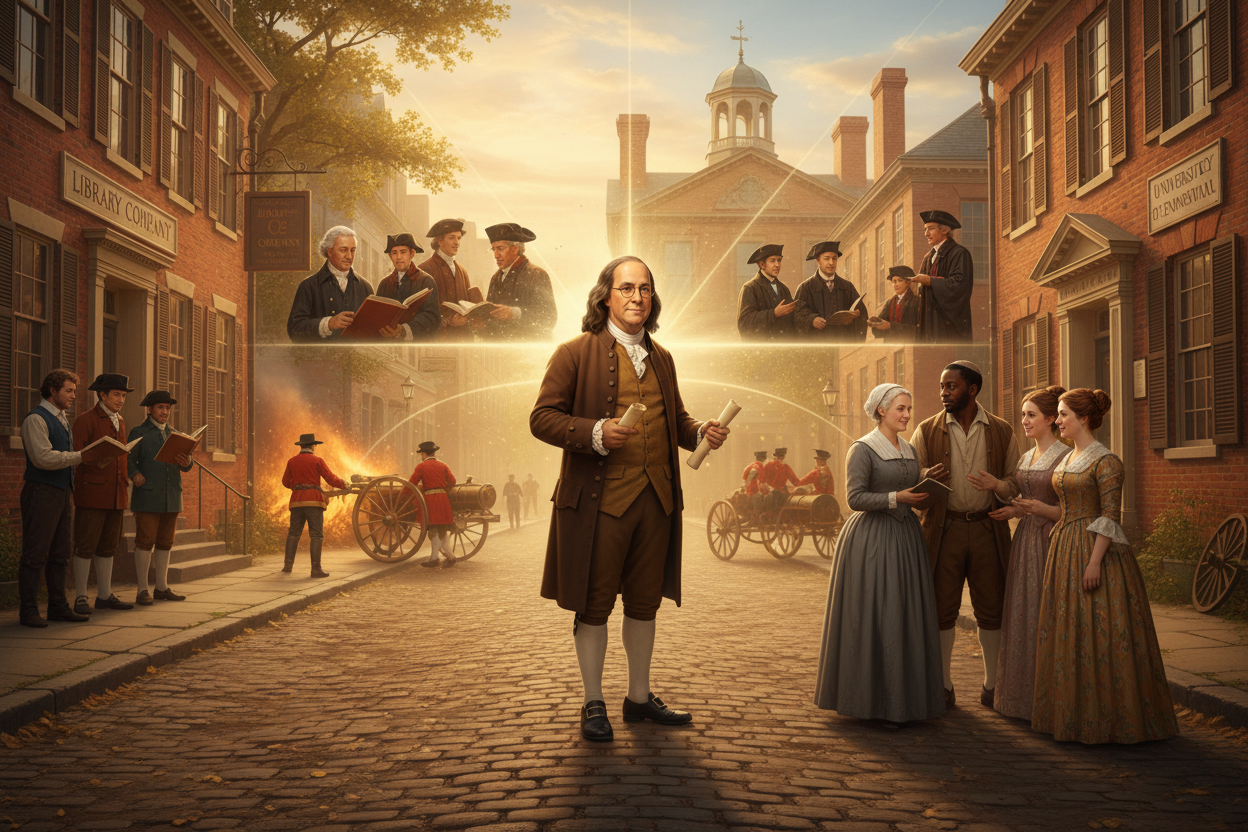
Benjamin Franklin, one of Philadelphia’s most famous adopted sons, embodied many of the city’s founding ideals in his own life and work. His emphasis on civic improvement, religious tolerance, and practical wisdom reflected the Quaker values that had shaped his adopted hometown. Franklin’s numerous civic projects – from the first public library to the volunteer fire company to the University of Pennsylvania – demonstrated how individual initiative could serve the common good, a perfect expression of brotherly love in action.
The Nickname’s Evolution Through History
As Philadelphia grew and changed over the centuries, so did the interpretation and application of its nickname. During the 19th century, waves of immigration brought new challenges and opportunities to live up to the “City of Brotherly Love” ideal. Irish, German, Italian, and Eastern European immigrants tested the city’s commitment to welcoming newcomers with open arms.
The Industrial Revolution transformed Philadelphia into a major manufacturing center, creating new forms of both prosperity and hardship. Labor disputes, ethnic tensions, and economic inequality sometimes made the city feel more like a place of conflict than brotherly love. Yet even during these difficult periods, the nickname served as a reminder of the city’s highest aspirations and a call to live up to its founding ideals.
The Civil Rights era brought particular significance to Philadelphia’s nickname. As African Americans fought for equality and justice, they often invoked the city’s founding principles of brotherly love and religious freedom. The irony that a city founded on principles of equality had long tolerated segregation and discrimination was not lost on civil rights activists, who used the contradiction to powerful effect in their campaigns for justice.
During the 1960s and 1970s, Philadelphia faced many of the same urban challenges that plagued other American cities: white flight to the suburbs, economic decline, and racial tensions. Yet the city’s nickname provided a framework for addressing these problems, reminding residents and leaders alike of their shared commitment to creating a community based on mutual respect and care.
Modern Philadelphia: Living Up to the Legacy
Today, Philadelphia continues to grapple with what it means to be the “City of Brotherly Love” in the 21st century. The city has made significant strides in recent decades, revitalizing its downtown area, attracting new residents and businesses, and working to address historical inequalities. Yet challenges remain, from persistent poverty in some neighborhoods to ongoing tensions between different communities.
Modern Philadelphians have found new ways to express the brotherly love ideal. The city’s vibrant nonprofit sector, with thousands of organizations working to address social problems and improve quality of life, represents a contemporary manifestation of Penn’s vision. Community gardens, neighborhood associations, and volunteer programs all reflect the same spirit of mutual aid and civic responsibility that inspired the city’s founding.
The city’s embrace of diversity has also evolved. Philadelphia now celebrates its status as a welcoming city for immigrants and refugees, seeing this as a continuation of Penn’s original vision of religious and cultural tolerance. The annual Philadelphia International Festival, neighborhood cultural celebrations, and the city’s official support for LGBTQ+ rights all demonstrate how the concept of brotherly love has expanded to embrace all forms of human diversity.
Conclusion: A Nickname That Still Matters
The story behind Philadelphia’s “City of Brotherly Love” nickname reveals far more than just an interesting historical footnote. It illuminates the ongoing American struggle to create communities based on justice, tolerance, and mutual respect. William Penn’s vision of a city where people of different backgrounds could live together in harmony remains as relevant today as it was over 300 years ago.
Understanding the real story behind this nickname helps us appreciate both how far Philadelphia has come and how far it still has to go. The city’s history is neither one of perfect success nor complete failure in living up to its ideals, but rather an ongoing experiment in democracy and community building. Every generation of Philadelphians has had to decide anew what brotherly love means in their time and how to put those principles into practice.
Today, as Americans continue to wrestle with questions of diversity, equality, and community, Philadelphia’s founding vision offers both inspiration and challenge. The “City of Brotherly Love” nickname isn’t just a quaint historical curiosity – it’s a living reminder that our cities and communities can be intentionally designed around our highest values. In a world that often seems divided by hatred and misunderstanding, Philadelphia’s story suggests that another way is possible, if we have the courage and commitment to pursue it.
The next time you hear someone refer to Philadelphia as the “City of Brotherly Love,” remember that these aren’t just empty words or tourist marketing. They represent a bold experiment in human community that began over three centuries ago and continues today. They remind us that our cities can be more than just places where people happen to live together – they can be deliberate expressions of our deepest values and highest aspirations for human society.