How Philadelphia’s Public Transportation Compares to Other Major Cities
Philadelphia’s public transportation system has been a cornerstone of the city’s infrastructure for over a century, connecting millions of residents and visitors to jobs, entertainment, and essential services throughout the region. But how does the City of Brotherly Love’s transit network stack up against other major metropolitan areas across the United States? As someone who’s navigated the SEPTA system countless times and experienced public transit in cities from coast to coast, I can tell you that Philadelphia’s transportation landscape tells a fascinating story of both triumph and ongoing challenges.
The Southeastern Pennsylvania Transportation Authority (SEPTA) operates one of the most comprehensive transit networks in the country, serving Philadelphia and its surrounding counties. With its distinctive blue and white trains, iconic trolleys, and extensive bus routes, SEPTA moves approximately 300 million passengers annually. However, when we examine ridership numbers, infrastructure quality, and overall efficiency compared to transit systems in New York, Washington D.C., San Francisco, and other major cities, the picture becomes more complex and nuanced than you might expect.
SEPTA’s Network: A Comprehensive Overview
Philadelphia’s public transportation system encompasses multiple modes of transit that work together to serve the greater metropolitan area. The backbone of SEPTA includes the Market-Frankford Line and Broad Street Line, two heavy rail subway lines that intersect at City Hall, creating the city’s transit hub. These lines alone carry over 200,000 passengers daily, making them among the busiest rapid transit lines outside of New York City.
What sets Philadelphia apart from many other cities is its remarkable preservation of historic streetcar infrastructure. The city operates five trolley routes that wind through West Philadelphia neighborhoods, connecting communities to Center City and University City. This trolley system represents one of the few remaining extensive streetcar networks in the United States, giving Philadelphia a unique character that cities like Atlanta or Phoenix simply cannot replicate.
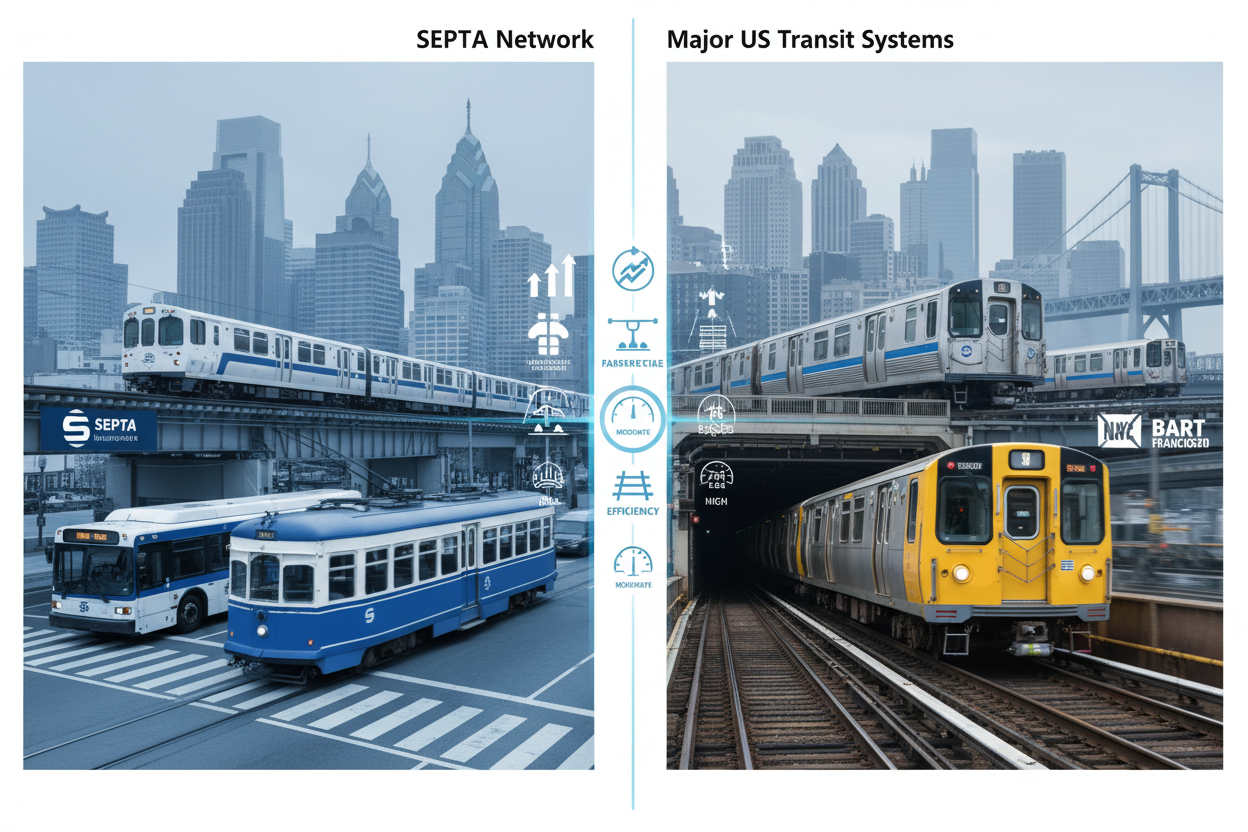
The Regional Rail network extends SEPTA’s reach far beyond the city limits, with 13 lines stretching into the Pennsylvania suburbs, New Jersey, and Delaware. This suburban connectivity rivals systems found in cities like Chicago and Boston, though it operates with less frequency than some commuters would prefer. During my conversations with regular SEPTA users, the consensus often centers on the system’s extensive coverage rather than its speed or reliability.
Ridership and Usage Patterns Compared to Major Cities
When examining ridership statistics, Philadelphia’s public transportation usage tells an interesting story about American urban mobility patterns. SEPTA ranks as the fifth-largest public transit system in the United States by ridership, trailing behind New York’s MTA, Los Angeles Metro, Chicago’s CTA, and Washington Metro. However, these raw numbers don’t tell the complete story of how Philadelphians actually use public transportation in their daily lives.
Philadelphia residents rely on public transit at higher rates than most American cities outside of New York and San Francisco. Approximately 26% of Philadelphia workers use public transportation to commute to work, compared to just 9% in Los Angeles and 15% in Chicago. This high usage rate reflects both the density of Philadelphia’s urban core and the relative accessibility of its transit network compared to car-dependent cities in the South and West.
The seasonal variations in SEPTA ridership also reveal interesting patterns about how weather and events affect transit usage. Unlike cities with more temperate climates, Philadelphia sees significant ridership fluctuations during harsh winter months, though not to the extent experienced by cities like Boston or Minneapolis. Summer months bring increased tourism-related ridership, particularly on routes serving popular destinations like Independence Hall and the Philadelphia Museum of Art.
Infrastructure Quality and Modernization Efforts
The age and condition of Philadelphia’s transit infrastructure present both advantages and challenges when compared to other major metropolitan areas. Many of SEPTA’s subway stations date back to the early 20th century, giving them a historic character that newer systems lack. However, this age also means that accessibility improvements and modernization efforts require significant investment and careful planning around existing structures.
Recent infrastructure improvements have focused on making stations ADA-compliant and upgrading aging equipment. The ongoing renovation of key stations like 30th Street and the installation of new railcars represent substantial investments in the system’s future. These efforts mirror similar modernization programs in cities like Washington D.C., where Metro has undertaken extensive platform reconstruction, and Boston, where the MBTA has focused on accessibility improvements.
Philadelphia’s signal systems and track infrastructure generally receive positive marks from transit experts, particularly compared to the aging systems in New York City. The Market-Frankford and Broad Street Lines operate with relatively modern signaling that allows for consistent service intervals. However, the Regional Rail network still relies on older infrastructure that sometimes leads to delays, especially during extreme weather events.
Cost Effectiveness and Affordability Analysis
Transit affordability represents a crucial factor in determining how accessible public transportation remains for residents across different income levels. SEPTA’s fare structure positions Philadelphia as moderately priced compared to other major metropolitan areas, though recent fare increases have sparked debate about transit equity and accessibility.
A single ride on SEPTA costs $2.50 for subway and trolley services, placing it below New York City’s $2.90 fare but above cities like Atlanta, where basic MARTA rides cost $2.50. However, SEPTA’s monthly pass options provide significant savings for regular commuters, with unlimited rides available for $96 per month. This pricing structure compares favorably to cities like San Francisco, where monthly passes can exceed $150, but falls short of more subsidized systems in cities like Seattle.
The introduction of SEPTA Key, the system’s electronic fare payment method, has streamlined the payment process while providing opportunities for fare capping and reduced-price programs. Low-income fare assistance programs help ensure that cost doesn’t become a barrier to transit access, though advocates argue that more aggressive affordability measures could increase ridership among Philadelphia’s most vulnerable populations.
Service Frequency and Reliability Metrics
Service reliability remains one of the most important factors in determining whether residents choose public transportation over driving or other alternatives. SEPTA’s performance in this area shows both strengths and areas for improvement when measured against peer transit systems across the country.
The Market-Frankford and Broad Street Lines generally operate with good frequency during peak hours, with trains arriving every 3-5 minutes during rush periods. This frequency matches or exceeds service levels in cities like Atlanta or Miami, though it falls short of the intensive service provided by New York’s subway system. Off-peak service, particularly on weekends and evenings, represents an area where Philadelphia lags behind cities like Washington D.C., where Metro maintains more consistent service throughout the day.
Weather-related delays affect SEPTA’s reliability, particularly during winter storms and extreme heat events. However, the system’s performance during adverse conditions generally surpasses that of cities with less robust infrastructure. The enclosed nature of most subway lines provides protection from weather that surface-running systems in cities like Los Angeles cannot match.
On-time performance statistics show SEPTA achieving approximately 85% on-time performance for rapid transit services, which places it in the middle range among major American transit systems. Cities like Portland and Minneapolis often achieve higher reliability rates, while systems in older cities like Boston and New York face similar challenges with aging infrastructure and high ridership demands.
Coverage Area and Accessibility Comparison
The geographic scope of Philadelphia’s public transportation network reflects the city’s compact urban form and the surrounding suburban development patterns. SEPTA serves approximately 2,200 square miles across five counties, providing transit access to both dense urban neighborhoods and suburban communities that rely on park-and-ride facilities.
Philadelphia’s transit coverage within the city limits exceeds that of many comparable cities, with most neighborhoods falling within a reasonable walking distance of bus or rail service. The grid-like street pattern in much of the city facilitates efficient bus routing, while the spoke-and-hub design of the rail system ensures that most destinations remain accessible with at most one transfer.
Suburban coverage through Regional Rail provides connectivity that rivals systems in cities like Chicago and Boston, though service frequency to outlying areas remains lower than many commuters prefer. The integration between different modes of transit – subway, trolley, bus, and regional rail – creates a comprehensive network that serves diverse travel patterns throughout the metropolitan area.
Future Development and Expansion Plans
Philadelphia’s public transportation future includes several significant projects that could reshape how the system compares to other major cities. The proposed King of Prussia Rail extension would extend Regional Rail service to one of the region’s largest employment centers, potentially increasing ridership and improving suburban connectivity.
Bus rapid transit development along Roosevelt Boulevard represents another major initiative that could improve service quality and attract new riders. This project reflects similar BRT investments in cities like Cleveland and Indianapolis, where dedicated bus lanes and enhanced stations have improved transit performance and ridership.
Electrification of additional Regional Rail lines and the potential for expanded trolley service demonstrate SEPTA’s commitment to sustainable transportation options. These environmental considerations align with trends in cities like Seattle and Portland, where transit agencies prioritize electric and low-emission vehicles.
The Verdict: Philadelphia’s Transit Strengths and Challenges
After examining Philadelphia’s public transportation system alongside those of other major American cities, several key themes emerge that define SEPTA’s position in the national transit landscape. The system’s comprehensive coverage, historic character, and strong ridership numbers demonstrate genuine strengths that many cities would envy. The preservation of trolley infrastructure and the extensive Regional Rail network provide Philadelphia with transit options that disappeared from most American cities decades ago.
However, challenges around service frequency, infrastructure modernization, and suburban connectivity reveal areas where Philadelphia could learn from the successes of other metropolitan areas. Cities like Washington D.C. and Portland offer examples of how strategic investments in frequency and reliability can attract choice riders, while systems in San Francisco and Seattle demonstrate how integration with regional transportation planning can create more seamless travel experiences.
The ultimate assessment of Philadelphia’s public transportation system depends largely on what you value most in urban mobility. For comprehensive coverage and historic charm, SEPTA ranks among the nation’s finest transit systems. For cutting-edge technology and frequent service, other cities may offer superior experiences. As Philadelphia continues to invest in its transportation infrastructure, the city has the opportunity to build upon its existing strengths while addressing the challenges that prevent SEPTA from reaching its full potential as a world-class transit system.