Philadelphia’s Most Photogenic Doorways and Architecture Details: A Visual Journey Through the City of Brotherly Love
Walking through Philadelphia’s historic neighborhoods feels like stepping into a living museum where every corner reveals architectural treasures waiting to be captured. From the cobblestone streets of Old City to the tree-lined avenues of Rittenhouse Square, the city’s doorways and architectural details tell stories spanning over three centuries. Whether you’re a professional photographer, an Instagram enthusiast, or simply someone who appreciates beautiful design, Philadelphia offers an endless array of photogenic facades that showcase the evolution of American architecture.
The city’s unique blend of colonial history, Victorian grandeur, and modern innovation creates a photographer’s paradise. Each neighborhood presents its own distinct character, from the Federal-style townhouses with their elegant fanlights to the ornate Brownstone mansions adorned with intricate ironwork. This architectural diversity makes Philadelphia one of America’s most visually compelling cities for capturing stunning doorway photography and detailed architectural elements.
Historic Old City: Where American Architecture Began
Old City stands as Philadelphia’s crown jewel for historic doorway photography, where Georgian and Federal-style architecture dominates the landscape. The area between 2nd and 6th Streets offers some of the most photographed entrances in the entire city, with many buildings dating back to the 18th and early 19th centuries.
Elfreth’s Alley, often called America’s oldest continuously inhabited residential street, presents an incredible collection of colonial doorways that transport visitors back in time. The narrow brick houses feature simple yet elegant entrances with paneled wooden doors, brass hardware, and charming fanlights that create perfect geometric compositions. The morning light filtering through the alley creates dramatic shadows that enhance the texture of the aged brick and weathered wood.
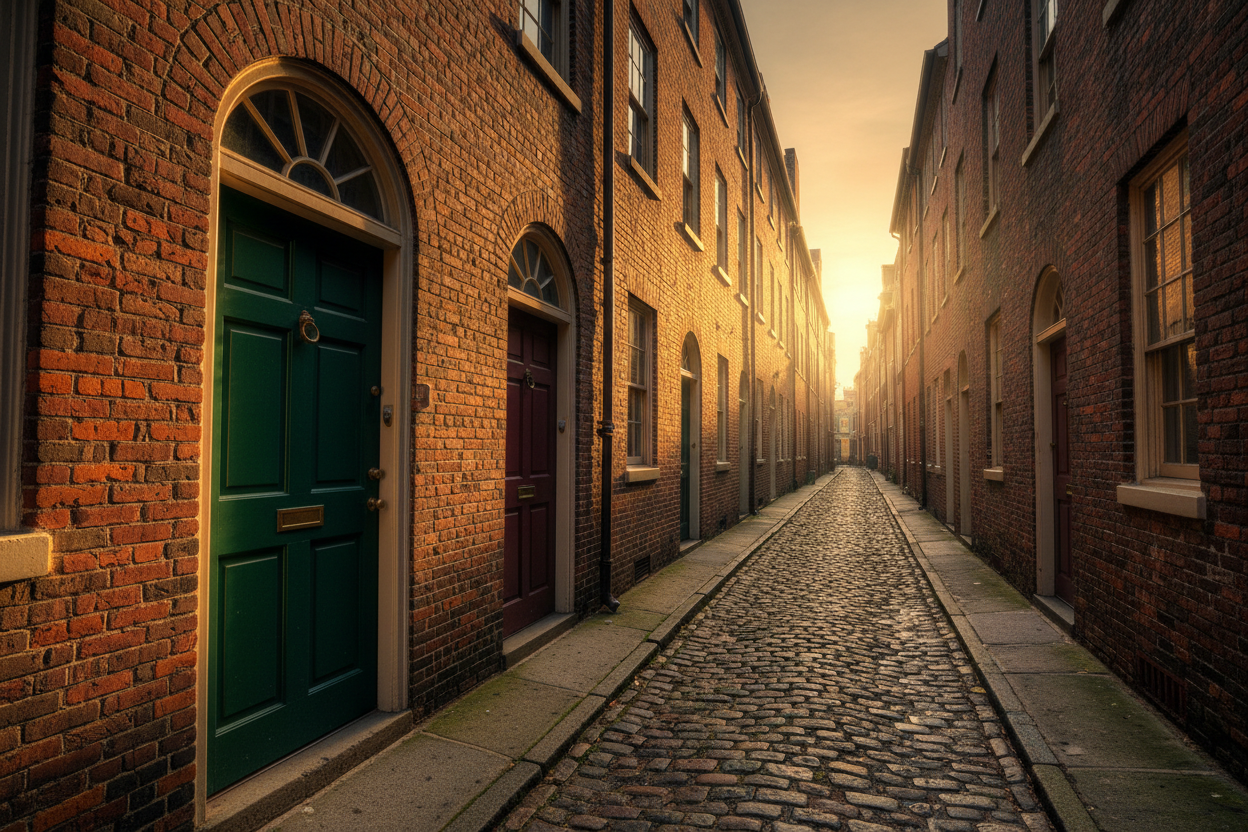
The Betsy Ross House at 239 Arch Street showcases a quintessential colonial doorway with its six-panel door painted in deep blue, flanked by shuttered windows and topped with a graceful fanlight. The contrast between the white window trim and red brick facade creates a striking color palette that photographs beautifully in both natural and golden hour lighting.
Independence Hall’s architectural details deserve special attention, particularly the symmetrical Georgian facade with its centered doorway crowned by an elaborate pediment. The building’s precise proportions and classical elements demonstrate the refined taste of 18th-century Philadelphia’s master builders, making it an essential stop for architecture photography enthusiasts.
Society Hill: Federal Elegance and Refined Details
Society Hill represents Philadelphia’s Federal period at its finest, where refined doorways and sophisticated architectural details reflect the prosperity of early 19th-century merchants and professionals. The neighborhood’s tree-lined streets create natural frames for photographing the elegant townhouse entrances that define this historic district.
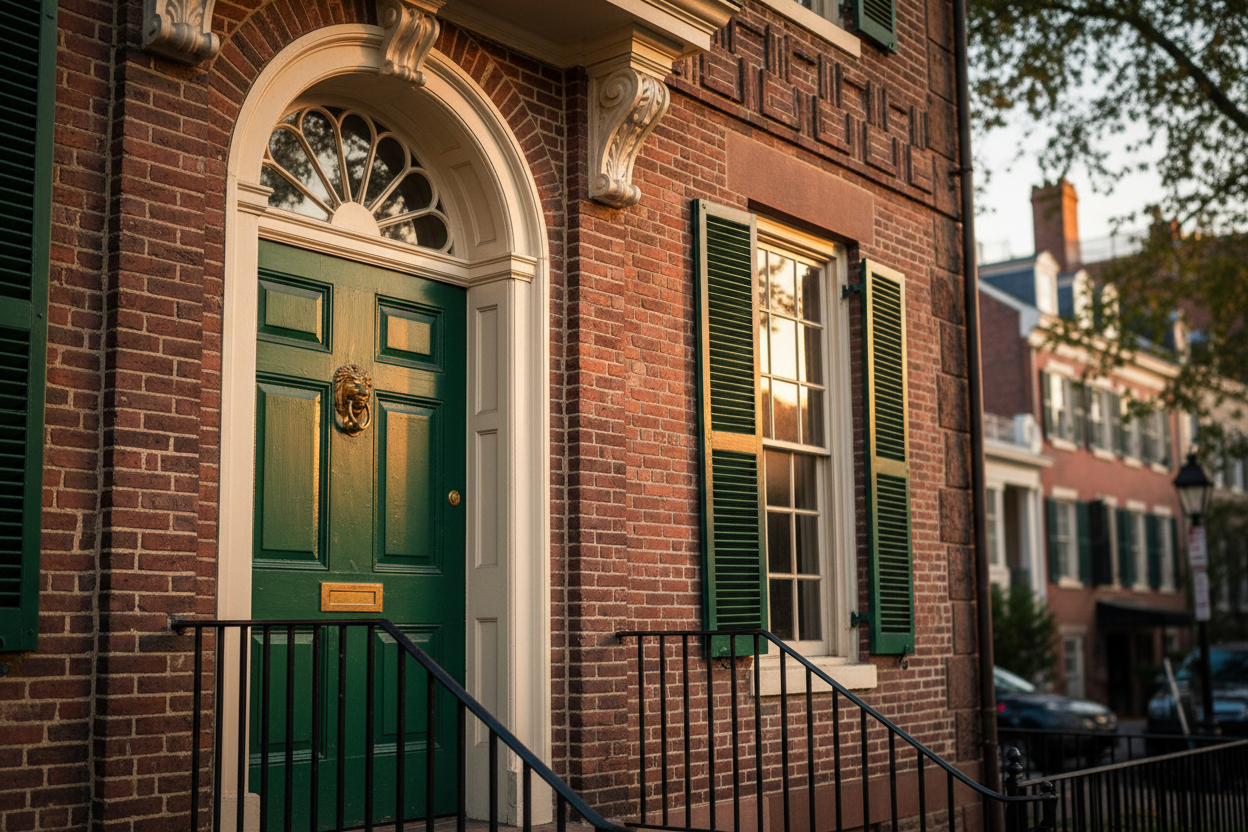
The typical Society Hill doorway features a six-panel door painted in historically accurate colors like deep green, burgundy, or classic black, often accompanied by brass hardware and decorative door knockers. Many entrances are enhanced by semicircular or elliptical fanlights with delicate glazing bars that create intricate shadow patterns when backlit by afternoon sun.
Pine Street between 3rd and 6th Streets offers an exceptional concentration of photogenic doorways, where Federal-style townhouses display their original architectural integrity. The subtle variations in door surrounds, from simple flat trim to more elaborate molded casings, provide endless opportunities for comparative photography that highlights the evolution of Federal-style design.
The Philadelphia Contributionship building at 212 South 4th Street presents one of the neighborhood’s most photographed doorways, featuring a magnificent arched entrance with keystone detailing and flanking pilasters. The building’s fire mark plaques add historical context and visual interest to architectural detail photography.
Rittenhouse Square: Victorian Grandeur and Brownstone Beauty
p>The Rittenhouse Square area showcases Philadelphia’s Victorian-era prosperity through its collection of elaborate brownstone mansions and ornate architectural details. The neighborhood’s wide sidewalks and mature trees create ideal conditions for photographing the intricate doorways that characterize late 19th-century residential architecture.
The brownstone row houses along Delancey Place present some of the city’s most ornate doorways, featuring carved stone surrounds, elaborate pediments, and decorative ironwork that demonstrates the craftsmanship of Philadelphia’s Victorian-era artisans. The warm brown sandstone provides a rich backdrop that complements both the deep shadows and bright highlights essential for dramatic architectural photography.
Many Rittenhouse area doorways feature impressive stoops with ornate iron railings that create leading lines and add depth to photographic compositions. The geometric patterns in the ironwork, combined with the carved stone details of the door surrounds, offer opportunities for both wide establishing shots and intimate detail photography.
The Rosenbach Museum at 2008-2010 Delancey Place exemplifies Victorian residential architecture with its paired doorways featuring elaborate carved stone surrounds and decorative pediments. The building’s well-preserved architectural details provide excellent examples of the ornate styling that defined Philadelphia’s Gilded Age neighborhoods.
Washington Square West: Bohemian Charm and Artistic Details
Washington Square West, affectionately known as the Gayborhood, combines historic Philadelphia architecture with contemporary artistic flair, creating unique opportunities for doorway photography that captures both preservation and creative expression. The neighborhood’s mix of 18th-century townhouses and converted industrial buildings provides diverse architectural subjects within a compact area.
Antique Row along Pine Street features numerous historic buildings with restored doorways that maintain their original character while serving modern commercial purposes. The contrast between carefully preserved architectural details and contemporary signage creates interesting juxtapositions that reflect Philadelphia’s ongoing evolution.
Many buildings in Washington Square West feature painted doors in vibrant colors that reflect the neighborhood’s artistic character. These bold color choices create striking photographs against the traditional brick and stone facades, demonstrating how contemporary touches can enhance rather than detract from historic architecture.
The area around 12th and Pine Streets offers excellent examples of adaptive reuse, where historic doorways have been sensitively restored and integrated into modern commercial spaces. These renovations provide opportunities to photograph the successful marriage of historic preservation and contemporary design.
Northern Liberties and Fishtown: Industrial Heritage and Modern Revival
Philadelphia’s former industrial neighborhoods of Northern Liberties and Fishtown present a different type of architectural photography opportunity, where converted factories and warehouses display the robust construction and functional beauty of 19th and early 20th-century industrial architecture.
The large-scale doorways and loading dock entrances found throughout these neighborhoods offer dramatic subjects for architectural photography. The massive timber doors, heavy iron hardware, and industrial proportions create powerful compositions that emphasize the strength and permanence of Philadelphia’s manufacturing heritage.
Many converted industrial buildings feature restored original doorways alongside contemporary additions, creating interesting contrasts between different eras of construction. The juxtaposition of weathered brick, aged timber, and modern materials provides rich textures and varied surfaces that photograph beautifully under different lighting conditions.
The Schmidt’s Brewery complex in Northern Liberties showcases excellent examples of industrial architecture photography opportunities, where massive arched doorways and decorative brickwork demonstrate the aesthetic considerations that influenced even utilitarian industrial construction.
Photography Tips for Capturing Philadelphia’s Architectural Details
Successfully photographing Philadelphia’s doorways and architectural details requires understanding both technical camera settings and the unique characteristics of urban architectural photography. The city’s narrow streets and varied building heights create challenging lighting conditions that demand flexible shooting techniques.
Golden hour photography works exceptionally well for Philadelphia’s brick and stone architecture, as the warm light enhances the natural colors and creates dramatic shadow patterns that emphasize architectural details. Early morning light often provides the cleanest conditions with fewer pedestrians and vehicles cluttering compositions.
Consider using a polarizing filter to reduce reflections from windows and enhance the saturation of brick and stone surfaces. This technique proves particularly effective when photographing doorways with glass elements or buildings with reflective materials that might otherwise create distracting glare.
Pay attention to the seasonal changes that affect architectural photography in Philadelphia. Spring and fall offer the best combination of comfortable weather and attractive lighting, while winter’s bare trees often reveal architectural details that might be obscured during leafier months.
Preserving Philadelphia’s Architectural Heritage Through Photography
Documenting Philadelphia’s doorways and architectural details serves an important preservation function, creating visual records of the city’s built environment for future generations. Many of the architectural elements that make Philadelphia so photogenic today face ongoing threats from development pressure, weather damage, and deferred maintenance.
Photography can play a crucial role in raising awareness about the importance of historic preservation and the value of maintaining Philadelphia’s architectural character. By capturing and sharing images of the city’s most beautiful doorways and details, photographers contribute to a broader appreciation for the craftsmanship and design principles that define Philadelphia’s visual identity.
Consider contributing your architectural photography to local historical societies or preservation organizations that use visual documentation to support their advocacy efforts. These organizations often need high-quality images for publications, websites, and presentations that help build public support for preservation initiatives.
Conclusion
Philadelphia’s doorways and architectural details represent more than just photogenic subjects; they embody the city’s rich history, cultural diversity, and ongoing evolution. From the simple elegance of colonial entrances in Old City to the ornate grandeur of Victorian brownstones in Rittenhouse Square, each neighborhood offers unique opportunities to capture the architectural heritage that makes Philadelphia one of America’s most visually compelling cities.
The art of photographing architectural details requires patience, technical skill, and an appreciation for the historical and cultural contexts that shaped these beautiful buildings. Whether you’re documenting a perfectly preserved Federal-style fanlight or capturing the weathered patina of an industrial doorway, each photograph contributes to our collective understanding and appreciation of Philadelphia’s architectural legacy.
As you explore Philadelphia’s neighborhoods with camera in hand, remember that you’re not just creating beautiful images – you’re participating in the ongoing story of a city that has successfully balanced preservation with progress for over three centuries. The doorways and architectural details you photograph today will serve as tomorrow’s historical documents, ensuring that future generations can appreciate the craftsmanship, artistry, and cultural values that these architectural elements represent.