Why Philadelphia Has More Public Art Per Capita Than Paris: A Tale of Two Cities and Their Artistic Souls
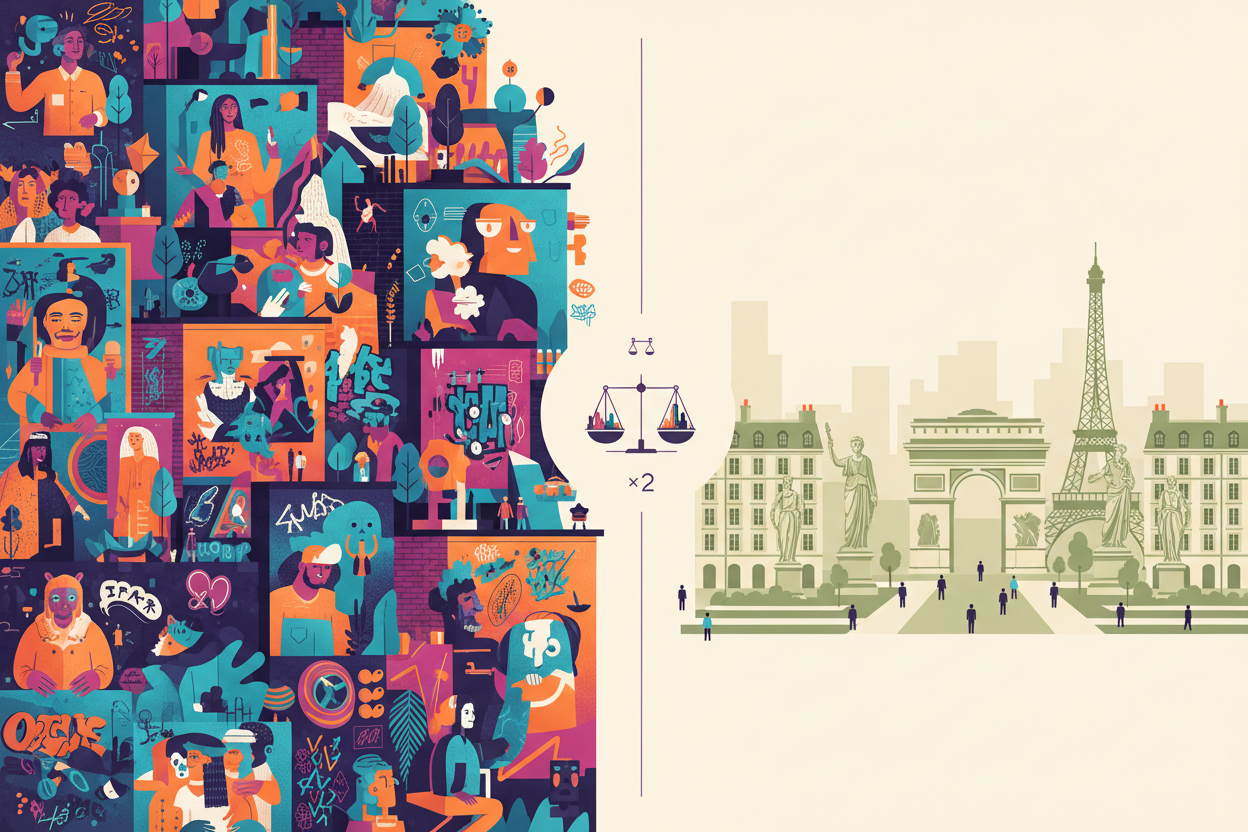
When you think of cities renowned for their art, Paris likely springs to mind immediately. The City of Light, with its world-famous Louvre, countless galleries, and romantic streetscapes that have inspired artists for centuries. But here’s a surprising fact that might make you reconsider your assumptions about artistic capitals: Philadelphia actually boasts more public art per capita than Paris. Yes, you read that correctly – the City of Brotherly Love outshines the French capital when it comes to accessible, street-level artistic expression.
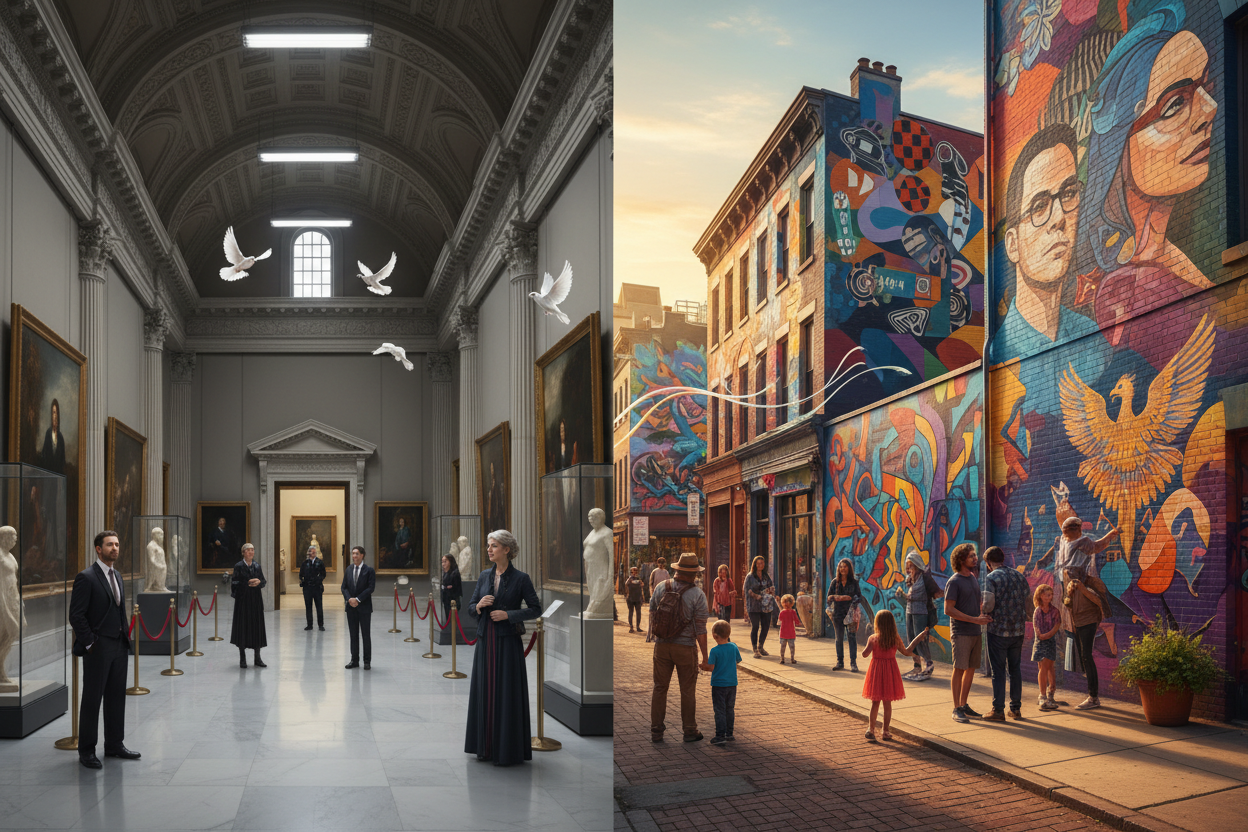
This revelation challenges our preconceptions about where art truly thrives and raises fascinating questions about how cities cultivate creative expression. While Paris may house priceless masterpieces behind museum walls, Philadelphia has embraced a different philosophy – one that brings art directly to the people, transforming everyday spaces into galleries that everyone can enjoy, regardless of their ability to afford museum admission.
The Numbers Don’t Lie: Philadelphia’s Public Art Advantage
Philadelphia’s commitment to public art becomes clear when you examine the statistics. The city is home to over 4,000 public artworks, ranging from massive murals that cover entire building sides to intricate sculptures tucked into neighborhood corners. With a population of approximately 1.6 million people, this translates to roughly 2.5 pieces of public art per 1,000 residents.
Paris, despite its artistic reputation, has fewer public artworks relative to its population of 2.1 million. While the exact count varies depending on how you define “public art,” most estimates place Paris at around 1.8 pieces per 1,000 residents. This difference might seem small, but it represents a fundamentally different approach to making art accessible to citizens.
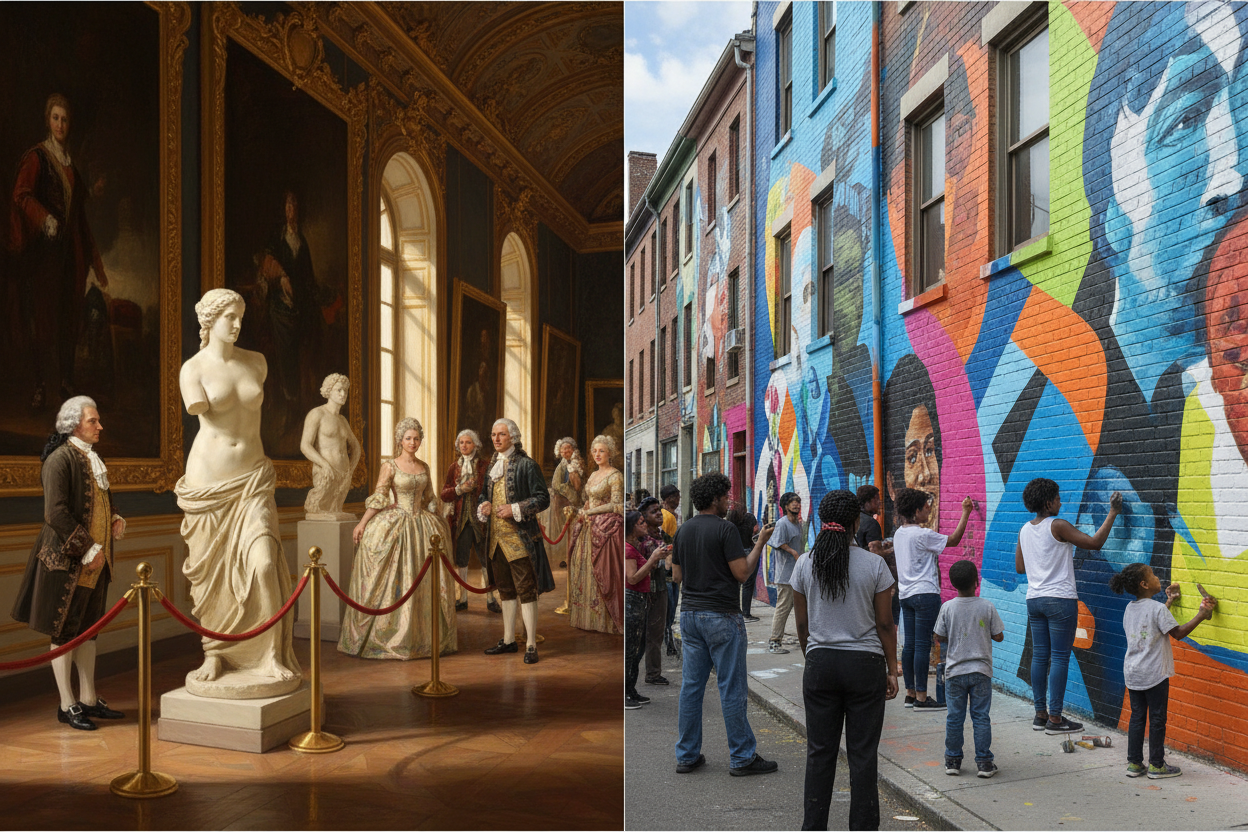
The distinction becomes even more pronounced when you consider that Philadelphia’s public art is often more visible and integrated into daily life. Unlike Paris, where much of the city’s artistic heritage is concentrated in specific districts or behind museum doors, Philadelphia’s art is woven throughout its neighborhoods, creating unexpected moments of beauty in the most ordinary places.
The Mural Arts Program: Philadelphia’s Secret Weapon
At the heart of Philadelphia’s public art success story lies the Mural Arts Program, launched in 1984 as an innovative approach to combat graffiti while simultaneously beautifying the city. What started as an anti-graffiti initiative has evolved into the largest public art program in the United States, and arguably one of the most successful urban arts programs in the world.
The program has produced over 4,000 murals throughout the city, each one telling a story about the community it serves. These aren’t just decorative pieces – they’re powerful narratives that address social issues, celebrate local heroes, and give voice to neighborhoods that might otherwise go unheard. The program employs professional artists while also training community members, creating a sustainable model that keeps art creation local and meaningful.
What makes Philadelphia’s approach particularly effective is its grassroots nature. Unlike top-down cultural initiatives that might feel imposed, the Mural Arts Program works directly with communities to identify what stories need telling and which walls need transforming. This collaborative approach ensures that the art resonates with local residents while contributing to the city’s overall cultural landscape.
Historical Context: How Two Cities Developed Different Artistic DNA
Understanding why Philadelphia surpasses Paris in public art requires looking at how each city’s relationship with art evolved over time. Paris developed its artistic identity during periods when art was primarily the domain of the wealthy and powerful. The city’s great museums and monuments were built to showcase the collections of kings and emperors, creating a model where art was something to be preserved, protected, and viewed from a respectful distance.
Philadelphia, on the other hand, emerged as a major city during the democratic experiment of the early United States. Founded on principles of equality and accessibility, the city developed a more egalitarian approach to culture from its inception. The same spirit that made Philadelphia the birthplace of American democracy also fostered an environment where art was seen as something that should belong to everyone, not just the elite.
The industrial history of both cities also played a role. While Paris maintained its status as a center of high culture, Philadelphia became a working-class city where practical creativity flourished. This blue-collar artistic tradition valued function alongside form, leading to an appreciation for art that serves the community rather than existing purely for aesthetic contemplation.
Community Engagement: Art as Social Catalyst
Perhaps the most significant difference between Philadelphia and Paris lies in how each city views the role of public art in community building. Philadelphia has embraced art as a tool for social change, economic development, and community healing. Many of the city’s murals address difficult topics like addiction, violence, and inequality, using artistic expression to start conversations and build connections between diverse groups of people.
The city’s approach recognizes that art can be transformative not just aesthetically, but socially and economically. Neighborhoods with significant mural presence often experience reduced crime rates, increased property values, and stronger community cohesion. This practical benefit of public art creates a positive feedback loop – communities see tangible improvements from artistic investment, leading to greater support for continued programs.
Philadelphia’s public art also serves as a form of cultural preservation, documenting the stories of immigrant communities, celebrating local achievements, and maintaining connections to the past even as neighborhoods change. This living history approach makes the city’s art feel vital and relevant rather than static or purely decorative.
Economic Impact: When Art Drives Urban Development
The economic implications of Philadelphia’s public art abundance extend far beyond tourism, though the city certainly benefits from visitors drawn to its outdoor galleries. The real economic power lies in how public art contributes to neighborhood revitalization and property development. Areas that might otherwise struggle with disinvestment become destinations when transformed by compelling murals and sculptures.
Local businesses report increased foot traffic in areas with significant public art presence. Restaurants, shops, and services benefit from the pedestrian activity generated by people seeking out murals and installations. This economic spillover effect means that investment in public art often pays dividends that extend throughout the community.
The job creation aspect is equally important. Philadelphia’s commitment to public art supports not just established artists, but also provides training and employment opportunities for community members. The Mural Arts Program alone has provided work for thousands of people over its decades of operation, creating a sustainable creative economy that keeps artistic talent in the city.
Accessibility and Democracy in Art
One of the most compelling aspects of Philadelphia’s public art advantage is how it democratizes access to cultural experiences. While visiting world-class museums requires time, money, and often advance planning, encountering Philadelphia’s public art happens naturally during daily life. A trip to the grocery store might lead you past a stunning mural, or a walk through the neighborhood could reveal a sculpture you’ve never noticed before.
This accessibility is particularly important for families with children, elderly residents, and anyone for whom traditional cultural institutions might feel intimidating or unwelcoming. Public art meets people where they are, literally and figuratively, breaking down barriers between “high” and “popular” culture.
The educational value of this approach cannot be overstated. Children growing up in Philadelphia develop visual literacy and cultural appreciation simply by moving through their city. They learn to read artistic symbols, understand cultural references, and see creativity as a normal part of their environment rather than something special and separate from daily life.
Challenges and Criticisms: The Other Side of the Canvas
Philadelphia’s public art success isn’t without its challenges and critics. Maintaining thousands of outdoor artworks requires ongoing investment and attention. Weather, vandalism, and urban development constantly threaten existing pieces, while the sheer volume of art can make preservation efforts overwhelming.
Some critics argue that focusing on public art can become a form of “artwashing” – using cultural improvements to mask deeper problems with housing, education, or economic inequality. There’s validity to concerns about whether mural programs sometimes serve as substitutes for more fundamental urban investments.
Additionally, the community-driven nature of Philadelphia’s public art, while generally positive, can sometimes lead to conflicts over content, style, or placement. Balancing artistic freedom with community input requires careful navigation and doesn’t always result in outcomes that satisfy everyone involved.
Looking Forward: Lessons for Cities Worldwide
Philadelphia’s achievement in surpassing Paris in public art per capita offers valuable lessons for cities around the world seeking to enhance their cultural landscapes. The key elements of Philadelphia’s success – community engagement, sustained institutional support, and a commitment to accessibility – provide a replicable model for urban cultural development.
The city’s approach demonstrates that public art works best when it grows organically from community needs and interests rather than being imposed from above. This bottom-up model creates stronger community ownership and ensures that artistic investments address real local priorities.
As cities worldwide grapple with issues of inequality, community cohesion, and economic development, Philadelphia’s example suggests that strategic investment in public art can address multiple challenges simultaneously. The city has shown that art isn’t a luxury to be added after other urban problems are solved – it’s a tool that can help solve those problems.
The story of Philadelphia’s public art abundance compared to Paris reminds us that cultural vitality isn’t always found where we expect it. Sometimes the most innovative and impactful artistic expressions emerge not from traditional cultural capitals, but from cities willing to experiment with new models of community engagement and creative expression. In choosing to bring art to the streets rather than confining it to galleries, Philadelphia has created something truly special – a city where culture belongs to everyone, and everyone belongs to the culture.