How Philadelphia’s Benjamin Franklin Parkway Compares to Paris’ Champs-Élysées: A Tale of Two Iconic Boulevards
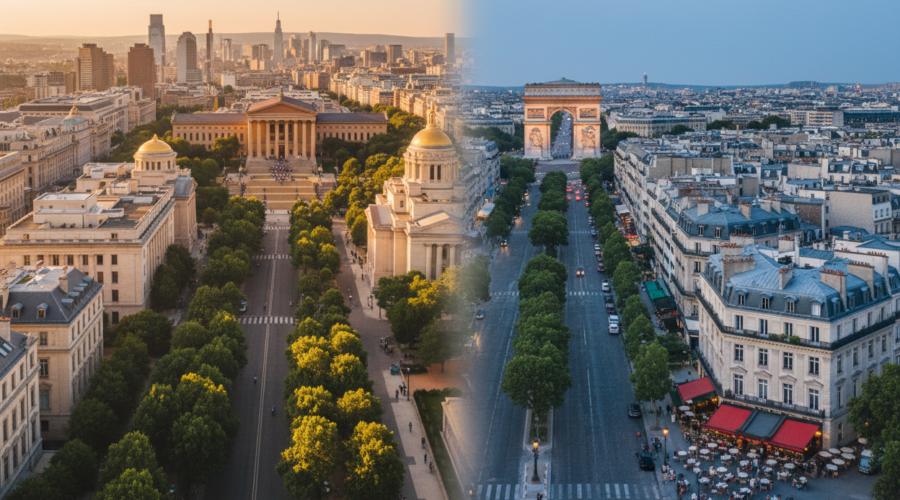
When you think of grand urban boulevards that define a city’s character, two magnificent stretches of road immediately come to mind: Philadelphia’s Benjamin Franklin Parkway and Paris’ legendary Champs-Élysées. Both serve as cultural arteries that pulse with the heartbeat of their respective cities, yet each tells a distinctly different story about urban planning, cultural identity, and the evolution of metropolitan life.
Having walked both boulevards countless times, I’ve always been fascinated by how these two streets, separated by an ocean and nearly two centuries of history, share remarkable similarities while maintaining their unique personalities. Let’s embark on a journey down these iconic pathways to discover what makes each special and how they stack up against one another.
The Birth of Two Boulevards: Historical Origins and Vision
The Champs-Élysées boasts a much longer pedigree, with its origins tracing back to 1667 when landscape architect André Le Nôtre extended the Tuileries Garden axis. What began as a simple tree-lined path gradually evolved into the “most beautiful avenue in the world,” as Parisians proudly call it today. The boulevard we recognize now took shape during Baron Haussmann’s massive renovation of Paris in the mid-19th century.
Philadelphia’s Benjamin Franklin Parkway, on the other hand, represents a much younger but equally ambitious vision. Conceived in the early 1900s as part of the City Beautiful movement, the Parkway was designed by French architects Jacques Greber and Paul Cret. Their goal was audacious: create America’s own Champs-Élysées that would rival the grandest European boulevards. Construction began in 1918, and the diagonal slash through Philadelphia’s rigid grid system was completed in the 1920s.
The timing difference reveals something profound about each boulevard’s character. The Champs-Élysées evolved organically over centuries, accumulating layers of history like sediment. The Benjamin Franklin Parkway was born from deliberate planning, a conscious attempt to inject European grandeur into an American city.
Architectural Grandeur: Museums, Monuments, and Magnificent Buildings
Both boulevards serve as open-air galleries of architectural achievement, though they showcase different eras and styles. The Champs-Élysées stretches 1.9 kilometers from Place de la Concorde to the Arc de Triomphe, creating one of the world’s most photographed urban vistas. The avenue’s Haussmann-era buildings maintain remarkable consistency, with their cream-colored limestone facades, wrought-iron balconies, and uniform height creating an elegant rhythm along the street.
The Benjamin Franklin Parkway spans 1.6 kilometers from City Hall to the Philadelphia Museum of Art, but what it lacks in length, it compensates for in cultural density. The boulevard hosts an impressive collection of world-class institutions: the Barnes Foundation, the Rodin Museum, the Franklin Institute, the Academy of Natural Sciences, and the crown jewel, the Philadelphia Museum of Art, whose steps Rocky Balboa made famous.
Where the Champs-Élysées prioritizes commercial grandeur with luxury boutiques like Louis Vuitton and Cartier occupying historic buildings, the Benjamin Franklin Parkway focuses on cultural and educational institutions. This fundamental difference reflects each city’s priorities and character – Paris as a global luxury capital, Philadelphia as a center of American learning and culture.
Cultural Significance and Daily Life
The cultural weight these boulevards carry cannot be overstated, though they bear it differently. The Champs-Élysées has witnessed some of history’s most dramatic moments: Napoleon’s funeral procession, Nazi occupation parades, and Charles de Gaulle’s triumphant liberation march. Today, it remains the stage for France’s most important celebrations, from Bastille Day military parades to World Cup victory celebrations that draw millions.
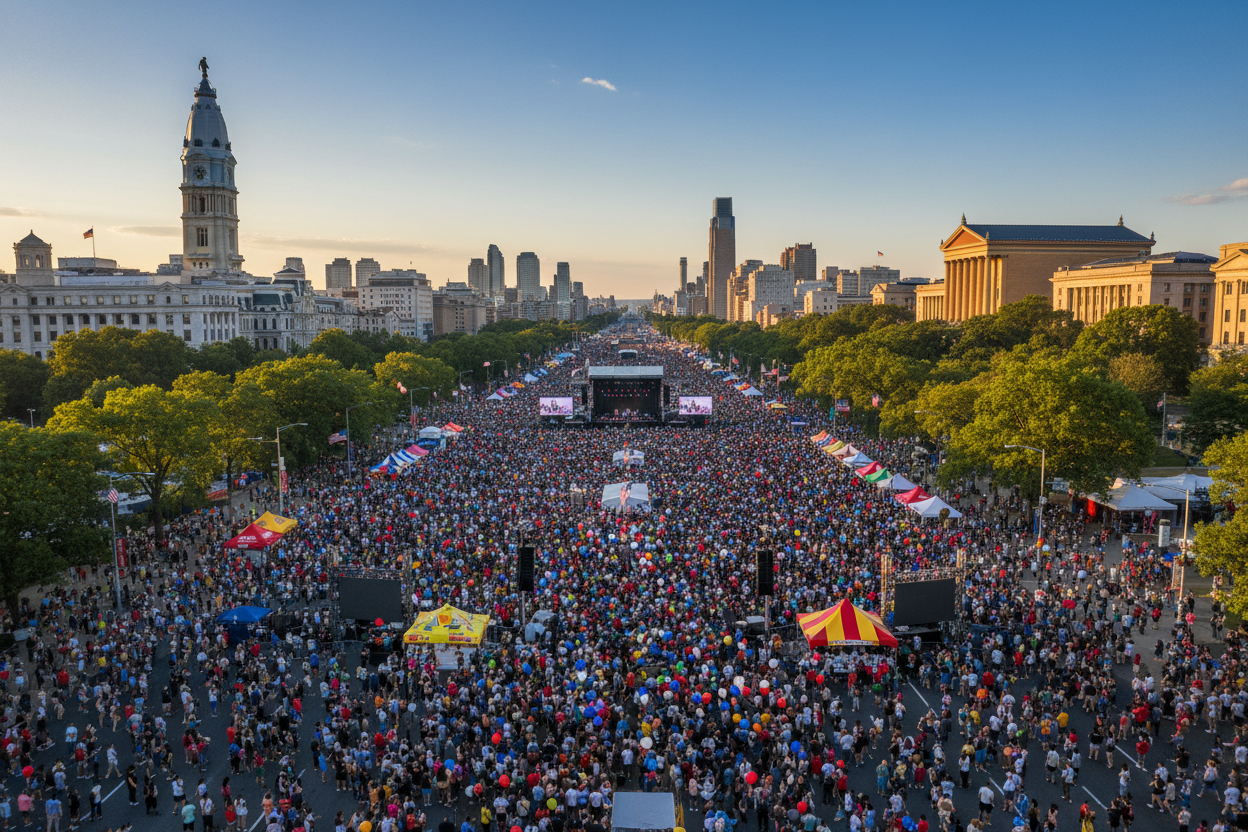
Philadelphia’s Benjamin Franklin Parkway may be younger, but it has quickly established itself as the city’s premier venue for major events. The Pope’s visit in 2015 drew over a million people to the Parkway, while the NFL Draft in 2017 transformed the boulevard into a massive outdoor celebration. The annual Thanksgiving Day Parade and various festivals throughout the year have made the Parkway central to Philadelphia’s civic life.
The daily rhythm of life differs significantly between the two. The Champs-Élysées buzzes with tourists year-round, creating a perpetual carnival atmosphere that can sometimes feel disconnected from authentic Parisian life. Locals often joke that real Parisians avoid the Champs-Élysées except for special occasions.
The Benjamin Franklin Parkway maintains a more organic relationship with Philadelphia residents. Joggers use it as a running route, families visit its museums regularly, and the surrounding neighborhoods feel genuinely lived-in rather than touristy. This accessibility gives the Parkway a more authentic connection to its city’s daily life.
Green Spaces and Urban Planning Excellence
Both boulevards demonstrate masterful integration of green space into urban environments, though with different approaches. The Champs-Élysées begins at the Tuileries Garden and ends at the Arc de Triomphe, with tree-lined sidewalks providing shade and beauty along its entire length. The careful placement of plane trees creates natural frames for architectural views while softening the urban hardscape.
The Benjamin Franklin Parkway takes a more varied approach to greenery. Logan Square (now Logan Circle) serves as a central green hub, while Eakins Oval provides a formal garden setting near the Art Museum. The Parkway’s design incorporates more varied landscaping, with different sections offering unique experiences – from the formal gardens near the museums to the more naturalistic plantings along other stretches.
Philadelphia’s boulevard also benefits from its connection to Fairmount Park, one of the largest urban park systems in America. This connection creates a green corridor that extends far beyond the Parkway itself, offering residents and visitors access to extensive recreational opportunities.
Shopping, Dining, and Commercial Appeal
The commercial aspects of these boulevards reveal stark contrasts in urban economics and culture. The Champs-Élysées ranks among the world’s most expensive retail real estate, with flagship stores for international luxury brands commanding premium rents. The avenue’s commercial success comes with a price – many complain it has become too commercialized, losing some of its Parisian charm to global retail uniformity.
The Benjamin Franklin Parkway takes a different approach entirely. Rather than focusing on retail, it emphasizes cultural commerce – the business of ideas, art, and education. The museums along the Parkway generate significant economic activity, but in a way that feels more aligned with the boulevard’s educational mission.
Dining experiences differ markedly as well. The Champs-Élysées offers everything from tourist-trap cafes to high-end restaurants, though locals often warn visitors that better food can be found elsewhere in Paris. The Benjamin Franklin Parkway’s dining scene centers around museum cafes and restaurants in nearby neighborhoods, creating a more integrated relationship with the surrounding city.
Accessibility and Transportation
Both boulevards excel in transportation connectivity, though they serve different urban mobility patterns. The Champs-Élysées benefits from Paris’s extensive metro system, with multiple stations providing easy access from anywhere in the city. The avenue’s integration into Paris’s broader transportation network makes it a natural gathering point and thoroughfare.
The Benjamin Franklin Parkway connects well to Philadelphia’s public transportation system, with multiple bus routes and subway access at both ends. However, Philadelphia’s car-centric culture means the Parkway also accommodates automobile traffic more extensively than its Parisian counterpart. This creates both opportunities and challenges – easier parking access but also more traffic congestion during peak times.
The walkability factor favors both boulevards, though in different ways. The Champs-Élysées offers wide sidewalks perfect for strolling, though crowds can make progress slow during peak tourist seasons. The Benjamin Franklin Parkway provides a more varied walking experience, with different sections offering unique perspectives and less consistent crowd density.
The Verdict: Different Strengths for Different Cities
Comparing the Benjamin Franklin Parkway to the Champs-Élysées ultimately reveals how successful urban planning reflects the character and values of its city. The Champs-Élysées embodies Paris’s role as a global cultural and luxury capital, a place where history, commerce, and spectacle converge in magnificent fashion. Its centuries of evolution have created layers of meaning that continue to accumulate with each passing year.
Philadelphia’s Benjamin Franklin Parkway represents American ambition and democratic ideals made manifest in urban form. It successfully transplanted European boulevard concepts to American soil while adapting them to serve a different culture’s needs. The Parkway’s focus on education, accessibility, and cultural institutions reflects Philadelphia’s identity as the birthplace of American democracy and a center of learning.
Both boulevards succeed brilliantly at what they set out to accomplish. The Champs-Élysées provides unmatched theatrical grandeur and commercial vitality, while the Benjamin Franklin Parkway offers cultural richness and authentic integration with city life. Rather than declaring one superior to the other, we should celebrate how each represents the best of its respective urban culture.
Whether you find yourself walking among the luxury boutiques of the Champs-Élysées or climbing the steps of the Philadelphia Museum of Art, you’re experiencing the power of thoughtful urban design to create spaces that elevate the human spirit. Both boulevards remind us that cities at their best don’t just house people – they inspire them.