How Philadelphia’s Neighborhoods Compare to European Cities: A Fascinating Urban Journey
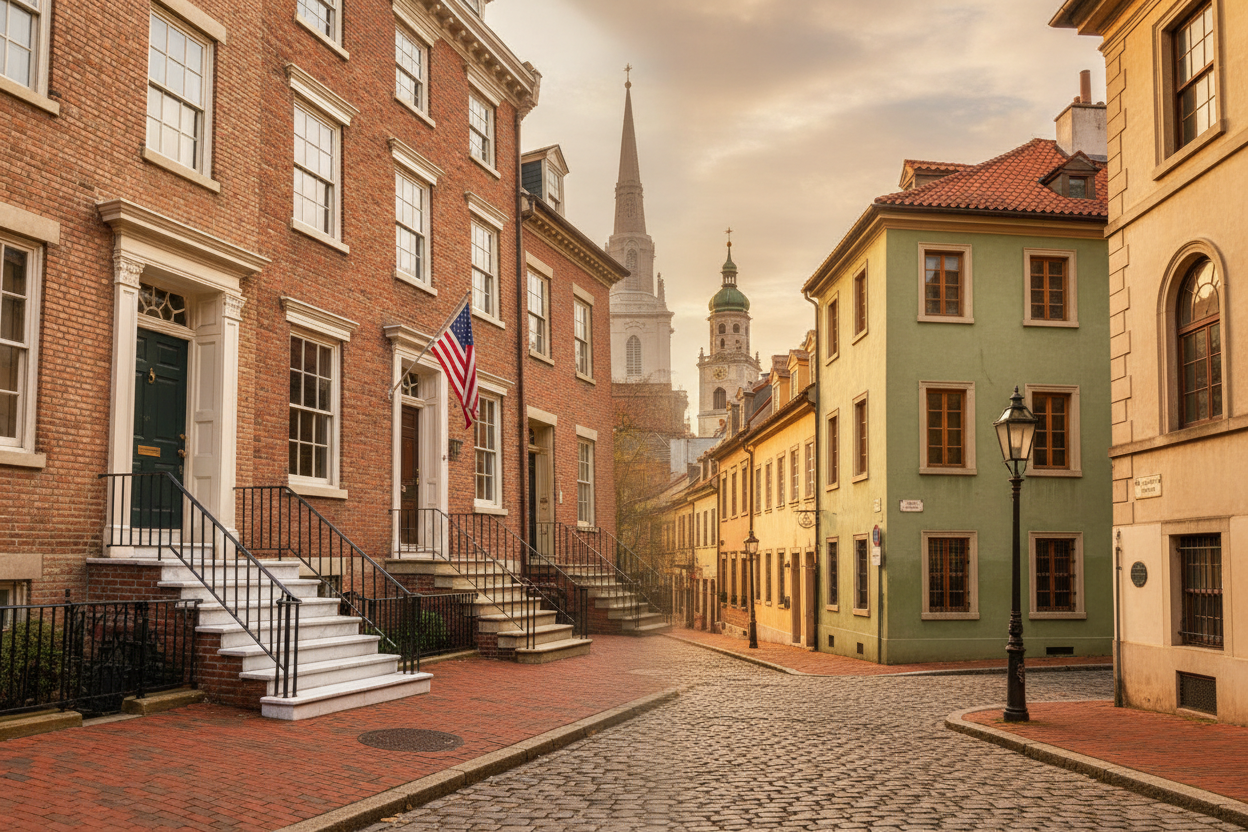
Walking through Philadelphia’s diverse neighborhoods, you might find yourself doing a double-take. Is that cobblestone street reminiscent of Prague? Does this tree-lined avenue remind you of Paris? Philadelphia’s rich architectural heritage and distinct neighborhood characters create surprising parallels with some of Europe’s most beloved cities. As America’s birthplace, Philadelphia developed during an era when European influence shaped urban planning, architecture, and cultural development, leaving behind a legacy that still echoes through its streets today.
From the colonial charm of Society Hill to the bohemian spirit of Northern Liberties, Philadelphia’s neighborhoods offer visitors and residents alike a taste of European urban living without crossing the Atlantic. Let’s explore how the City of Brotherly Love’s distinct districts mirror the character, architecture, and atmosphere of Europe’s most iconic destinations.
Old City Philadelphia: A Living Museum Like Prague’s Historic Quarter
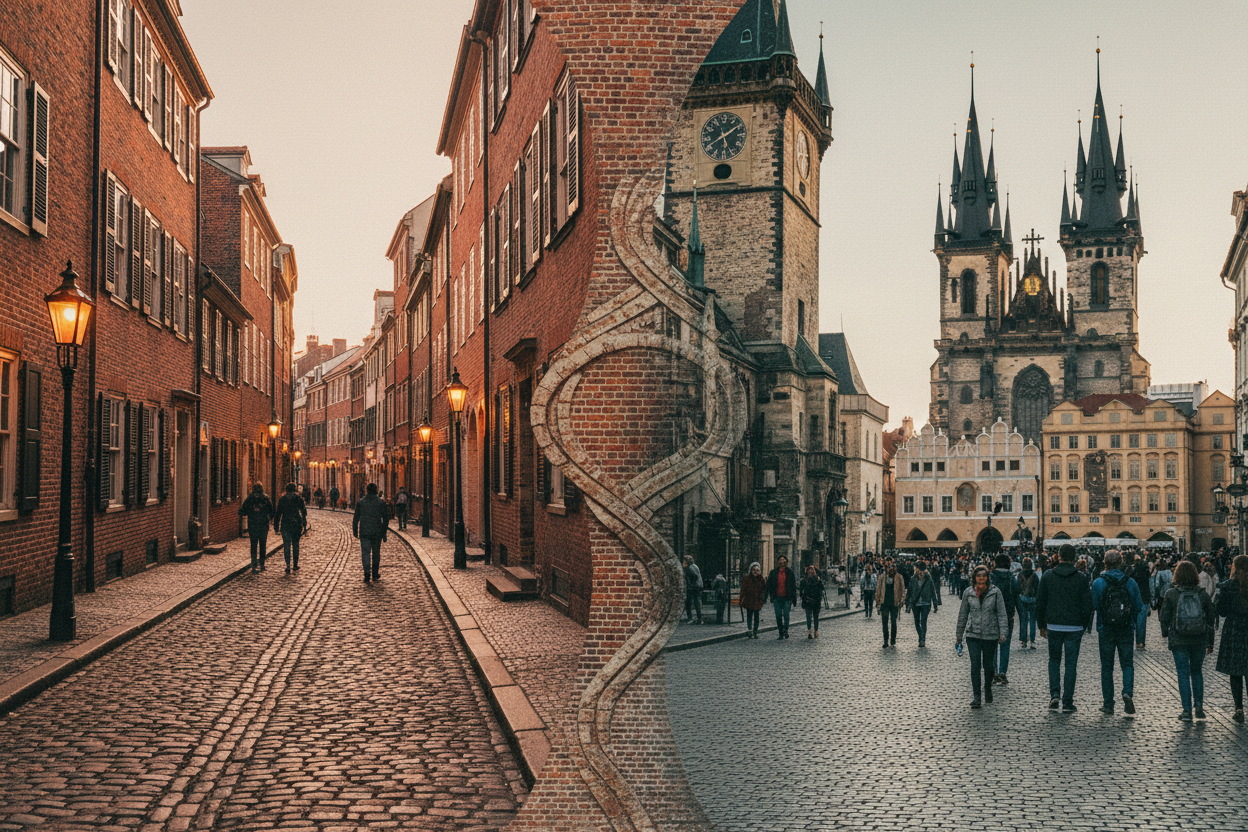
Old City Philadelphia serves as the city’s most obvious European parallel, drawing immediate comparisons to Prague’s Old Town. Both neighborhoods function as living museums where centuries of history unfold along cobblestone streets and through carefully preserved architecture. The narrow, winding streets of Old City, particularly around Elfreth’s Alley—America’s oldest continuously inhabited residential street—echo the medieval layout of Prague’s historic quarter.
The architectural similarities are striking. Old City’s 18th and 19th-century buildings, with their red brick facades and Georgian influences, create a visual harmony reminiscent of Prague’s Gothic and Baroque structures. Both neighborhoods successfully balance historical preservation with modern urban life, hosting galleries, restaurants, and boutiques within centuries-old walls.
What makes this comparison particularly compelling is how both areas serve as cultural and tourist hubs while maintaining authentic residential communities. Just as Prague’s Old Town Square buzzes with locals and visitors alike, Old City’s Independence Hall area creates a natural gathering place where history meets contemporary Philadelphia culture.

Society Hill: Philadelphia’s Answer to London’s Bloomsbury
Society Hill represents Philadelphia’s most refined residential neighborhood, drawing natural comparisons to London’s prestigious Bloomsbury district. Both areas showcase elegant Georgian and Federal-style architecture, with Society Hill’s meticulously maintained 18th and 19th-century townhouses mirroring the stately terraced houses that define Bloomsbury’s character.
The tree-lined streets of Society Hill, particularly around Washington Square, evoke the same sophisticated urban village atmosphere found in Bloomsbury’s garden squares. Both neighborhoods attract intellectuals, professionals, and artists who appreciate the combination of historical significance and urban convenience. Society Hill’s proximity to Independence National Historical Park parallels Bloomsbury’s relationship with the British Museum and University College London—both serving as intellectual and cultural anchors.
The residential patterns are remarkably similar too. Just as Bloomsbury’s residents enjoy private garden squares and well-maintained public spaces, Society Hill offers its residents beautifully landscaped pocket parks and the expansive Washington Square Park, creating an oasis of green space within the urban environment.
Rittenhouse Square: The Parisian Boulevard Experience
Rittenhouse Square stands as Philadelphia’s most European neighborhood, particularly evoking the elegant residential districts of Paris’s 7th and 16th arrondissements. The neighborhood’s central park, surrounded by luxury apartments and townhouses, mirrors the sophisticated urban planning that characterizes Paris’s finest residential areas.
The wide, tree-lined streets radiating from Rittenhouse Square Park create the same grand boulevard effect found along Paris’s Avenue Foch or Boulevard Saint-Germain. The architectural mix of pre-war apartment buildings, elegant townhouses, and modern high-rises reflects the evolutionary development seen in Paris’s most desirable neighborhoods.
Perhaps most importantly, Rittenhouse Square captures the Parisian lifestyle of outdoor dining, people-watching, and neighborhood socializing. The sidewalk cafes along Walnut and Locust Streets, combined with the park’s active social scene, create an atmosphere where residents and visitors naturally gather, much like the café culture that defines Parisian neighborhood life.
Northern Liberties: Berlin’s Creative Energy in Philadelphia
Northern Liberties embodies the same creative, alternative energy that characterizes Berlin’s Kreuzberg and Friedrichshain districts. This former industrial neighborhood has transformed into a hub for artists, musicians, and young professionals, mirroring Berlin’s post-reunification cultural renaissance.
The conversion of old warehouses and factories into lofts, galleries, and creative spaces in Northern Liberties directly parallels Berlin’s adaptive reuse of industrial buildings. Both neighborhoods feature a mix of gritty urban aesthetics with cutting-edge art installations, creating environments where creativity thrives alongside urban authenticity.
The nightlife and music scene in Northern Liberties particularly evokes Berlin’s legendary club culture. Venues like The Fillmore and various smaller clubs create the same atmosphere of artistic experimentation and alternative culture that defines Berlin’s creative districts. The neighborhood’s commitment to supporting local artists and musicians mirrors Berlin’s role as a haven for creative expression.
Fishtown: Amsterdam’s Canal District Charm
Fishtown’s transformation from working-class industrial neighborhood to trendy residential area mirrors the evolution of Amsterdam’s canal districts. Both areas feature narrow streets lined with modest row houses that have been lovingly restored while maintaining their authentic character.
The Delaware River waterfront in Fishtown creates a similar relationship between water and urban life found throughout Amsterdam. While Amsterdam has its famous canals, Fishtown’s river access and waterfront development projects echo the Dutch city’s integration of water features into neighborhood life.
Most significantly, both neighborhoods have maintained their authentic, unpretentious character despite gentrification pressures. Fishtown’s local bars, independent shops, and community-focused businesses create the same neighborhood-centric culture that defines Amsterdam’s residential districts, where locals prioritize community connections over commercial development.
University City: Oxford’s Academic Atmosphere
University City, anchored by the University of Pennsylvania and Drexel University, naturally evokes comparisons to Oxford, England. Both areas seamlessly blend academic institutions with surrounding residential neighborhoods, creating environments where intellectual life extends beyond campus boundaries.
The Gothic Revival architecture of Penn’s campus, particularly buildings like the Furness Library, directly references Oxford’s architectural traditions. The tree-lined streets surrounding the universities, filled with bookshops, cafes, and student housing, mirror Oxford’s integration of academic and community life.
The cultural atmosphere in University City reflects Oxford’s intellectual energy. The neighborhood’s museums, lecture halls, and academic events create a year-round calendar of intellectual engagement that extends to the broader community, much like Oxford’s relationship with its surrounding town.
Architectural Heritage: European Influences in Philadelphia Design
Philadelphia’s architectural landscape directly reflects its European heritage, with different neighborhoods showcasing distinct European influences. The Georgian and Federal styles prominent in Society Hill and Old City draw from English architectural traditions, while the Second Empire and Beaux-Arts buildings in Center City reflect French influences popular in the late 19th century.
The city’s row house tradition, found throughout neighborhoods like South Philadelphia and Kensington, mirrors the terraced housing developments common throughout British and Dutch cities. These narrow, attached homes maximize urban density while creating intimate neighborhood streetscapes that encourage pedestrian activity and community interaction.
Even Philadelphia’s public spaces reflect European urban planning principles. The city’s square system, with Washington, Rittenhouse, Logan, and Franklin Squares, follows the garden square model developed in London and adapted throughout European cities as a way to provide green space within dense urban environments.
Cultural Parallels: European Traditions in Philadelphia Life
Beyond architecture and urban planning, Philadelphia’s neighborhoods maintain cultural traditions that echo European city life. The Italian Market in South Philadelphia creates the same vibrant street market atmosphere found in Rome’s Trastevere or Naples’ historic districts, with vendors selling fresh produce, meats, and specialty foods from sidewalk stalls and small shops.
The German influence in neighborhoods like Germantown reflects Philadelphia’s historical connections to European immigration patterns. The area’s annual festivals, traditional architecture, and cultural institutions maintain connections to German traditions much like Berlin’s various districts preserve their distinct cultural identities.
Philadelphia’s neighborhood tavern culture, particularly strong in areas like Fishtown and Northern Liberties, mirrors the pub culture that defines British neighborhood life. These local gathering places serve as community centers where neighbors connect, creating the same social fabric that characterizes European neighborhood life.
Conclusion: Philadelphia as America’s European City
Philadelphia’s neighborhoods offer a uniquely American interpretation of European urban living, combining Old World charm with New World innovation. From Old City’s Prague-like historical preservation to Rittenhouse Square’s Parisian elegance, each neighborhood provides visitors and residents with distinct European experiences without leaving the United States.
What makes these comparisons particularly meaningful is how they highlight Philadelphia’s success in maintaining neighborhood character while adapting to contemporary urban life. Like the best European cities, Philadelphia’s neighborhoods each offer distinct identities while contributing to a cohesive urban experience that celebrates both history and innovation.
Whether you’re drawn to Society Hill’s London-like sophistication, Northern Liberties’ Berlin-inspired creativity, or Fishtown’s Amsterdam-style authenticity, Philadelphia’s neighborhoods prove that American cities can successfully capture the essence of European urban living while creating something uniquely their own. For travelers seeking European atmosphere closer to home, or Europeans curious about American interpretations of familiar urban patterns, Philadelphia’s diverse neighborhoods offer endless opportunities for exploration and discovery.