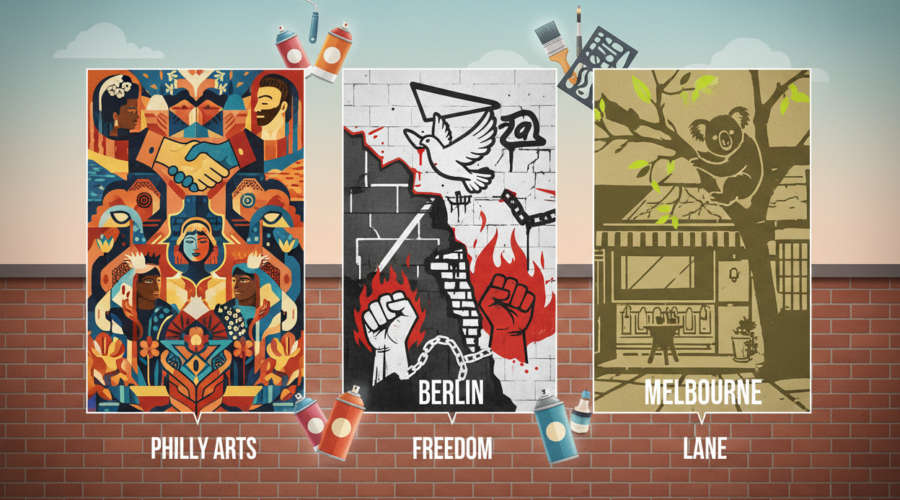
How Philadelphia’s Street Art Scene Compares to Berlin and Melbourne: A Global Perspective on Urban Canvas
When you think of world-renowned street art destinations, cities like Berlin and Melbourne immediately spring to mind. But there’s another contender that deserves serious recognition in the global street art conversation: Philadelphia. The City of Brotherly Love has quietly cultivated one of America’s most vibrant and historically significant street art scenes, one that holds its own against these international heavyweights.
Having explored the colorful alleyways of all three cities, I can tell you that each offers something uniquely compelling. While Berlin carries the weight of political transformation and Melbourne celebrates sanctioned creativity, Philadelphia brings raw authenticity and deep cultural roots that span decades. Let’s dive into what makes each city special and how Philadelphia measures up in this artistic triumvirate.
The Historical Foundation: Philadelphia’s Street Art Legacy
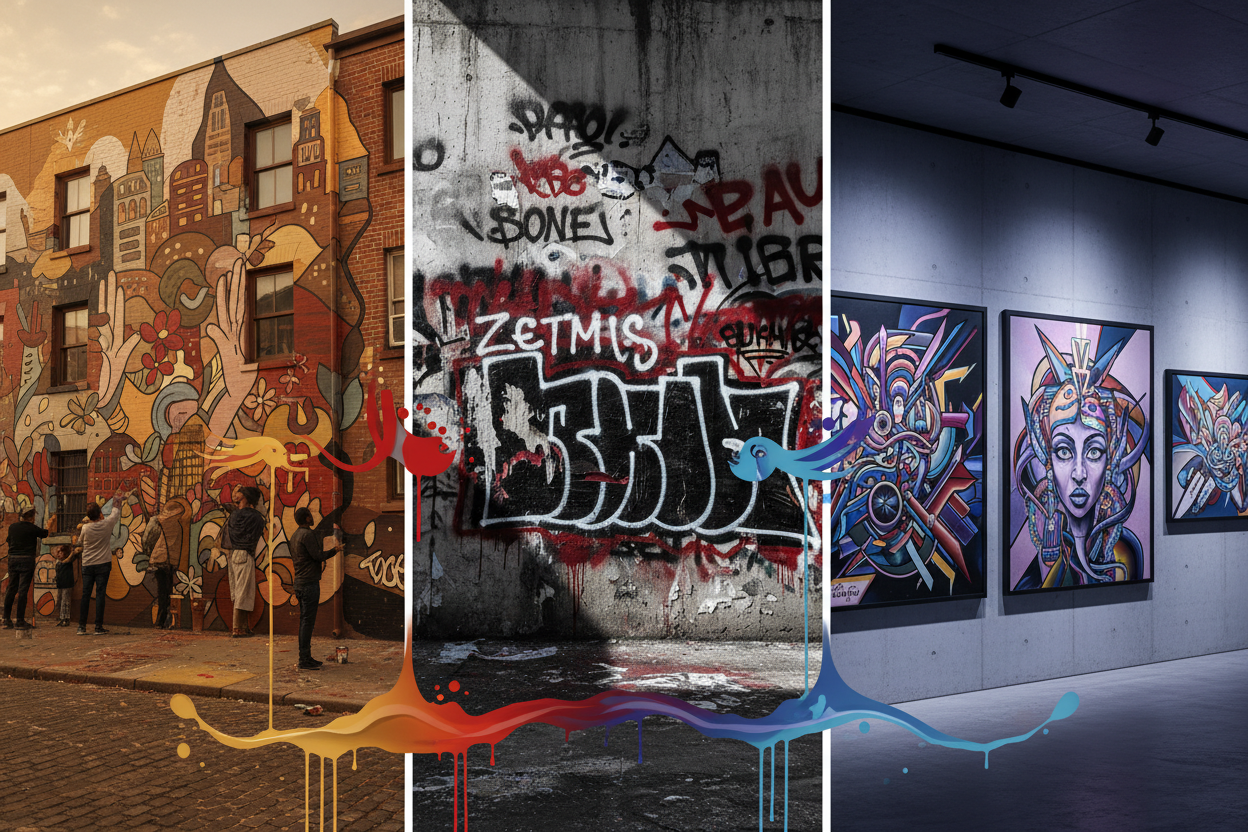
Philadelphia’s street art story begins much earlier than most people realize. The city’s mural tradition dates back to the 1960s, making it one of the oldest organized street art movements in the world. The Philadelphia Mural Arts Program, established in 1984, transformed the city’s approach to public art by channeling graffiti culture into community-driven murals.
This program has produced over 4,000 murals throughout the city, earning Philadelphia the nickname “City of Murals.” What sets Philadelphia apart is how it embraced street art as a tool for social change and community healing, rather than simply tolerating it as an inevitable urban phenomenon. The city’s approach was revolutionary – instead of fighting graffiti, they harnessed its energy for positive transformation.
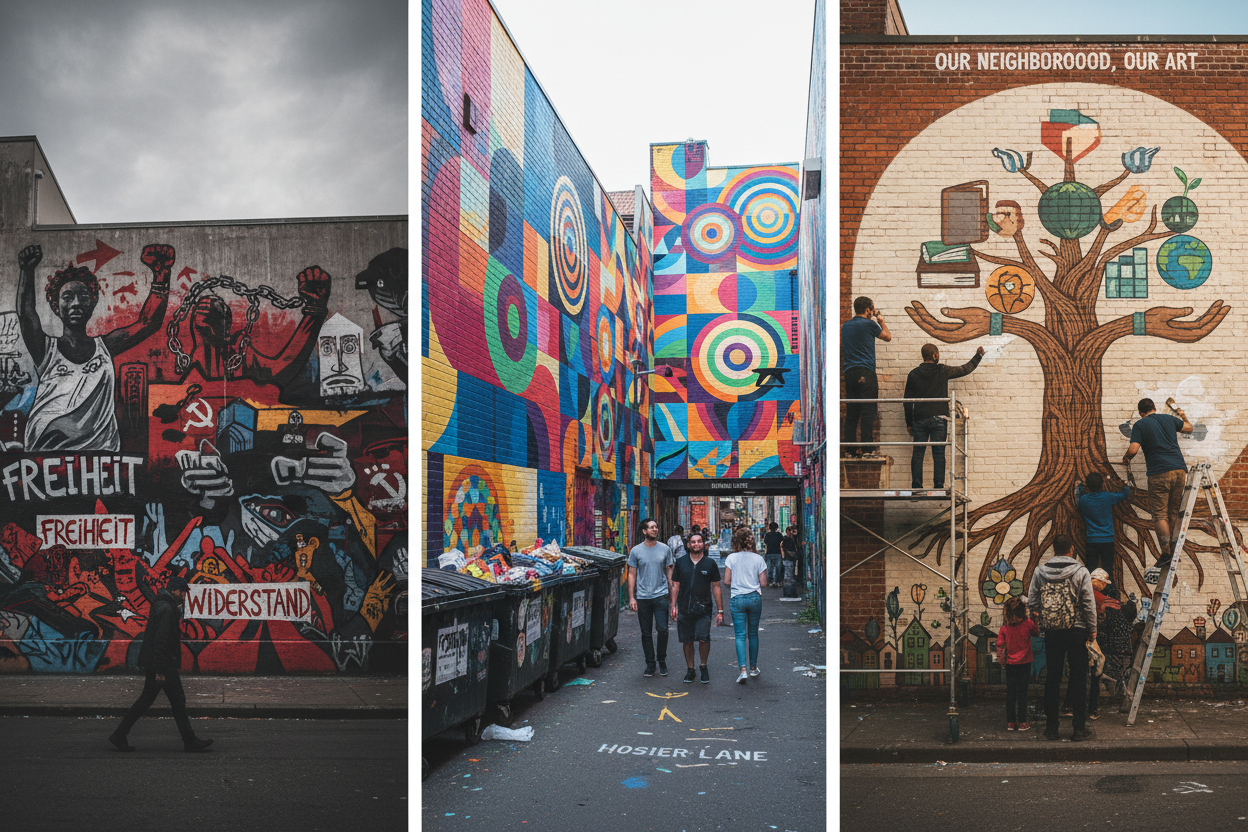
Compare this to Berlin, where street art exploded after the fall of the Berlin Wall in 1989, serving as a form of political expression and freedom. The city’s street art scene developed organically from the rubble of division, with artists using walls as canvases to express newfound liberty. Melbourne’s scene, while equally impressive, began gaining international recognition much later, around the 1990s and 2000s.
Berlin’s Political Canvas: Art as Revolution
Berlin’s street art scene carries an emotional weight that’s hard to match. Walking through neighborhoods like Kreuzberg or Friedrichshain feels like stepping through living history. The remnants of the Berlin Wall serve as the world’s largest open-air gallery, where artists from around the globe have left their mark on this symbol of division and reunification.
What makes Berlin’s street art particularly powerful is its political undertone. Artists here don’t just create for aesthetics – they’re making statements about freedom, oppression, and social justice. The famous East Side Gallery, a 1.3-kilometer stretch of the Berlin Wall, showcases over 100 paintings by artists from 21 countries, each telling a story of hope and transformation.
The city’s authorities have generally adopted a hands-off approach to street art, understanding its cultural and historical significance. This tolerance has created an environment where artists can experiment freely, leading to some of the most innovative and thought-provoking street art in the world. However, this freedom comes with challenges – the constant evolution means that masterpieces are often painted over, creating a dynamic but sometimes ephemeral art scene.
Melbourne’s Laneway Culture: Sanctioned Creativity
Melbourne takes a completely different approach to street art, one that’s both organized and wildly creative. The city’s famous laneway culture has transformed narrow alleyways into legitimate art galleries. Hosier Lane, AC/DC Lane, and Union Lane have become tourist destinations in their own right, drawing visitors from around the world who come specifically to see the street art.
What’s remarkable about Melbourne is how the city government actively supports street art through legal walls and commissioned pieces. The local council provides designated spaces where artists can work legally, fostering a scene that’s both vibrant and sustainable. This official support has attracted some of the world’s best street artists, making Melbourne a pilgrimage site for street art enthusiasts.
The Australian city’s street art scene is incredibly diverse, ranging from traditional graffiti to large-scale murals, stencil work, and paste-ups. Artists like Banksy have left their mark here, and local talents like Rone and Adnate have gained international recognition. The city’s street art tours have become so popular that they’re now considered essential Melbourne experiences.
Philadelphia’s Unique Identity: Community-Driven Artistry
While Berlin offers political gravitas and Melbourne provides institutional support, Philadelphia brings something equally valuable: authentic community connection. The city’s street art scene is deeply rooted in neighborhood identity and social activism. Many murals tell stories specific to their communities, celebrating local heroes, addressing social issues, or simply bringing beauty to underserved areas.
Philadelphia’s approach to street art is uniquely collaborative. The Mural Arts Program doesn’t just commission artists – it involves community members in the creative process. Residents help design murals, share stories that inspire the artwork, and often participate in the painting process itself. This community involvement creates a sense of ownership and pride that you don’t always find in other cities.
The city’s street art also reflects its diverse cultural landscape. From the vibrant murals in the Italian Market to the powerful pieces in North Philadelphia that address issues of gentrification and social justice, Philadelphia’s walls tell the story of a complex, evolving city. Artists like David McShane and Meg Saligman have created works that are not just visually stunning but deeply meaningful to the communities they serve.
Artistic Styles and Techniques: A Comparative Analysis
Each city has developed its own distinct artistic style and preferred techniques. Berlin’s street art tends to be raw and politically charged, often incorporating mixed media and found objects. The city’s artists frequently use stencils, wheat-paste, and large-scale pieces that make bold statements. There’s an urgency to much of Berlin’s street art that reflects the city’s tumultuous history.
Melbourne’s street art scene is perhaps the most technically diverse. The city’s artists excel in everything from photorealistic portraits to abstract pieces, intricate stencil work, and innovative use of typography. The legal nature of much of Melbourne’s street art allows artists to spend more time on detailed work, resulting in pieces that are often more polished and refined.
Philadelphia’s street art style is characterized by its narrative quality and community focus. Many pieces are large-scale murals that tell stories or celebrate cultural heritage. The city’s artists often incorporate elements of traditional mural painting techniques, creating works that feel more permanent and integrated into the urban landscape. There’s also a strong tradition of portrait work, with many murals featuring local community leaders, historical figures, or everyday heroes.
Tourism and Cultural Impact
The tourism impact of street art varies significantly among these three cities. Melbourne has perhaps been most successful in monetizing its street art scene, with organized tours, maps, and even smartphone apps helping visitors navigate the laneway culture. The city has effectively branded itself as a street art destination, attracting hundreds of thousands of visitors annually.
Berlin’s street art tourism is more organic but equally significant. The city’s historical significance combined with its vibrant art scene creates a powerful draw for cultural tourists. However, the transient nature of much of Berlin’s street art means that guidebooks quickly become outdated.
Philadelphia’s street art tourism is growing but remains more niche. The city offers mural tours and has begun to market its street art more aggressively, but it hasn’t yet achieved the same level of recognition as Melbourne or Berlin. This presents both a challenge and an opportunity – Philadelphia’s street art scene feels more authentic and less commercialized, but it also means fewer resources for artists and less international recognition.
Challenges and Future Directions
Each city faces unique challenges in maintaining and developing its street art scene. Berlin struggles with gentrification and the commercialization of formerly authentic spaces. As property values rise, many of the abandoned buildings and alternative spaces that fostered the street art scene are being developed, pushing artists to the periphery.
Melbourne faces the challenge of balancing tourism with artistic integrity. As the laneway tours become more popular, there’s pressure to create Instagram-friendly art that appeals to visitors but may not reflect the authentic voice of local artists. The city is working to maintain the balance between accessibility and artistic freedom.
Philadelphia’s main challenge is visibility and resources. While the Mural Arts Program provides some support, many artists still struggle with funding and recognition. The city is working to develop its cultural tourism sector, but it needs to do so in a way that doesn’t compromise the community-focused nature of its street art scene.
The Global Street Art Conversation
In the broader context of global street art, Philadelphia, Berlin, and Melbourne each contribute something essential to the conversation. Berlin reminds us that art can be a powerful tool for political expression and social change. Melbourne demonstrates how cities can embrace street art as legitimate cultural expression while maintaining high artistic standards. Philadelphia shows us the importance of community involvement and the power of art to heal and unite neighborhoods.
What’s particularly interesting is how artists from these cities influence each other. International street art festivals and artist exchanges have created a global dialogue, with techniques and styles crossing borders. A stencil technique perfected in Melbourne might appear on a wall in Berlin, while a community engagement approach developed in Philadelphia could inspire projects in other cities.
Philadelphia’s street art scene may not have the international recognition of Berlin or Melbourne yet, but it offers something equally valuable: a model for how street art can be deeply integrated into community life and social progress. The city’s approach of using art as a tool for neighborhood revitalization and community building provides lessons that other cities around the world are beginning to adopt.
As these three cities continue to evolve their street art scenes, they each face the challenge of maintaining authenticity while embracing growth and change. The most successful will be those that can preserve what makes their scenes unique while remaining open to new influences and approaches. Philadelphia’s emphasis on community, Berlin’s political edge, and Melbourne’s institutional support each offer models that other cities can learn from and adapt to their own contexts.
The future of street art lies not in competition between cities but in the continued exchange of ideas, techniques, and approaches. Philadelphia may be the underdog in this comparison, but its community-focused approach and rich artistic tradition position it well to play an increasingly important role in the global street art conversation.