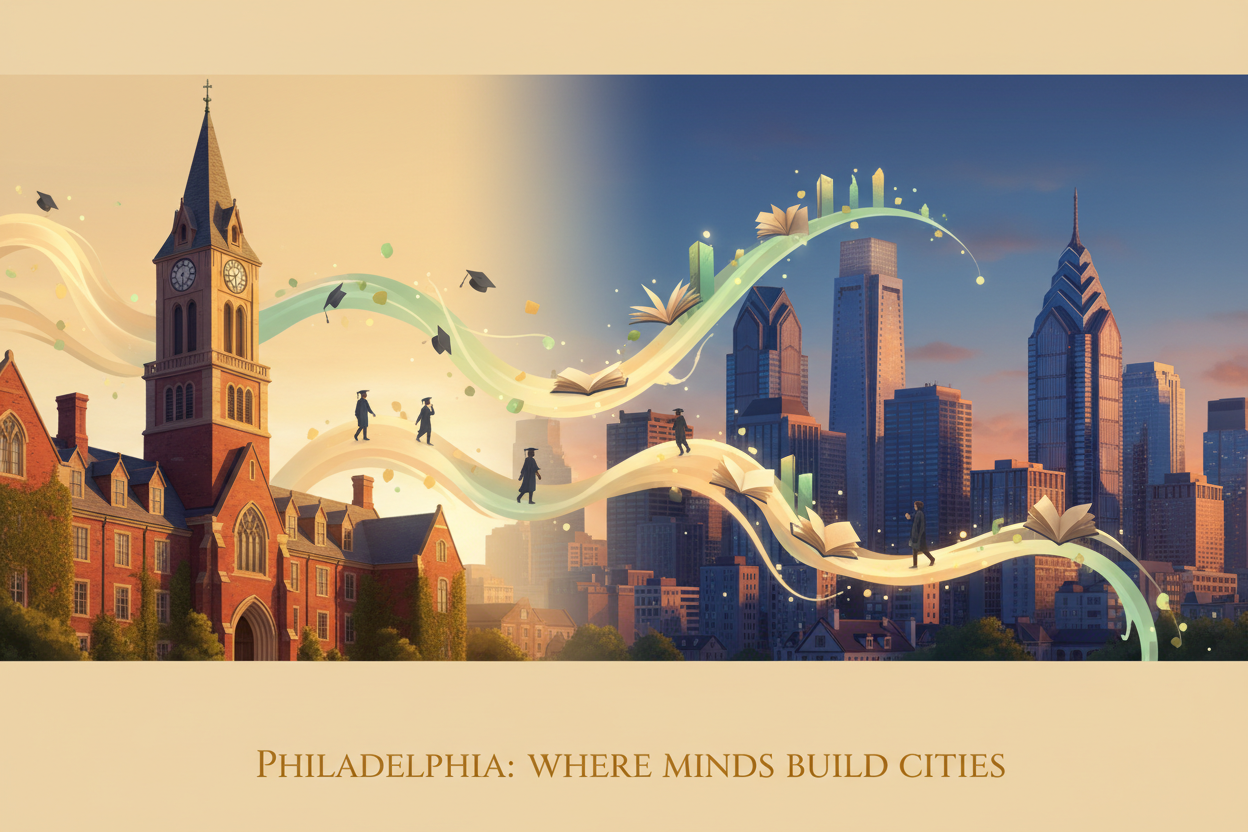
How Philadelphia’s Universities Shape the City’s Character
Walking through Philadelphia on any given day, you’ll encounter something remarkable: a city where centuries-old cobblestones meet cutting-edge research labs, where Benjamin Franklin’s legacy mingles with tomorrow’s innovations. This unique character isn’t accidental—it’s been carefully cultivated by the dozens of universities and colleges that call Philadelphia home. From the Ivy League prestige of the University of Pennsylvania to the specialized excellence of institutions like Curtis Institute of Music, Philadelphia’s higher education landscape has fundamentally shaped not just the city’s skyline, but its very soul.
With over 120,000 college students calling Philadelphia home during the academic year, these institutions do more than just educate—they transform neighborhoods, drive innovation, influence culture, and create an economic engine that powers much of the city’s growth. Let’s explore how Philadelphia’s universities have become the architects of the city’s distinctive character.
The Historical Foundation: Education as Philadelphia’s DNA
Philadelphia’s relationship with higher education runs deeper than most cities, stretching back to the colonial era when Benjamin Franklin founded what would become the University of Pennsylvania in 1740. This wasn’t just another college—it was revolutionary for its time, emphasizing practical education alongside classical studies. Franklin’s vision of useful knowledge would become a defining characteristic of Philadelphia’s educational philosophy that persists today.
The city’s commitment to education continued to grow throughout the 19th and 20th centuries. Temple University emerged in 1884 with a mission to provide quality education to working-class students, while Drexel University pioneered cooperative education programs that blended classroom learning with real-world experience. Each institution brought its own flavor to the city, creating layers of academic culture that would eventually merge into Philadelphia’s unique educational ecosystem.
This historical foundation created something special: a city where learning isn’t confined to campus boundaries. The influence of these institutions seeped into the streets, the architecture, the local businesses, and even the way residents think about problems and solutions.
Neighborhood Transformation: When Campus Meets Community
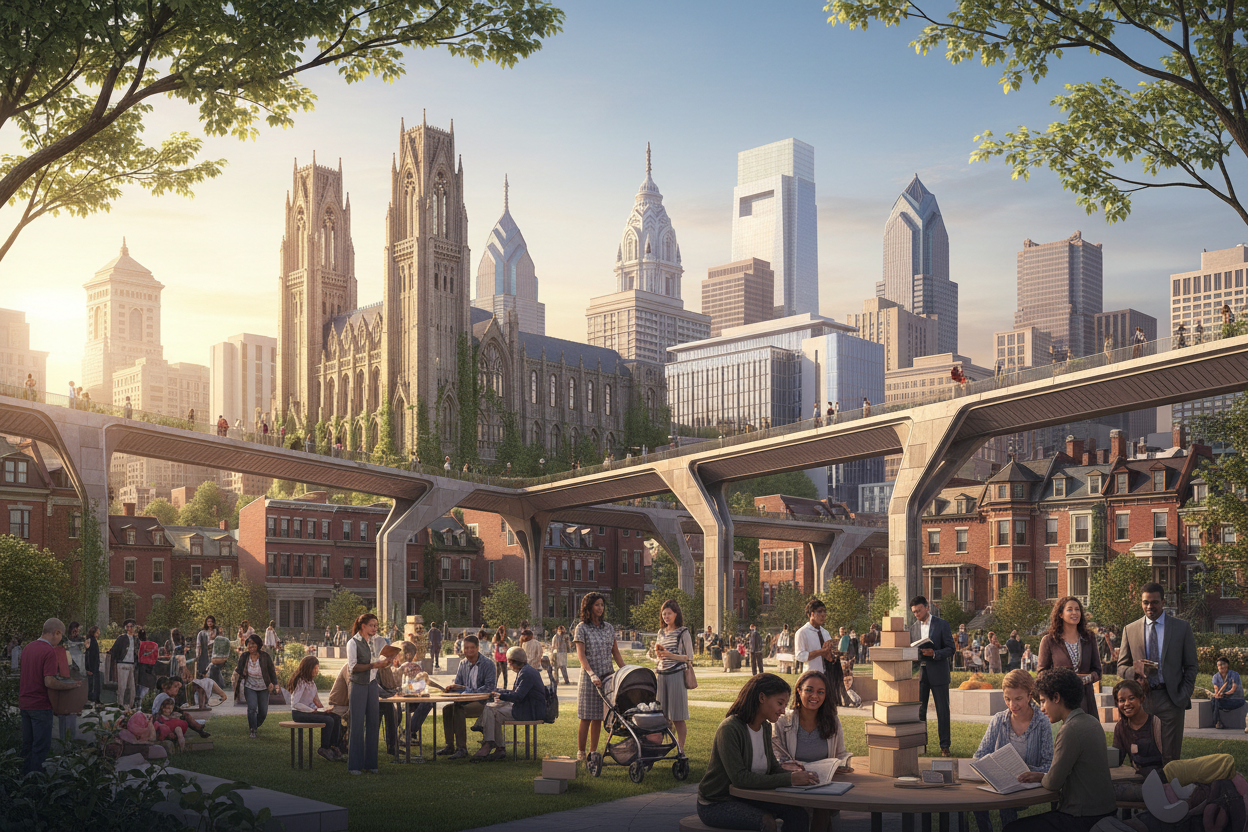
Perhaps nowhere is the university influence more visible than in Philadelphia’s neighborhoods. Take University City, where the University of Pennsylvania and Drexel University have transformed what was once a collection of separate communities into a thriving hub of innovation and development. The area now boasts state-of-the-art research facilities, trendy restaurants catering to student tastes, and housing that ranges from converted historic buildings to modern high-rises.
But this transformation extends far beyond University City. Temple University’s presence in North Philadelphia has been a catalyst for community development, with the university investing heavily in neighborhood improvement initiatives. Similarly, Saint Joseph’s University has helped shape the character of the Wynnefield area, while La Salle University’s campus creates a distinctive academic atmosphere in the Olney section of the city.
These transformations aren’t always without controversy—gentrification concerns are real and valid. However, many universities have recognized their responsibility to be good neighbors, implementing community engagement programs and ensuring that long-time residents benefit from development rather than being displaced by it.
The Innovation Ecosystem: Research That Changes the World
Philadelphia’s universities have created an innovation ecosystem that rivals Silicon Valley in many respects. The University of Pennsylvania alone generates over $1 billion in research funding annually, much of which flows directly into groundbreaking work in medicine, engineering, and business. The Penn Medicine system, anchored by the Hospital of the University of Pennsylvania, has made Philadelphia a global leader in healthcare innovation.
But innovation in Philadelphia isn’t limited to one institution. Thomas Jefferson University has pioneered new approaches to medical education and patient care. Drexel University’s focus on cooperative education has created strong ties between academia and industry. Even smaller institutions contribute significantly—the Curtis Institute of Music may be tiny, but its influence on classical music education and performance is felt worldwide.
This concentration of research activity has attracted biotechnology companies, pharmaceutical giants, and tech startups to set up shop in Philadelphia. The result is a city where academic research seamlessly transitions into commercial application, creating jobs and driving economic growth while maintaining Philadelphia’s reputation as a city of innovation.
Cultural Influence: Students as Cultural Catalysts
With over 120,000 students from around the world, Philadelphia’s universities serve as cultural mixing bowls that profoundly influence the city’s character. These students don’t just attend classes—they eat at local restaurants, shop at neighborhood stores, attend cultural events, and often stay in the city after graduation, becoming permanent contributors to Philadelphia’s cultural landscape.
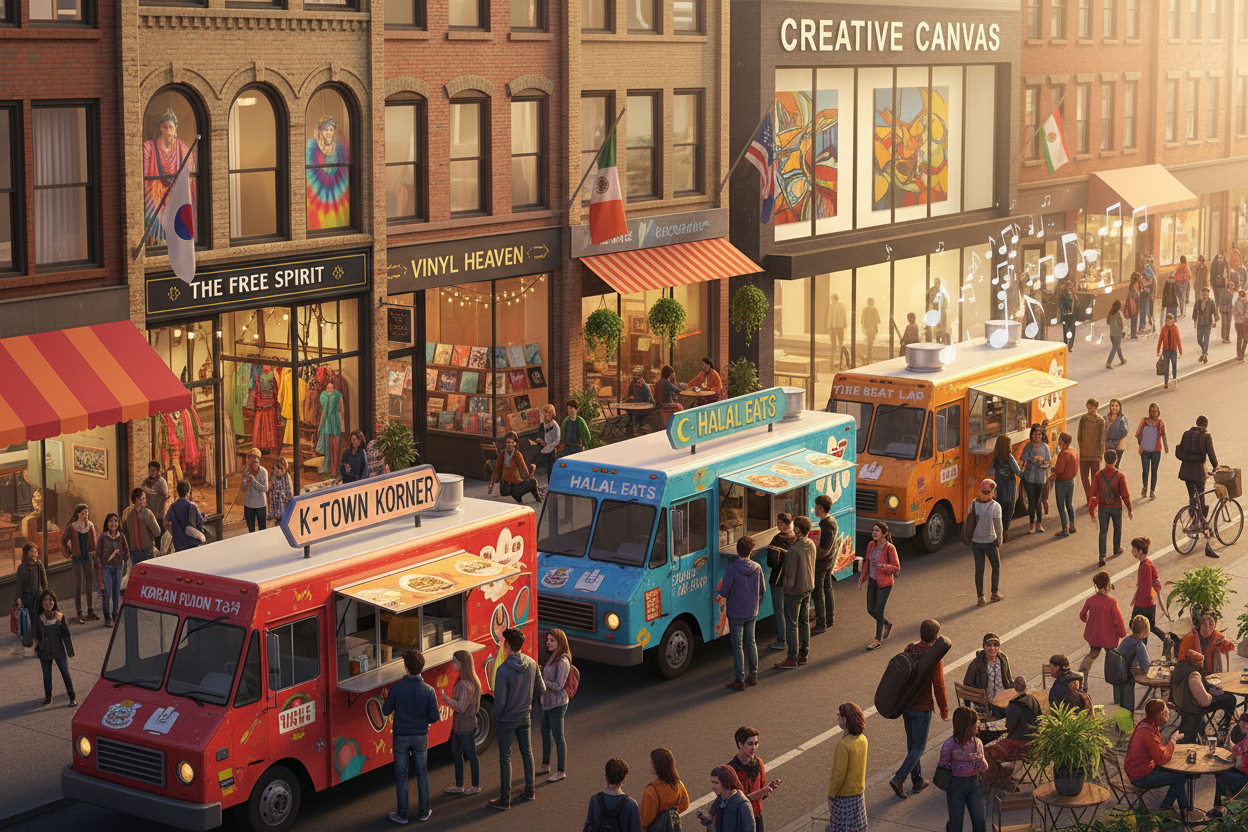
The influence is visible everywhere. South Street’s eclectic mix of shops and restaurants caters heavily to student tastes and budgets. The city’s music scene benefits enormously from students at Curtis Institute, University of the Arts, and other institutions. Art galleries near campus areas showcase student work alongside established artists. Food trucks serving everything from halal to Korean fusion dot the landscape around major universities, reflecting the international diversity of the student population.
This cultural influence creates a unique energy that sets Philadelphia apart from other major East Coast cities. It’s younger and more experimental than Boston, more grounded and practical than New York, and more diverse and inclusive than many other major metropolitan areas.
Economic Impact: The University-Driven Economy
The economic impact of Philadelphia’s universities extends far beyond tuition payments and campus jobs. These institutions are among the city’s largest employers, with the University of Pennsylvania system alone employing over 40,000 people. But the ripple effects go much deeper.
Students and university employees spend billions of dollars annually in the local economy. They rent apartments, buy groceries, eat at restaurants, use transportation services, and purchase everything from textbooks to furniture. This spending supports thousands of local businesses and creates employment opportunities throughout the city.
Moreover, universities attract conferences, academic meetings, and cultural events that bring visitors from around the world to Philadelphia. The economic impact of these visitors—from hotel stays to restaurant meals to tourist attractions—adds hundreds of millions of dollars to the local economy each year.
Perhaps most importantly, universities serve as anchor institutions that provide economic stability. While other industries may come and go, universities provide steady, long-term employment and economic activity that helps Philadelphia weather economic downturns better than many comparable cities.
Architecture and Urban Planning: Campus Design Influences City Design
The architectural influence of Philadelphia’s universities extends well beyond campus boundaries. The University of Pennsylvania’s mix of historic collegiate Gothic buildings and modern research facilities has influenced development patterns throughout West Philadelphia. Temple University’s urban campus integration has served as a model for how universities can enhance rather than isolate themselves from surrounding neighborhoods.
Many of Philadelphia’s most iconic buildings are associated with its universities. The University of Pennsylvania’s Fisher Fine Arts Library, designed by Frank Furness, is considered one of the finest examples of Victorian architecture in America. Temple University’s Liacouras Center has become a landmark in North Philadelphia. These buildings don’t just serve their immediate university functions—they contribute to Philadelphia’s architectural heritage and tourist attractions.
University planning decisions also influence broader city development patterns. When universities expand or renovate, they often spark complementary development in surrounding areas. New dormitories lead to new restaurants and shops. Research facilities attract related businesses. Athletic facilities become community resources that extend far beyond the campus community.
The Future: Continuing Evolution and Growth
Philadelphia’s universities continue to evolve and adapt, ensuring their ongoing influence on the city’s character. Many institutions are expanding their community engagement efforts, recognizing that their success is intimately tied to the health and prosperity of the broader Philadelphia community.
Sustainability initiatives at universities are influencing city-wide environmental policies. The University of Pennsylvania’s commitment to carbon neutrality, for example, has spurred similar commitments from other institutions and influenced municipal sustainability planning. Student activism around issues like climate change, social justice, and economic inequality continues to shape public discourse and policy in Philadelphia.
Technology transfer programs are becoming increasingly sophisticated, helping to commercialize university research and create new businesses in Philadelphia. The growing emphasis on entrepreneurship education is producing graduates who are more likely to start businesses in Philadelphia rather than moving to other cities after graduation.
Conclusion: A Symbiotic Relationship
The relationship between Philadelphia’s universities and the city itself is truly symbiotic. The universities benefit from Philadelphia’s rich history, cultural diversity, and urban amenities, while the city benefits from the energy, innovation, and economic activity that universities provide. This relationship has created a city character that is unique among American metropolitan areas—intellectual yet practical, historic yet innovative, diverse yet cohesive.
As Philadelphia continues to evolve in the 21st century, its universities will undoubtedly continue to play a central role in shaping its character. The challenge will be ensuring that this influence remains positive and inclusive, benefiting all residents while maintaining the distinctive qualities that make Philadelphia special. Based on the city’s track record, there’s every reason to be optimistic about this continuing partnership between town and gown.
Whether you’re a prospective student, a business considering relocating to Philadelphia, or simply someone interested in urban development, understanding the role of universities in shaping Philadelphia’s character provides valuable insight into what makes this city tick. It’s a reminder that great cities aren’t built by any single factor, but by the complex interplay of institutions, people, and ideas working together over time.