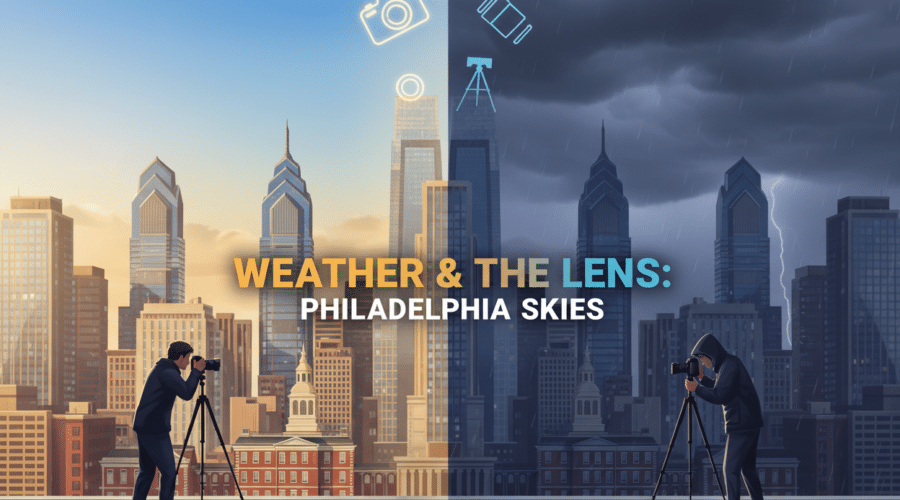
How Philadelphia’s Weather Patterns Affect Your Photography Plans
Philadelphia’s diverse climate presents both incredible opportunities and unique challenges for photographers throughout the year. From the golden autumn leaves in Fairmount Park to the dramatic winter storms that blanket Independence Hall, the City of Brotherly Love offers a constantly changing canvas for photographers willing to adapt their techniques to Mother Nature’s moods.
Understanding Philadelphia’s weather patterns isn’t just about checking the forecast before heading out with your camera. It’s about learning to anticipate how seasonal changes, humidity levels, temperature swings, and precipitation will impact your equipment, your subjects, and ultimately, your creative vision. Whether you’re a professional photographer planning a wedding shoot or an enthusiast capturing the city’s architectural beauty, weather awareness can make the difference between mediocre snapshots and breathtaking imagery.
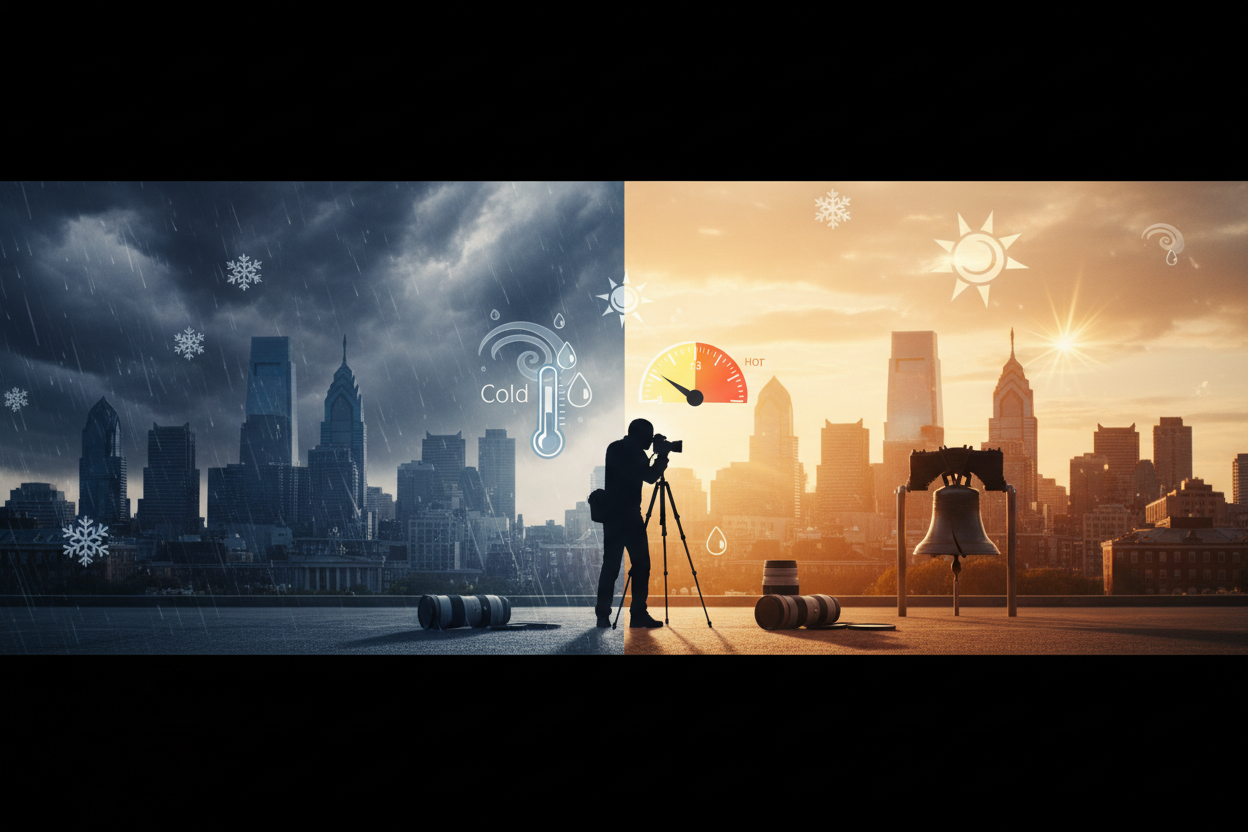
Philadelphia’s Four-Season Photography Calendar
Philadelphia experiences a humid subtropical climate with four distinct seasons, each offering unique photographic opportunities and challenges. The city’s location in the Mid-Atlantic region means photographers must prepare for everything from sweltering summer humidity to sudden winter blizzards.
Spring arrives gradually, typically from March through May, bringing unpredictable weather patterns that can shift from cool morning mist to warm afternoon sunshine within hours. This transitional season offers some of the most dynamic lighting conditions of the year, but requires photographers to stay flexible with their plans.
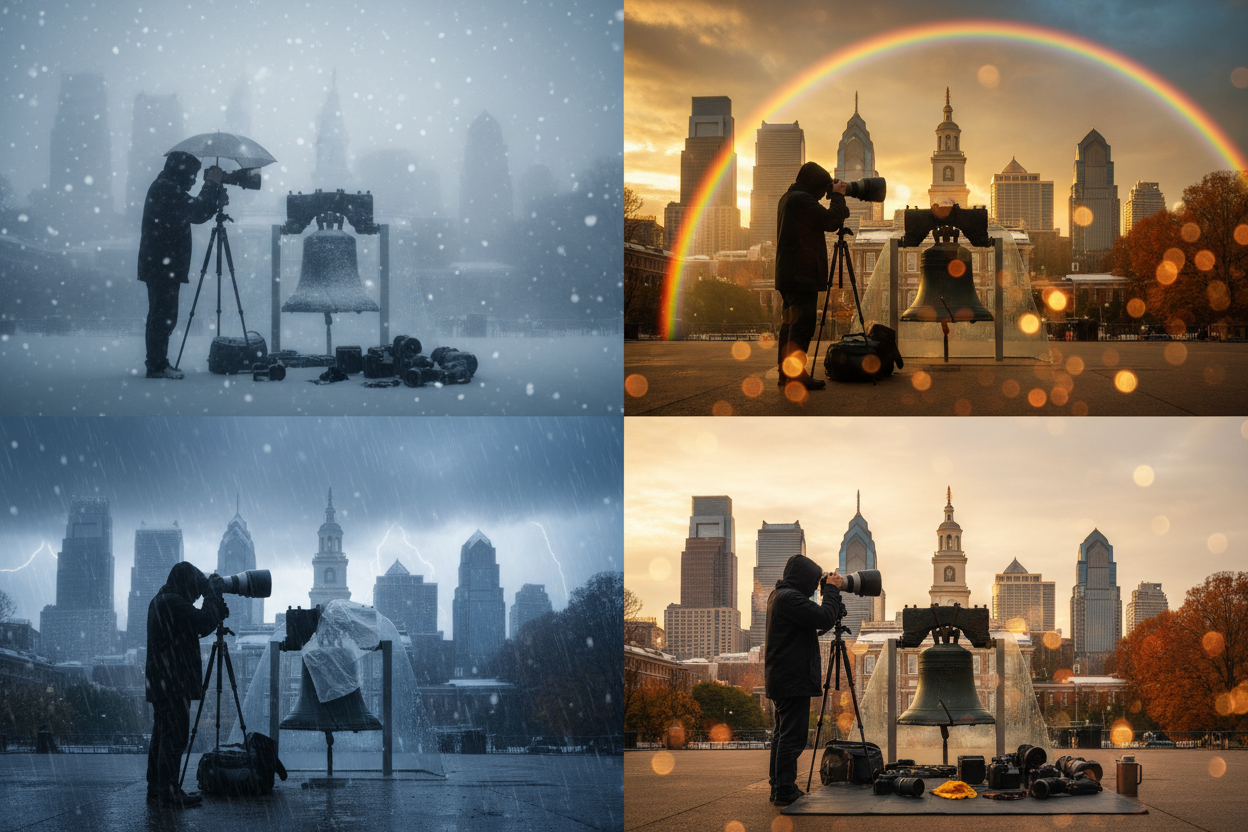
Summer months from June through August bring high humidity and temperatures that regularly climb into the 80s and 90s. While this creates challenges for both photographers and their equipment, it also provides opportunities for dramatic storm photography and beautiful golden hour sessions that extend well into the evening.
Fall photography season, running from September through November, is arguably Philadelphia’s most photogenic time of year. The changing foliage creates stunning backdrops, while cooler temperatures make outdoor shoots more comfortable for both photographers and subjects.
Winter photography in Philadelphia, from December through February, requires careful planning and specialized techniques, but rewards prepared photographers with snow-covered cityscapes and unique atmospheric conditions that can’t be replicated in any other season.
Spring Weather Challenges and Opportunities
Philadelphia’s spring weather is notoriously unpredictable, with temperature swings of 20-30 degrees within a single day being common. This volatility stems from the city’s position where warm, moist air from the south collides with cool, dry air masses from the north, creating rapidly changing conditions that can catch unprepared photographers off guard.
Rain is frequent during spring months, with April typically being the wettest month of the year. However, these frequent showers create excellent opportunities for dramatic sky photography, rainbow captures, and the fresh, vibrant colors that emerge after rainfall. The key is learning to work with Philadelphia’s spring rain patterns rather than against them.
Cherry blossom season, usually peaking in mid-April, draws photographers to locations like Shofuso Japanese House and Garden and the Penn Treaty Park. However, these delicate blooms are extremely weather-sensitive, and a single strong storm can end the season abruptly. Successful spring photographers in Philadelphia learn to monitor weather forecasts closely and remain ready to shoot at a moment’s notice when conditions align.
The rapidly changing light conditions during spring can actually work in your favor for portrait photography. The frequent cloud cover acts as a natural diffuser, creating soft, even lighting that’s particularly flattering for outdoor portraits. Additionally, the dramatic skies that accompany spring weather systems can add compelling backgrounds to architectural and landscape photography.
Summer Heat and Humidity: Equipment Protection Strategies
Philadelphia’s summer humidity regularly exceeds 70%, creating significant challenges for photographers and their equipment. Camera lenses can fog up when moving between air-conditioned spaces and the humid outdoors, while electronic components may malfunction in extreme heat and moisture conditions.
The intense summer sun creates harsh shadows and blown-out highlights during midday hours, making early morning and late evening the preferred shooting times for most photographers. However, Philadelphia’s summer thunderstorms, which typically develop in late afternoon, can provide spectacular photography opportunities for those prepared to capture them safely.
Heat waves are common during Philadelphia summers, with temperatures sometimes reaching into the upper 90s for several consecutive days. During these periods, photographers must take extra precautions to protect both themselves and their equipment. Keeping cameras in shaded areas, using lens hoods to prevent overheating, and carrying extra batteries (which drain faster in heat) become essential practices.
The extended daylight hours of summer, with sunset occurring as late as 8 PM in June and July, provide opportunities for golden hour photography that would be impossible during shorter winter days. This extended shooting window allows photographers to capture multiple locations during a single evening session, taking advantage of Philadelphia’s diverse neighborhoods and landmarks.
Autumn’s Golden Hour: Maximizing Fall Photography
Philadelphia’s fall foliage typically peaks between mid-October and early November, depending on temperature patterns and rainfall throughout the growing season. The city’s abundant tree-lined streets, extensive park system, and proximity to wooded areas like Wissahickon Valley Park make it an exceptional destination for autumn photography.
The cooler temperatures and lower humidity of fall create ideal conditions for both photographers and their equipment. Camera batteries last longer in moderate temperatures, and the reduced atmospheric haze common during summer months results in sharper, more contrasted images with better color saturation.
Fall weather patterns in Philadelphia tend to be more stable than spring conditions, with high-pressure systems often bringing several consecutive days of clear, crisp weather perfect for photography. However, the first frost, which typically occurs in late October or early November, can dramatically alter the landscape overnight, ending the peak foliage season abruptly.
The angle of the sun during fall months creates particularly attractive lighting conditions throughout the day. The lower sun angle produces longer, more dramatic shadows while reducing the harsh overhead lighting that plagues summer photography. This makes fall an excellent time for architectural photography, as buildings and monuments are illuminated more evenly throughout the day.
Winter Weather: Embracing Philadelphia’s Snowy Scenes
Philadelphia typically receives 20-25 inches of snow annually, with most significant snowfall occurring between January and March. While winter weather can be challenging for photographers, it also transforms the city into a completely different photographic subject, offering unique opportunities for those willing to brave the cold.
Snow photography requires specific techniques and equipment considerations. Camera batteries drain rapidly in cold temperatures, making it essential to carry extras and keep them warm. Condensation becomes a major concern when bringing cold equipment into warm indoor spaces, requiring photographers to allow gradual temperature adjustment to prevent damage.
The reflective properties of snow can create exposure challenges, often causing cameras to underexpose scenes and resulting in gray, muddy-looking snow. Understanding how to use exposure compensation and manual camera settings becomes crucial for capturing the bright, clean whites that make winter photography compelling.
Philadelphia’s winter storms often create dramatic atmospheric conditions perfect for moody, artistic photography. The diffused light during snowfall acts as a natural softbox, creating even illumination ideal for portrait work. Additionally, the simplified color palette of winter scenes allows photographers to focus on composition, texture, and form without the distraction of competing colors.
Weather-Specific Equipment and Planning Tips
Successful photography in Philadelphia’s varied climate requires careful equipment selection and maintenance routines adapted to each season’s challenges. Weatherproofing becomes essential, not just for protection against rain and snow, but also to guard against Philadelphia’s high humidity levels that can cause internal camera fogging and corrosion over time.
Investing in weather-sealed camera bodies and lenses provides peace of mind during Philadelphia’s frequent rain showers and snow events. However, even weather-sealed equipment benefits from additional protection like rain covers and lens hoods. Silica gel packets stored in camera bags help control moisture levels, particularly important during humid summer months.
Planning photography sessions around Philadelphia’s weather patterns requires understanding local meteorological trends. The city’s position relative to the Atlantic Ocean means weather systems often approach from the southwest, giving photographers advance warning of changing conditions. Learning to read weather radar and understanding how local topography affects weather patterns can help photographers anticipate optimal shooting conditions.
Backup plans become essential when working in Philadelphia’s unpredictable climate. Indoor locations like Reading Terminal Market, the Philadelphia Museum of Art, or covered areas in Rittenhouse Square can provide alternative shooting opportunities when outdoor conditions become unfavorable. Having a list of weather-appropriate backup locations ensures that photography sessions can continue regardless of what Mother Nature delivers.
Seasonal Light Quality and Its Impact on Your Images
Philadelphia’s latitude of approximately 40 degrees north creates significant variations in light quality throughout the year, dramatically affecting the mood and technical requirements of photography. During summer months, the sun reaches its highest point around 73 degrees above the horizon, creating short shadows and intense overhead lighting that can be challenging for many types of photography.
Winter light in Philadelphia is characterized by a much lower sun angle, with the maximum elevation reaching only about 26 degrees above the horizon in December. This creates longer, more dramatic shadows throughout the day and provides opportunities for side-lighting and backlighting that simply aren’t available during summer months.
The quality of light also changes with Philadelphia’s seasonal weather patterns. Summer’s high humidity can create a hazy atmosphere that softens distant subjects and reduces contrast, while winter’s clear, dry air often produces sharp, high-contrast conditions ideal for landscape and architectural photography.
Understanding how seasonal atmospheric conditions affect color temperature helps photographers make better decisions about white balance settings and post-processing techniques. Philadelphia’s summer light tends to be warmer due to atmospheric filtering, while winter light appears cooler and more neutral. These subtle differences can significantly impact the mood and emotional impact of photographs.
Conclusion
Philadelphia’s diverse weather patterns present both challenges and extraordinary opportunities for photographers willing to adapt their techniques and equipment to the city’s changing conditions. From the unpredictable beauty of spring storms to the golden light of autumn afternoons, each season offers unique photographic possibilities that reward prepared and flexible photographers.
Success in Philadelphia photography isn’t about fighting against the weather – it’s about learning to work with the city’s natural rhythms and understanding how different conditions can enhance rather than hinder your creative vision. Whether you’re capturing the snow-covered steps of the Philadelphia Museum of Art or the vibrant colors of Rittenhouse Square in autumn, embracing Philadelphia’s weather patterns as part of your photographic toolkit will elevate your work and help you create images that truly capture the spirit of this remarkable city.
The key to mastering Philadelphia photography lies in preparation, flexibility, and a willingness to see challenging weather conditions as creative opportunities rather than obstacles. By understanding the city’s seasonal patterns, protecting your equipment appropriately, and maintaining backup plans for various weather scenarios, you’ll be ready to capture Philadelphia’s beauty in any season, under any conditions that Mother Nature provides.