The Ultimate Guide to Philadelphia’s Vintage Neon Signs and Retro Charm
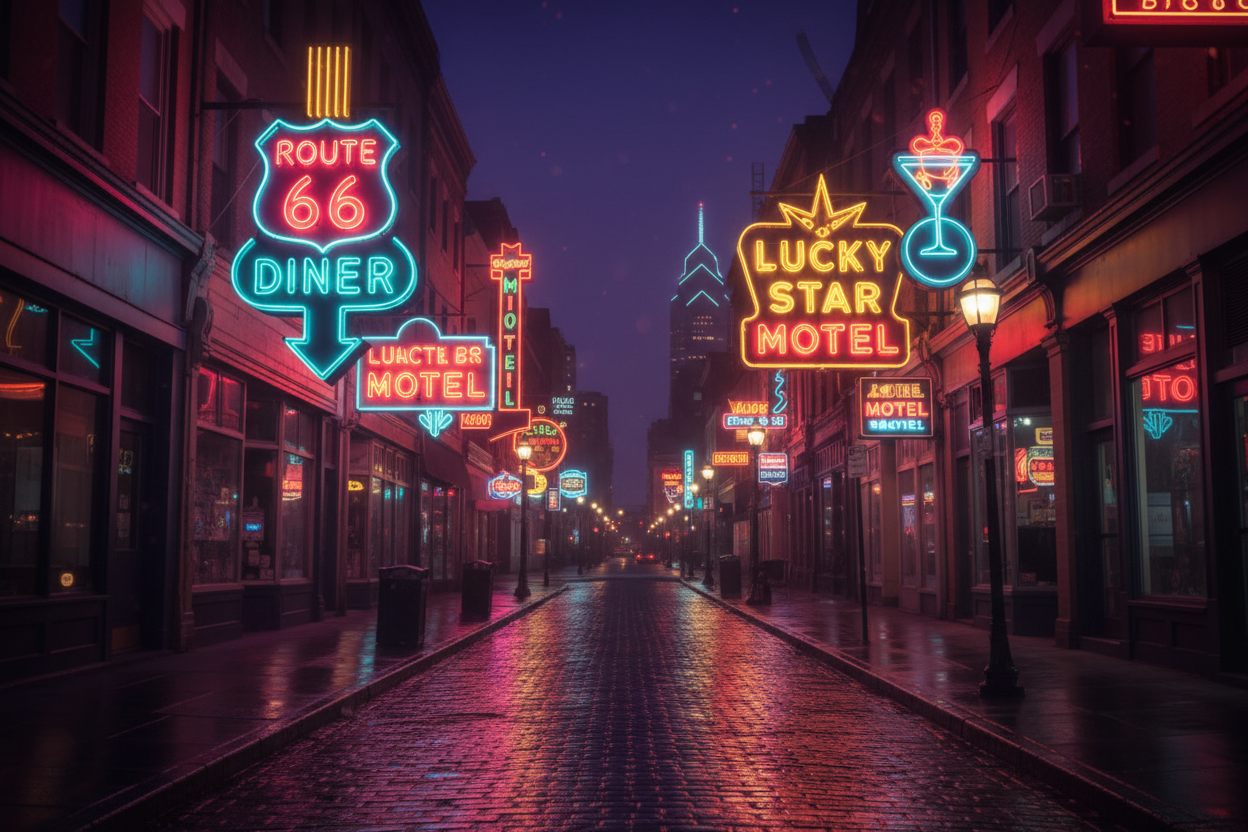
Philadelphia isn’t just known for its cheesesteaks and Liberty Bell – the City of Brotherly Love harbors one of America’s most captivating collections of vintage neon signs. Walking through Philly’s neighborhoods feels like stepping into a time machine, where glowing tubes of colored gas tell stories of decades past. From the iconic Pat’s King of Steaks sign to hidden gems tucked away in South Philly corners, these luminous landmarks offer a glimpse into the city’s rich commercial history and artistic heritage.
Whether you’re a photography enthusiast, history buff, or simply someone who appreciates the artistry of bygone eras, Philadelphia’s neon landscape provides an unforgettable journey through American mid-century culture. This comprehensive guide will take you on a tour of the city’s most remarkable vintage signs while exploring the neighborhoods that house these glowing treasures.
The Golden Age of Neon in Philadelphia
Philadelphia’s love affair with neon began in earnest during the 1920s and reached its peak in the post-World War II boom of the 1950s. Local businesses embraced this revolutionary lighting technology as a way to stand out in an increasingly competitive marketplace. The city’s industrial heritage made it a natural hub for neon craftsmanship, with several sign companies establishing themselves as leaders in the field.
During this golden era, neon signs weren’t just advertisements – they were works of art that transformed ordinary storefronts into beacons of hope and prosperity. The warm glow of these signs welcomed workers home after long shifts in the city’s factories and mills, creating a sense of community and belonging that still resonates today.
Many of Philadelphia’s surviving vintage neon signs date back to this transformative period, representing not just commercial history but the dreams and aspirations of immigrant families who built businesses in America’s fifth-largest city.
South Philadelphia: The Heart of Vintage Neon Culture
No exploration of Philadelphia’s neon heritage would be complete without spending significant time in South Philadelphia. This working-class neighborhood has preserved more vintage signage than perhaps any other area of the city, creating an outdoor museum of mid-century Americana.
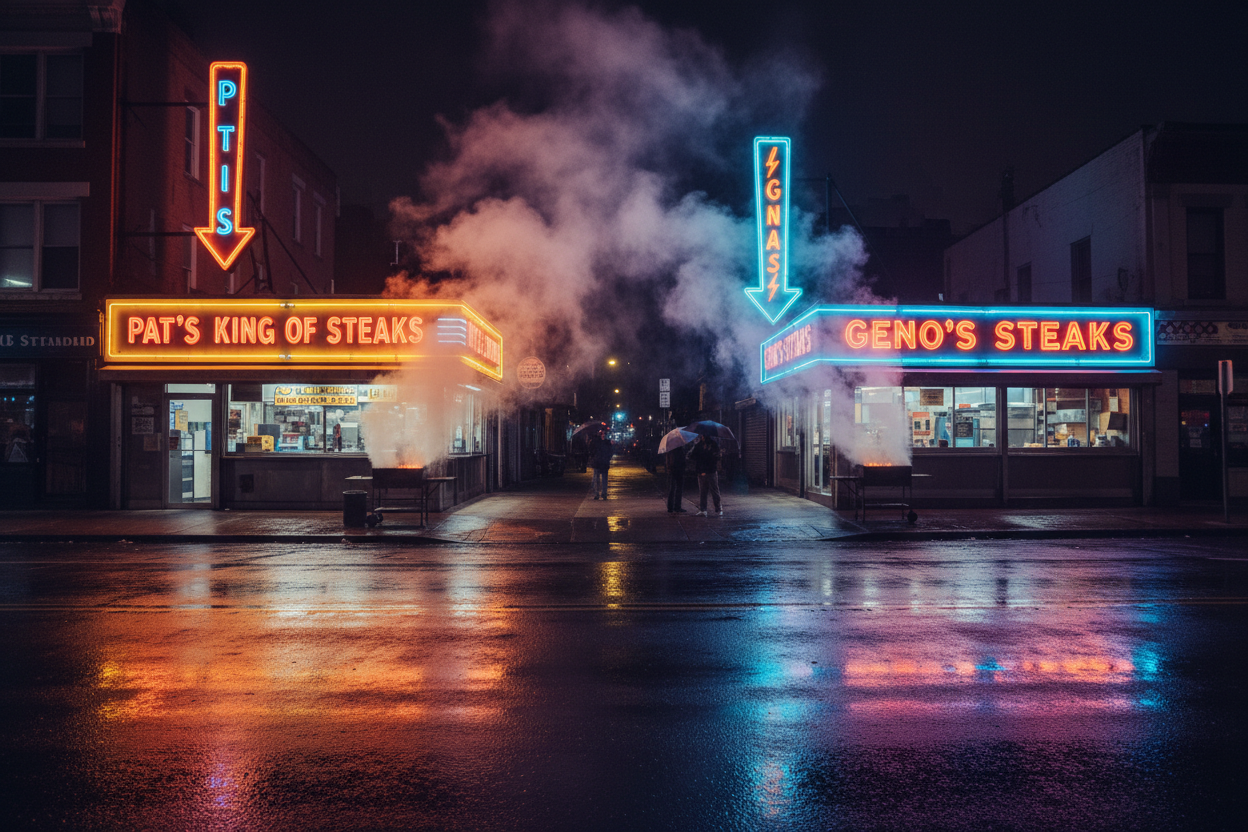
The famous rivalry between Pat’s King of Steaks and Geno’s Steaks showcases two of the city’s most photographed neon signs. Pat’s original sign, with its distinctive arrow and bold lettering, has been guiding hungry customers since 1966. The orange and yellow neon creates an almost magical atmosphere during evening hours, especially when steam from the grills mingles with the colorful light.
Beyond the cheesesteak giants, South Philadelphia’s residential streets reveal dozens of smaller vintage signs. The neighborhood’s Italian-American heritage is reflected in the neon displays of family restaurants, bakeries, and social clubs that have operated for generations. Villa di Roma’s classic script neon and the glowing facade of Ralph’s Italian Restaurant represent the enduring appeal of traditional craftsmanship.
Center City’s Neon Landmarks and Hidden Gems
Philadelphia’s downtown core might seem dominated by modern skyscrapers, but careful observers will discover remarkable vintage neon signs that have survived decades of urban development. The Boyd Theater’s magnificent marquee, though no longer operational as a cinema, stands as one of the city’s most impressive examples of theater neon artistry.
Reading Terminal Market houses several vintage neon installations within its historic walls. The market’s merchants have maintained original signage from the mid-20th century, creating an authentic atmosphere that complements the building’s Victorian architecture. These signs represent the evolution of Philadelphia’s food culture and the immigrant communities that shaped the city’s culinary identity.
The Broad Street corridor reveals additional treasures, including vintage hotel signs and restaurant markers that once guided travelers through the city. Many of these signs have been carefully restored by property owners who understand their historical significance and tourist appeal.
Northern Liberties and Fishtown: Industrial Neon Heritage
Philadelphia’s northern neighborhoods showcase a different aspect of the city’s neon history – one tied to industrial commerce and blue-collar culture. Northern Liberties, once a separate municipality, maintains several vintage signs that reflect its working-class roots and recent gentrification.
Fishtown’s transformation from industrial neighborhood to hip enclave has been accompanied by renewed appreciation for vintage signage. Local businesses have embraced the area’s neon heritage, with some establishments incorporating restored vintage signs into their modern operations. The neighborhood’s craft breweries and artisanal shops often feature neon elements that pay homage to the area’s manufacturing past.
These neighborhoods demonstrate how vintage neon signs can serve as bridges between past and present, helping communities maintain their identity while adapting to changing economic conditions.
The Art and Craft of Philadelphia Neon
Understanding Philadelphia’s neon signs requires appreciation for the skilled craftspeople who created them. The city was home to several renowned neon companies, including Federal Sign Company and Wagner Sign Service, whose work can still be seen throughout the metropolitan area.
Traditional neon sign making involves bending glass tubes into specific shapes, filling them with noble gases, and coating the interior with phosphor powders to create different colors. Philadelphia’s neon artists mastered techniques for creating complex letterforms, decorative elements, and animated sequences that brought storefronts to life after dark.
Many surviving signs showcase the regional style preferences that developed in Philadelphia during the mid-20th century. Local sign makers often incorporated distinctive fonts, color combinations, and decorative elements that reflected the city’s industrial aesthetic and immigrant cultural influences.
Photography Tips for Capturing Philadelphia’s Neon Magic
Photographing vintage neon signs presents unique challenges and opportunities. The best time for neon photography is during the “blue hour” – the period just after sunset when the sky retains some color but artificial lights become prominent. This timing creates dramatic contrast and allows neon signs to truly glow against the darkening sky.
When photographing Philadelphia’s neon signs, consider the urban context. Including architectural elements, street scenes, or human activity can help tell the complete story of these signs and their role in city life. Long exposure techniques can create stunning light trails and emphasize the movement of traffic around static neon displays.
Many of Philadelphia’s best neon signs are located in active commercial areas, so be respectful of businesses and pedestrians while photographing. Some establishments welcome photographers, especially during slower business hours, and may even share stories about their signs’ history.
Preservation Efforts and Future Challenges
Philadelphia’s vintage neon signs face constant threats from development pressure, maintenance costs, and changing business needs. However, growing awareness of their historical and cultural value has sparked preservation efforts throughout the city.
Local organizations like the Neon Museum of Philadelphia work to document and preserve the city’s neon heritage. These groups advocate for landmark protections, assist with restoration projects, and educate the public about the importance of vintage signage in maintaining neighborhood character.
The challenge lies in balancing preservation with practical business needs. Many vintage neon signs require expensive maintenance and consume more energy than modern LED alternatives. Successful preservation often depends on finding creative solutions that allow businesses to maintain their historic character while meeting contemporary operational requirements.
Planning Your Philadelphia Neon Adventure
Exploring Philadelphia’s vintage neon signs can easily fill several days of sightseeing. Start with the concentrated collections in South Philadelphia, where you can walk between multiple significant signs while enjoying the neighborhood’s authentic atmosphere and excellent food options.
Consider timing your visit to coincide with evening hours when the signs are illuminated. Many establishments turn on their neon displays at dusk and keep them running until closing time. Weekend evenings often provide the most vibrant displays, as businesses extend their hours and the surrounding streets come alive with activity.
Public transportation makes it easy to move between different neon districts. The SEPTA system connects major neon areas, allowing visitors to create comprehensive tours without worrying about parking in busy commercial districts.
Conclusion
Philadelphia’s vintage neon signs represent far more than mere advertising – they’re glowing monuments to the city’s commercial history, artistic heritage, and community spirit. From the bustling corners of South Philadelphia to the hidden gems scattered throughout diverse neighborhoods, these luminous landmarks continue to captivate residents and visitors alike.
As you explore Philadelphia’s neon landscape, you’re not just seeing signs – you’re witnessing the dreams of generations of business owners, the skill of master craftspeople, and the ongoing evolution of an American city. Each glowing tube tells a story of ambition, creativity, and perseverance that reflects the broader Philadelphia experience.
The preservation of these vintage signs depends on continued appreciation from both locals and tourists. By seeking out and celebrating Philadelphia’s neon heritage, we ensure that future generations will be able to experience the magic of these glowing time capsules that transform ordinary city streets into extraordinary works of art.