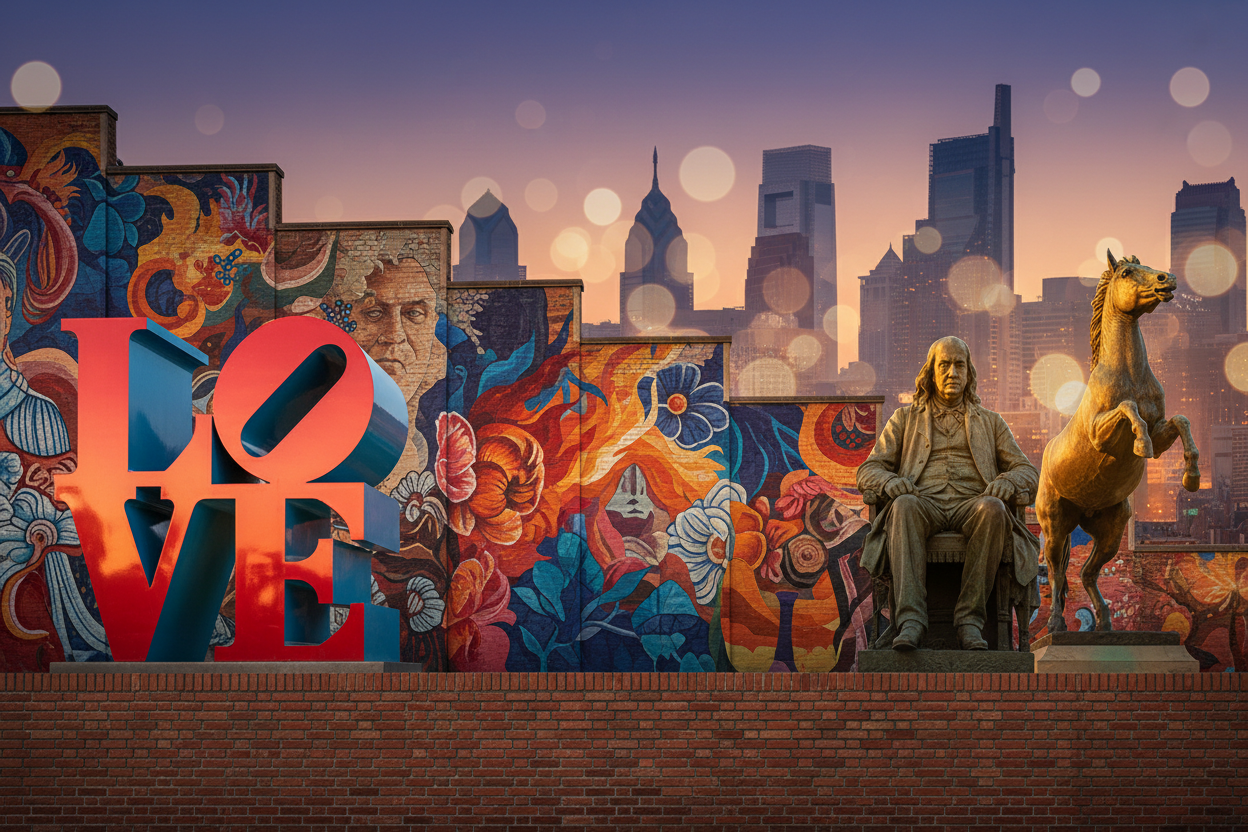
Why Philadelphia’s Public Art Scene Rivals Any Major City
When people think of world-class public art, cities like New York, Paris, or London typically come to mind. But there’s a hidden gem on the East Coast that’s been quietly building one of the most impressive and accessible public art collections in the world: Philadelphia. The City of Brotherly Love has transformed itself into an outdoor museum where creativity meets community, and where every neighborhood tells its story through vibrant murals, innovative sculptures, and thought-provoking installations.
Philadelphia’s commitment to public art isn’t just about beautification – it’s about cultural identity, community engagement, and urban revitalization. From the world’s largest outdoor mural program to cutting-edge contemporary installations, Philadelphia has created a public art ecosystem that not only rivals but often surpasses what you’ll find in more famous cultural capitals.
The Mural Arts Program: A Global Pioneer in Community Art
At the heart of Philadelphia’s public art renaissance is the Mural Arts Program, founded in 1984 as an anti-graffiti initiative. What started as a way to combat vandalism has evolved into the largest public art program in the United States, with over 4,000 murals adorning buildings throughout the city.
The program’s approach is revolutionary in its community-centered philosophy. Rather than simply commissioning artists to create beautiful works, Mural Arts Philadelphia engages local residents in the creative process. Neighborhoods identify their own stories, challenges, and aspirations, which artists then translate into powerful visual narratives that reflect the authentic voice of each community.
Take the “Common Threads” mural in Kensington, where artist Meg Saligman worked with local residents to create a 14,000-square-foot masterpiece that celebrates the neighborhood’s diverse cultural heritage. Or consider the “Sanctuary” mural in West Philadelphia, which addresses immigration and belonging through the collaborative efforts of artist Eurhi Jones and community members who shared their personal migration stories.
This model has been so successful that cities around the world now look to Philadelphia for guidance on community-engaged public art. The program’s emphasis on social practice art – where the process of creation is as important as the final product – has established Philadelphia as a global leader in using art as a tool for social change and community building.
Historic Foundations Meet Contemporary Innovation
Philadelphia’s public art scene benefits tremendously from its rich historical foundation. The city that gave birth to American independence provides a unique backdrop where colonial architecture meets cutting-edge contemporary art installations. This juxtaposition creates a visual dialogue between past and future that few cities can match.
The Benjamin Franklin Parkway, often called Philadelphia’s Champs-Élysées, exemplifies this blend perfectly. Along this grand boulevard, you’ll find Claes Oldenburg’s iconic “Clothespin” standing near City Hall, while Robert Indiana’s “LOVE” sculpture has become synonymous with the city itself. These works don’t compete with the historic architecture – they complement it, creating layers of meaning that speak to Philadelphia’s evolution as both a historic city and a contemporary cultural center.
The Association for Public Art, one of the oldest public art organizations in the United States, has been commissioning works since 1872. This long tradition means Philadelphia has accumulated an extraordinary collection of public sculptures, from Augustus Saint-Gaudens’ Civil War memorials to contemporary installations by artists like Jaume Plensa and Kehinde Wiley.
Neighborhood-Level Cultural Identity Through Street Art
What sets Philadelphia apart from other major cities is how deeply public art is woven into the fabric of individual neighborhoods. Each area of the city has developed its own artistic identity, creating distinct cultural districts that feel authentic rather than manufactured.
In Northern Liberties, former industrial buildings serve as canvases for large-scale murals that reflect the neighborhood’s transformation from manufacturing hub to arts district. The Fishtown area showcases a mix of commissioned murals and sanctioned street art that celebrates both its working-class roots and its emerging creative community.
South Philadelphia’s Italian Market area features murals that honor the neighborhood’s immigrant history while embracing its evolving demographic diversity. These aren’t tourist attractions created for outsiders – they’re community assets that residents interact with daily, creating a sense of place and belonging that’s increasingly rare in rapidly gentrifying urban areas.
The Magic Gardens in South Philadelphia, created by artist Isaiah Zagar, demonstrates how one artist’s vision can transform an entire neighborhood. Zagar’s intricate mosaic installations cover walls, vacant lots, and even entire buildings, creating an immersive environment that has become both a tourist destination and a source of community pride.
Institutional Support and Artistic Infrastructure
Philadelphia’s public art success isn’t accidental – it’s the result of robust institutional support and thoughtful urban planning. The city government, through its Office of Arts, Culture and the Creative Economy, has made public art a priority in development projects and neighborhood revitalization efforts.
The Percent for Art ordinance requires that one percent of construction costs for city-funded projects be allocated to public art. This policy ensures that new development contributes to the city’s cultural landscape rather than detracting from it. Unlike some cities where such requirements result in token installations, Philadelphia’s program emphasizes quality and community relevance.
The Philadelphia Museum of Art has also played a crucial role in elevating the city’s public art profile. Beyond its world-class permanent collection, the museum has commissioned major public installations and supported emerging artists through programs that blur the lines between institutional and street art.
Educational institutions like the University of the Arts, Temple University’s Tyler School of Art, and the Pennsylvania Academy of the Fine Arts provide a constant influx of young artists who contribute to the city’s creative energy. Many graduates choose to stay in Philadelphia, drawn by affordable studio space and a supportive artistic community.
Economic Impact and Urban Development
Philadelphia’s investment in public art has generated significant economic returns that rival those of cities with much larger cultural budgets. The Mural Arts Program alone attracts over 15,000 tourists annually for its guided tours, while neighborhoods with significant public art installations have seen increased property values and business development.
The Northern Liberties neighborhood exemplifies this transformation. Once considered a post-industrial wasteland, the area’s commitment to public art and creative placemaking has attracted restaurants, galleries, and residential development. The neighborhood’s large-scale murals serve as landmarks that help establish its identity as a creative district.
Unlike gentrification driven purely by market forces, Philadelphia’s art-led development often includes mechanisms to preserve affordability and community character. The Mural Arts Program’s emphasis on community engagement ensures that longtime residents have a voice in how their neighborhoods evolve.
The economic model is sustainable because it doesn’t rely solely on tourism or external validation. The art serves the community first, which creates authentic cultural experiences that naturally attract visitors and investment. This approach has proven more resilient than top-down cultural initiatives that prioritize spectacle over substance.
Accessibility and Democratic Art Engagement
Perhaps Philadelphia’s greatest achievement in public art is its commitment to accessibility. While cities like New York concentrate their major public art in wealthy neighborhoods or tourist areas, Philadelphia has distributed high-quality installations throughout all areas of the city, including low-income communities that are often overlooked by cultural institutions.
The Mural Arts Program’s “Restorative Justice” initiative brings art programming directly into correctional facilities, while the “Art Education” program works with public schools in underserved neighborhoods. These efforts ensure that public art serves as a tool for social equity rather than a marker of privilege.
The city’s public art is also physically accessible in ways that museum collections cannot be. You don’t need to pay admission fees or navigate institutional barriers to experience Philadelphia’s outdoor gallery. The art exists in the spaces where people live, work, and commute, making cultural engagement a natural part of daily life.
This democratic approach to art access has created a more culturally engaged citizenry. Philadelphians from all backgrounds can speak knowledgeably about public art in their neighborhoods, creating a shared cultural literacy that strengthens community bonds and civic pride.
Future Vision and Continued Innovation
Philadelphia’s public art scene continues to evolve and innovate, with new initiatives that push the boundaries of what public art can achieve. Recent projects have incorporated technology, environmental sustainability, and social justice themes in ways that keep the city at the forefront of contemporary public art practice.
The “Monument Lab” project, which invited artists to create temporary monuments throughout the city, sparked important conversations about whose stories get commemorated in public space. This initiative demonstrated Philadelphia’s willingness to use public art as a platform for examining difficult histories and imagining more inclusive futures.
Climate change and environmental justice have become increasingly important themes in new commissions. Artists are creating works that address Philadelphia’s environmental challenges while engaging communities in conversations about sustainability and resilience.
The city’s commitment to supporting emerging artists ensures that Philadelphia’s public art scene will continue to reflect contemporary concerns and artistic innovations. Programs that provide stipends, mentorship, and exhibition opportunities for local artists create a pipeline of talent that keeps the scene fresh and relevant.
Philadelphia’s public art scene has achieved something remarkable: it has created a model for how cities can use art to build stronger communities, support local artists, and enhance quality of life for all residents. While other cities chase headlines with expensive installations by famous artists, Philadelphia has focused on sustainable, community-centered approaches that create lasting value.
The result is a city where art isn’t confined to galleries and museums but lives and breathes in the streets, where creativity serves social purpose, and where every neighborhood has the opportunity to tell its story through visual culture. This is why Philadelphia’s public art scene doesn’t just rival other major cities – in many ways, it shows them what’s possible when art truly serves the public.