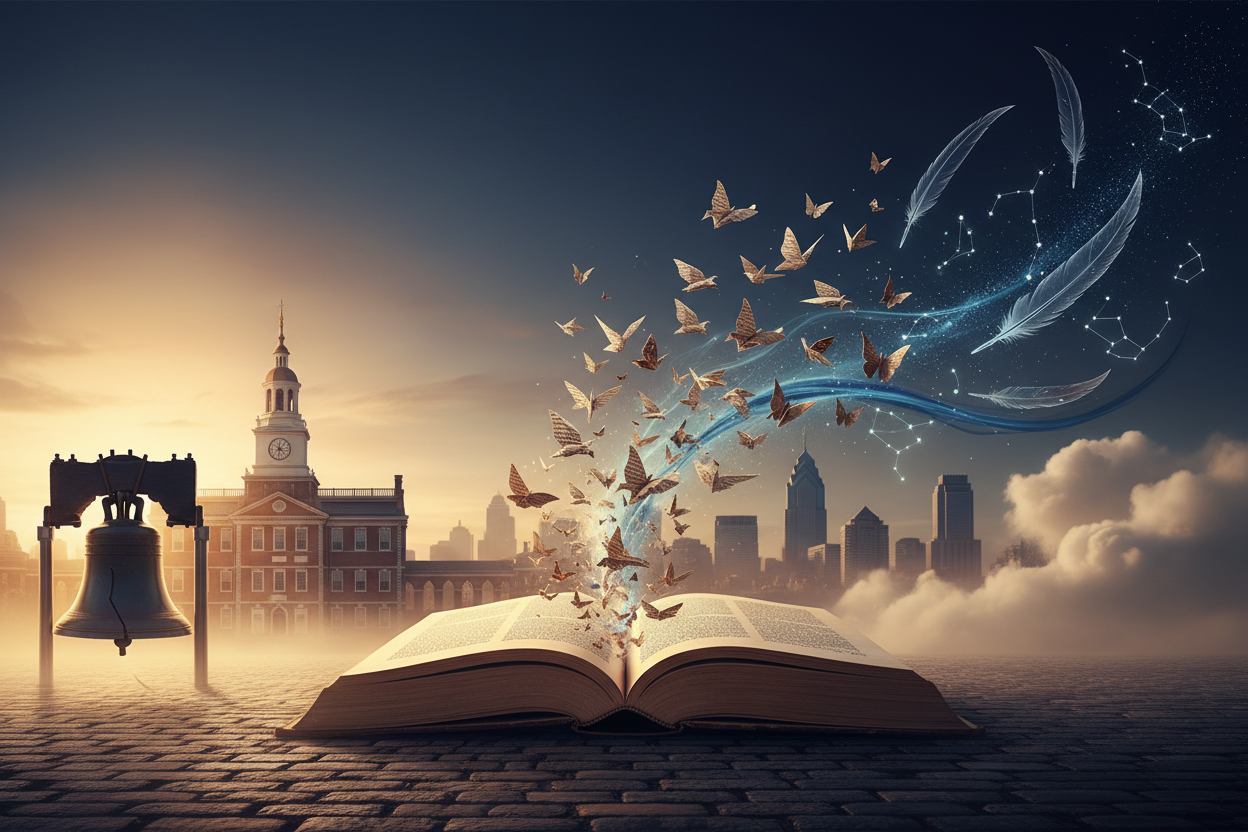
How Philadelphia Influenced American Literature and Writers: The City of Brotherly Love’s Literary Legacy
When most people think of American literary cities, New York or Boston typically come to mind first. But Philadelphia, the City of Brotherly Love, has quietly shaped American literature in profound and lasting ways that deserve recognition. From the birth of the nation to modern times, Philadelphia has served as both muse and home to countless writers who have helped define what it means to be American through their words.
This historic city, with its cobblestone streets, revolutionary heritage, and working-class spirit, has provided the backdrop for some of the most important literary movements and voices in American history. The influence of Philadelphia on American literature extends far beyond geography—it’s woven into the very fabric of our national storytelling tradition.
The Revolutionary Foundations of Philadelphia’s Literary Identity
Philadelphia’s literary significance begins with the founding of America itself. As the birthplace of the Declaration of Independence and the Constitution, the city naturally became a center for political writing and intellectual discourse. The founding fathers who gathered here weren’t just politicians—they were writers, philosophers, and thinkers whose words would echo through centuries of American literature.
Benjamin Franklin, perhaps Philadelphia’s most famous literary figure, established many of the city’s intellectual traditions. His wit, pragmatism, and accessible writing style in works like “Poor Richard’s Almanack” and his autobiography helped define an distinctly American voice in literature. Franklin’s approach to writing—clear, practical, and infused with homespun wisdom—would influence generations of American authors who sought to capture the democratic spirit in their work.
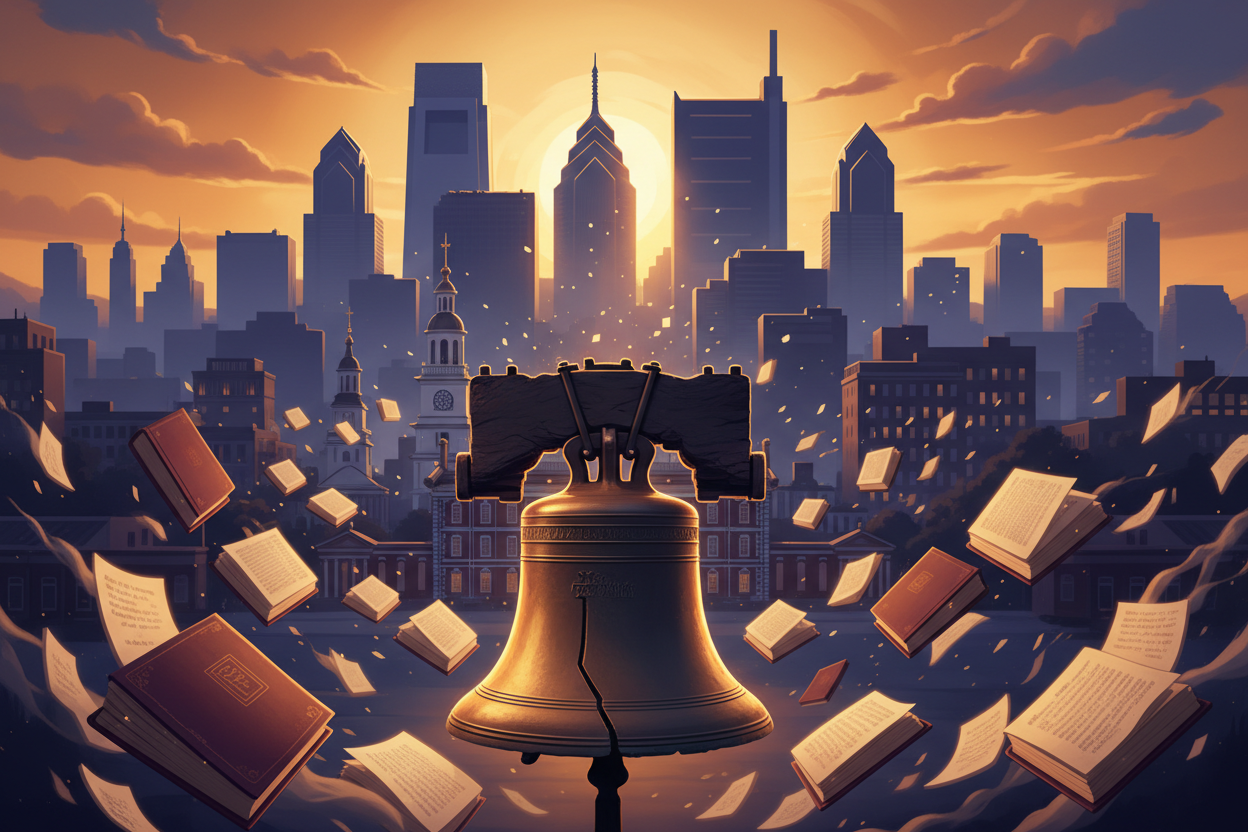
The city’s role as the nation’s first capital also attracted writers and intellectuals from across the young country. This convergence of minds created a literary atmosphere that valued both intellectual rigor and democratic ideals, setting the stage for Philadelphia’s ongoing influence on American letters.
Edgar Allan Poe and the Dark Romance of Philadelphia
No discussion of Philadelphia’s literary influence would be complete without examining Edgar Allan Poe’s transformative years in the city. From 1838 to 1844, Poe lived and worked in Philadelphia, producing some of his most celebrated works including “The Fall of the House of Usher,” “The Murders in the Rue Morgue,” and “The Tell-Tale Heart.”
Philadelphia’s gothic architecture, shadowy alleyways, and industrial atmosphere provided the perfect backdrop for Poe’s dark imagination. The city’s contrast between its enlightened founding principles and its gritty urban reality gave Poe material to explore themes of decay, madness, and the human condition that would become hallmarks of American gothic literature.
During his Philadelphia years, Poe also worked as an editor for Graham’s Magazine, helping to establish literary criticism as a serious profession in America. His editorial work in Philadelphia contributed to raising the standards of American periodical literature and helped create a more sophisticated reading public.
Walt Whitman: The Poet of Democratic Philadelphia
Walt Whitman’s connection to Philadelphia spans the latter part of his life, but the city’s influence on his work was profound. After suffering a stroke in 1873, Whitman moved to Camden, just across the Delaware River from Philadelphia, where he would spend his final years refining his masterpiece, “Leaves of Grass.”
The democratic spirit of Philadelphia resonated deeply with Whitman’s poetic vision of America. The city’s working-class neighborhoods, diverse population, and industrial energy provided him with endless inspiration for his celebrations of common people and American democracy. His famous poem “Crossing Brooklyn Ferry” finds its spiritual companion in his observations of life along the Delaware River and in Philadelphia’s bustling streets.
Whitman’s time in the Philadelphia area also allowed him to develop his role as America’s unofficial poet laureate. He became a beloved figure in the city’s literary circles, hosting salons and mentoring younger writers who would carry forward his vision of a uniquely American poetry rooted in democratic ideals and everyday experience.
The Philadelphia Renaissance: 20th Century Literary Flowering
The early 20th century saw Philadelphia experience its own literary renaissance, with writers like Christopher Morley helping to establish the city as a serious literary center. Morley’s bookshop and his novel “Kitty Foyle” brought national attention to Philadelphia’s literary scene and helped establish the city’s reputation for nurturing thoughtful, character-driven fiction.
During this period, Philadelphia also became home to important literary magazines and publishing houses that gave voice to emerging American writers. The city’s position between New York and Washington made it an ideal location for publishers seeking to capture both commercial and intellectual markets.
The Philadelphia Writers’ Workshop, established in the mid-20th century, became a launching pad for numerous successful authors and helped establish the city’s reputation as a place where serious writers could develop their craft in a supportive community environment.
Contemporary Philadelphia: A Modern Literary Hub
Today’s Philadelphia continues to influence American literature through its vibrant contemporary writing scene. The city has produced and nurtured numerous contemporary authors who have gained national recognition, from Jennifer Weiner’s popular fiction to Buzz Bissinger’s groundbreaking sports journalism in “Friday Night Lights.”
The city’s universities, including the University of Pennsylvania and Temple University, have become important centers for creative writing programs that attract students from around the world. These institutions help maintain Philadelphia’s position as a place where new literary voices are discovered and developed.
Philadelphia’s contemporary literary scene is also notable for its diversity and inclusivity. The city has become home to numerous writers exploring themes of immigration, urban life, and social justice, reflecting Philadelphia’s evolution as a multicultural metropolis while maintaining its connection to American literary traditions.
The Unique Character of Philadelphia Literature
What makes Philadelphia’s influence on American literature distinctive is the city’s unique character—a blend of historical gravitas, working-class authenticity, and intellectual sophistication. Writers associated with Philadelphia tend to share certain characteristics: a democratic sensibility, an appreciation for the common person, and a grounding in American historical consciousness.
The city’s literature often reflects its physical and cultural landscape—the tension between old and new, the mixing of different social classes and ethnic groups, and the ongoing struggle to live up to the ideals established by the founding fathers. This creates a distinctly Philadelphia voice in American literature that values both tradition and progress, sophistication and accessibility.
Philadelphia writers have also been particularly adept at capturing the American urban experience. From Poe’s dark city streets to contemporary authors exploring gentrification and urban renewal, Philadelphia literature has consistently grappled with the challenges and opportunities of city life in America.
Literary Landmarks and Cultural Institutions
Philadelphia’s physical landscape continues to inspire writers and preserve literary history. The Edgar Allan Poe National Historic Site, the Rosenbach Museum and Library, and numerous other cultural institutions maintain the city’s connection to its literary past while supporting contemporary writers.
The city’s many bookstores, reading series, and literary festivals create an ongoing culture that celebrates both established and emerging voices. Events like the Philadelphia Book Festival and the city’s numerous neighborhood reading series help maintain Philadelphia’s position as a city where literature matters and where writers can find both audience and community.
These institutions also help preserve and promote Philadelphia’s literary heritage, ensuring that future generations of writers and readers understand the city’s crucial role in developing American literary traditions.
Conclusion: Philadelphia’s Enduring Literary Legacy
Philadelphia’s influence on American literature extends far beyond the famous names associated with the city. It represents a particular approach to American writing—one that values democratic ideals, embraces the complexity of urban life, and maintains a connection to the nation’s founding principles while remaining open to new voices and perspectives.
From Benjamin Franklin’s practical wisdom to Edgar Allan Poe’s gothic imagination, from Walt Whitman’s democratic vistas to contemporary writers exploring modern urban America, Philadelphia has consistently produced and nurtured literature that captures essential aspects of the American experience. The city’s writers have helped define what it means to be American, contributing to a literary tradition that is both deeply rooted in history and constantly evolving.
As Philadelphia continues to grow and change, its influence on American literature persists. New voices emerge from the city’s neighborhoods, universities, and cultural institutions, carrying forward the democratic spirit and literary excellence that have made Philadelphia one of America’s most important literary cities. The City of Brotherly Love continues to prove that great literature can emerge from anywhere—and that sometimes the most profound influences on our national culture come from places that don’t always demand the spotlight but simply do the important work of nurturing human creativity and expression.