How Philadelphia’s Public Transportation Art Tells the City’s Story
Every morning, thousands of Philadelphia commuters rush through subway stations and wait on platform benches, often too busy to notice the incredible stories unfolding around them. Yet beneath their feet and above their heads, Philadelphia’s public transportation system houses one of the most comprehensive collections of public art in America. From vibrant murals that celebrate local heroes to intricate mosaics that honor the city’s industrial past, SEPTA’s art program transforms mundane commutes into journeys through Philadelphia’s rich cultural tapestry.
The Southeastern Pennsylvania Transportation Authority (SEPTA) has been integrating art into its infrastructure for decades, creating an underground museum that tells the story of a city built on revolution, immigration, and reinvention. This isn’t just decoration – it’s storytelling on a massive scale, where every tile, sculpture, and painted wall serves as a chapter in Philadelphia’s ongoing narrative.
The Birth of Philadelphia’s Transit Art Movement
Philadelphia’s commitment to public transportation art began in earnest during the 1980s, when city officials recognized that art could transform sterile transit spaces into welcoming community hubs. The program gained momentum through the Percent for Art ordinance, which requires that a percentage of construction costs for public projects be dedicated to artistic elements.
What started as a practical beautification effort evolved into something much more profound. Local artists, community groups, and transportation planners began collaborating to ensure that each piece of art reflected the unique character of its surrounding neighborhood. The result is a transit system where every station tells a different story, yet all contribute to the larger narrative of Philadelphia’s identity.
The timing couldn’t have been better. As Philadelphia worked to revitalize its downtown core and reconnect with its neighborhoods, public art became a bridge between communities, literally and figuratively linking diverse areas of the city through shared artistic expression.
Iconic Murals That Define Philadelphia’s Underground
Perhaps nowhere is Philadelphia’s story more vividly told than through the massive murals that grace subway station walls. These aren’t simple decorations – they’re historical documents painted in bold colors and sweeping brushstrokes.
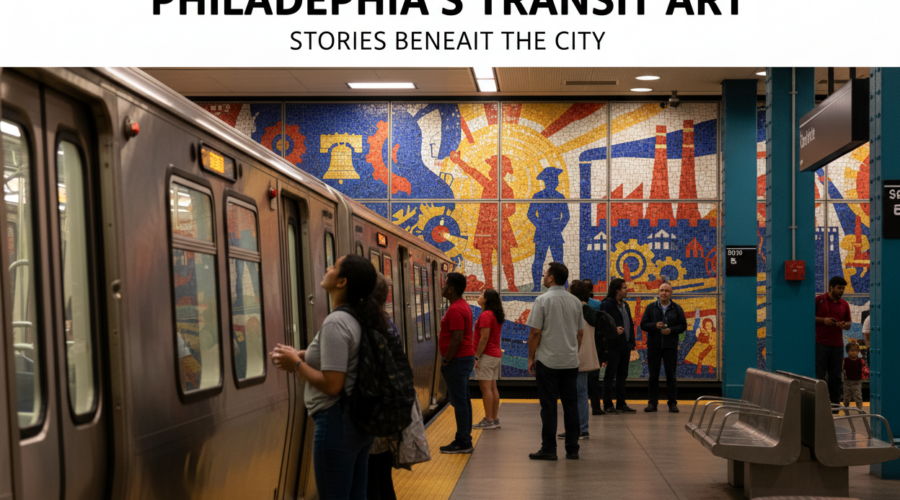
At the Spring Garden Station, commuters encounter “Philadelphia Mural,” a stunning work by artist Meg Saligman that depicts the city’s transformation from colonial settlement to modern metropolis. The mural weaves together images of Independence Hall, the Liberty Bell, and contemporary Philadelphia landmarks, creating a visual timeline that passengers can absorb during their brief stop.
The 8th Street Station features equally compelling artwork that celebrates Philadelphia’s role as the birthplace of American democracy. Here, murals incorporate quotes from the Declaration of Independence and the Constitution, reminding daily commuters that they’re traveling through a city where the very concept of American freedom was born.
These murals serve a dual purpose: they educate residents and visitors about Philadelphia’s significance while creating a sense of pride and ownership among community members. Local artists often incorporate feedback from neighborhood groups, ensuring that the final pieces reflect authentic community voices rather than imposed artistic visions.
Mosaic Masterpieces Celebrating Community Heritage
While murals capture broad historical themes, Philadelphia’s transit mosaics dive deeper into neighborhood-specific stories. These intricate works, composed of thousands of individual tiles, create intimate portraits of community life that might otherwise go unnoticed.
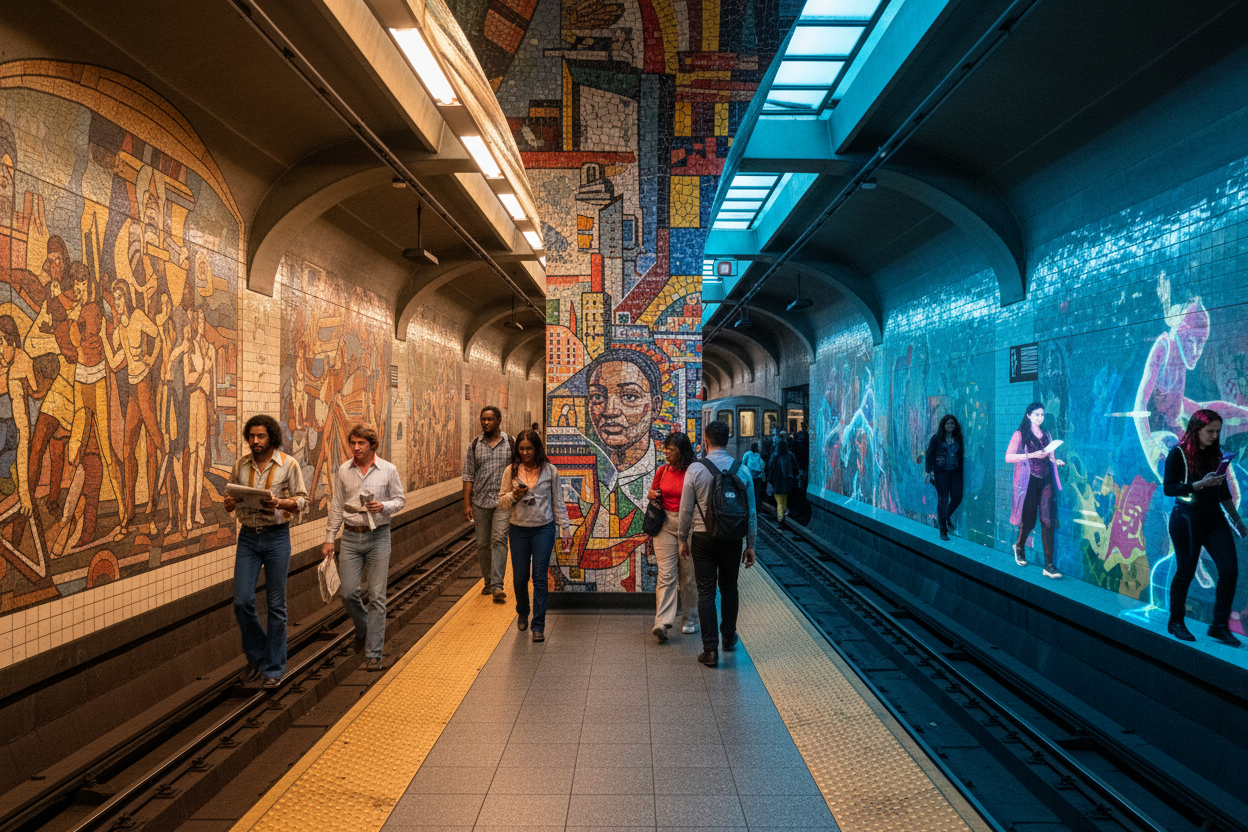
The Girard Station showcases one of the most impressive mosaic installations in the system. Created through a collaboration between professional artists and local residents, the mosaics depict scenes from daily life in the surrounding Fishtown and Northern Liberties neighborhoods. Images of local businesses, community gardens, and family gatherings create a visual celebration of working-class Philadelphia culture.
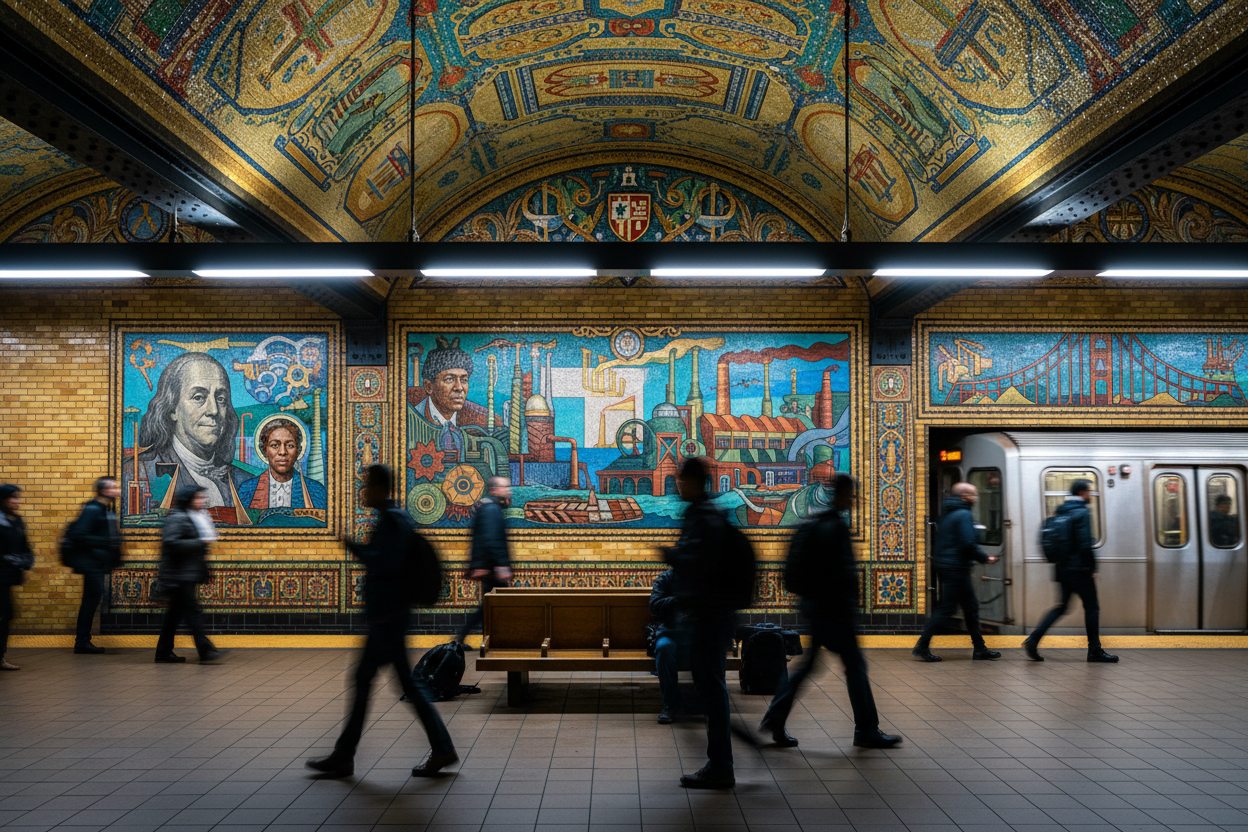
At the Allegheny Station, mosaics honor the area’s industrial heritage while acknowledging its ongoing transformation. Detailed tile work depicts the neighborhood’s history as a manufacturing hub, complete with images of factories, workers, and the tools of industry. Yet the artwork also includes contemporary elements, showing how the area has evolved into a vibrant residential and cultural district.
These mosaic projects often involve extensive community participation, with local residents contributing ideas, stories, and sometimes even helping to install the tiles themselves. This collaborative approach ensures that the final artworks feel authentic and meaningful to the people who see them every day.
Sculptural Stories Along the Transit Lines
Philadelphia’s public transportation art extends beyond flat surfaces to include three-dimensional sculptures that create immersive storytelling experiences. These pieces often serve as focal points for station design, drawing the eye and encouraging contemplation even during rushed commutes.
The 30th Street Station, while technically an Amtrak facility, sets the tone for Philadelphia’s approach to transportation art with its massive “Angel of the Resurrection” sculpture. This 38-foot bronze figure has welcomed travelers to Philadelphia since 1952, embodying the city’s role as a gateway between North and South, past and present.
Smaller SEPTA stations feature their own sculptural elements that tell more localized stories. Bronze plaques, carved stone elements, and metal installations throughout the system commemorate everything from local heroes to significant historical events. These pieces create moments of discovery for observant passengers, rewarding those who take time to notice their surroundings.
The sculptural program also includes functional art – benches, lighting fixtures, and architectural elements that serve practical purposes while contributing to the overall artistic narrative. This integration of form and function exemplifies Philadelphia’s pragmatic approach to public art, where beauty and utility work hand in hand.
Neighborhood Stories Reflected in Station Art
One of the most remarkable aspects of Philadelphia’s transit art program is how effectively it captures the distinct personality of different neighborhoods. Each station serves as a cultural ambassador for its surrounding community, introducing visitors to local history, traditions, and contemporary life.
In South Philadelphia, stations feature art that celebrates the area’s Italian-American heritage alongside its growing diversity. Murals and mosaics incorporate traditional symbols like grapes and olive branches while also acknowledging newer immigrant communities that have made the neighborhood home.
North Philadelphia stations tell stories of resilience and renewal, with artwork that honors the area’s African-American heritage while highlighting ongoing community development efforts. These pieces often feature portraits of local leaders, images of community organizations, and symbols of hope and progress.
University City stations reflect the area’s academic character with art that celebrates learning, innovation, and the intersection of town and gown. Scientific imagery, literary references, and abstract representations of knowledge creation help define these spaces as gateways to Philadelphia’s educational institutions.
This neighborhood-specific approach ensures that Philadelphia’s transit system doesn’t impose a single artistic vision across the city. Instead, it allows each community to tell its own story while contributing to the larger urban narrative.
The Role of Community Collaboration in Transit Art
What sets Philadelphia’s public transportation art apart from similar programs in other cities is the depth of community involvement in the creative process. Rather than simply commissioning artists to create pieces for public spaces, SEPTA and its partners have developed extensive outreach programs that ensure community voices are heard and honored.
The process typically begins with community meetings where residents share stories, memories, and hopes for their neighborhoods. Artists then work with these community groups to develop concepts that authentically reflect local experiences and values. This collaborative approach can extend the timeline for projects, but it results in artwork that feels genuine and meaningful to the people who encounter it daily.
Local schools often participate in these projects, with students contributing ideas, creating preliminary sketches, or even helping with installation. These educational components ensure that young people feel connected to their community’s artistic legacy while learning about the creative process.
The collaboration extends beyond the initial creation phase. Many transit art projects include ongoing maintenance and programming components that keep community members engaged with the artwork over time. This might include annual cleaning days, educational tours, or seasonal decorative elements that keep the art fresh and relevant.
Preserving Philadelphia’s Transit Art Legacy
As Philadelphia’s transit art collection has grown over the decades, preservation has become an increasingly important consideration. Many of the earliest pieces are now approaching their fourth decade, requiring careful maintenance to ensure they continue telling Philadelphia’s story for future generations.
SEPTA has developed specialized conservation protocols for different types of artwork, from climate-controlled storage for removable pieces to on-site restoration techniques for permanent installations. The authority works with professional art conservators to assess the condition of pieces and develop appropriate preservation strategies.
Documentation has also become a priority, with comprehensive photographic records and historical documentation being compiled for each piece in the collection. This archive serves multiple purposes: it helps guide restoration efforts, provides educational resources for researchers and students, and ensures that the stories behind the artwork are preserved along with the pieces themselves.
The preservation effort extends to protecting artwork from vandalism and accidental damage. While SEPTA maintains that public art should be accessible rather than hidden behind barriers, the authority has implemented subtle security measures and community education programs that encourage respect for the artistic installations.
The Future of Storytelling Through Transit Art
Philadelphia’s public transportation art program continues to evolve, incorporating new technologies and contemporary artistic practices while maintaining its commitment to community storytelling. Recent projects have experimented with digital elements, interactive components, and temporary installations that allow for more flexible programming.
Climate change and sustainability have become important themes in newer installations, reflecting Philadelphia’s growing commitment to environmental responsibility. Artists are increasingly incorporating recycled materials, energy-efficient lighting, and themes related to urban resilience and adaptation.
The program is also expanding beyond traditional station locations to include bus stops, transit centers, and connecting pathways. This expansion allows for more comprehensive neighborhood storytelling while reaching commuters who might not regularly use subway services.
Future projects will likely place even greater emphasis on community collaboration, with new technologies making it easier for residents to participate in the design process and share their stories. Virtual reality, digital surveys, and online collaboration platforms are opening new possibilities for inclusive artistic development.
Philadelphia’s public transportation art program stands as a testament to the power of creative collaboration between artists, communities, and civic institutions. Through decades of careful planning, genuine community engagement, and artistic excellence, SEPTA has created something remarkable: a transit system that doesn’t just move people from place to place, but connects them to the rich history and ongoing story of their city.
Every mural, mosaic, and sculpture in Philadelphia’s transit system serves as both artwork and historical document, capturing moments in the city’s evolution while inspiring hope for its future. For residents, these pieces create a sense of pride and belonging that transforms daily commutes into journeys through their community’s heritage. For visitors, they provide an authentic introduction to Philadelphia’s character that no guidebook could match.
As Philadelphia continues to grow and change, its public transportation art will undoubtedly evolve as well, adding new chapters to the city’s visual narrative while preserving the stories that have already been told. In a world where public spaces are often sterile and impersonal, Philadelphia’s transit system proves that infrastructure can be both functional and inspiring, serving the practical needs of urban life while nourishing the human spirit through the power of art and storytelling.