Philadelphia’s Most Unique Museums for Niche Interests and Hobbies
Philadelphia isn’t just about the Liberty Bell and Independence Hall. While these iconic landmarks rightfully draw millions of visitors each year, the City of Brotherly Love harbors an incredible collection of specialized museums that cater to the most specific interests and passionate hobbies. From the bizarre to the brilliant, these hidden gems offer intimate experiences that you simply won’t find anywhere else.
Whether you’re a lifelong collector, an amateur historian with a particular fascination, or someone who just loves discovering the unexpected, Philadelphia’s niche museums provide windows into worlds you never knew existed. These aren’t your typical tourist destinations – they’re labor-of-love institutions created by and for people who share deep, specific passions.
The Mutter Museum: Where Medical History Comes Alive
Perhaps Philadelphia’s most famous unusual museum, the Mutter Museum stands as a testament to medical curiosity and scientific advancement. Located within the College of Physicians of Philadelphia, this isn’t your average medical museum – it’s a carefully curated collection of medical oddities, anatomical specimens, and antique medical equipment that tells the story of how far we’ve come in understanding the human body.
The museum houses over 25,000 specimens, including the famous conjoined liver of Chang and Eng Bunker, the original “Siamese twins,” and a collection of skulls that illustrates the pseudoscience of phrenology. What makes the Mutter truly special isn’t just its shock value – it’s the thoughtful way these exhibits illuminate medical history and the dedication of physicians who pushed boundaries to save lives.
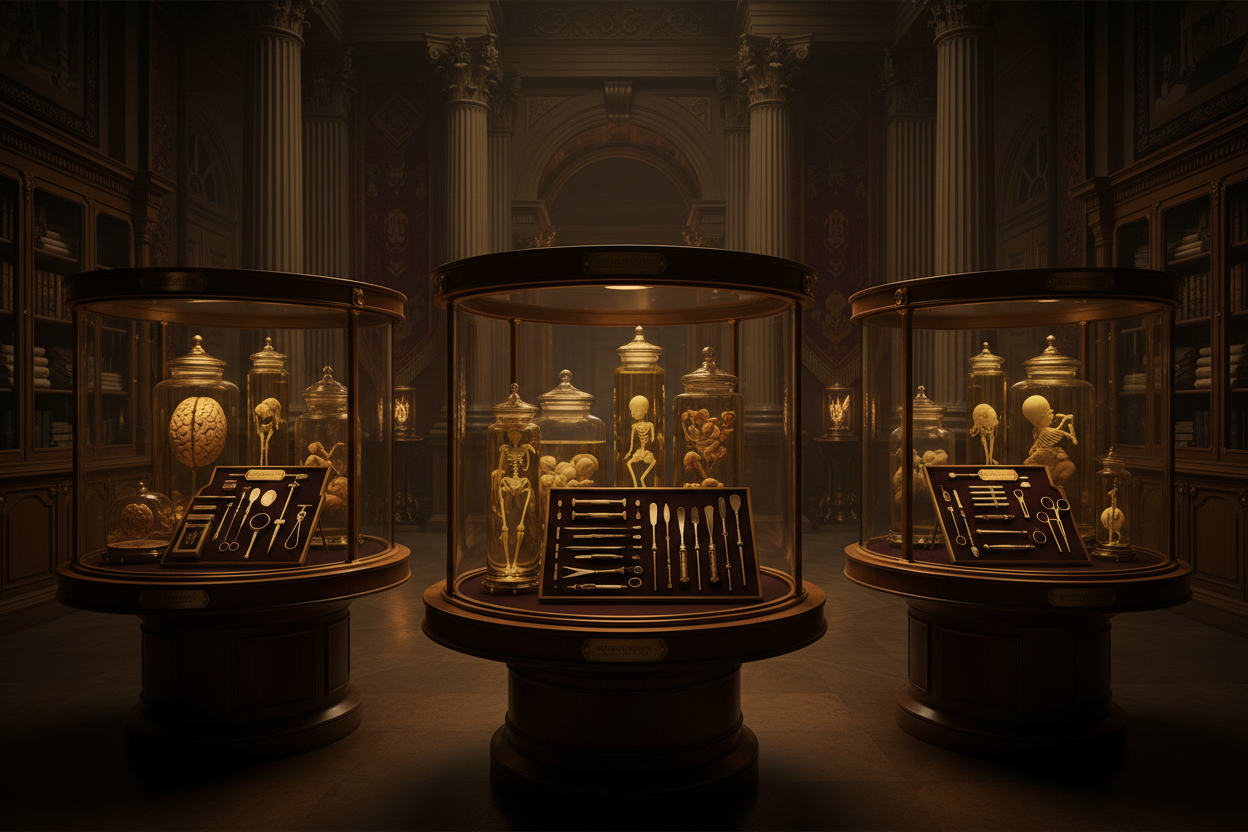
Visitors often find themselves simultaneously fascinated and moved by displays showing how surgical techniques evolved, how diseases were understood in different eras, and how medical professionals worked with limited tools to heal their patients. The museum’s educational approach transforms what could be merely macabre into genuinely enlightening experiences about human resilience and scientific progress.
Wagner Free Institute of Science: A Victorian Time Capsule
Step into the Wagner Free Institute of Science, and you’ll feel like you’ve traveled back to the 1890s. This remarkable institution has remained virtually unchanged since its founding, offering visitors an authentic Victorian-era natural history experience that’s increasingly rare in our modern world.
The museum’s collection spans geology, paleontology, and biology, but what makes it extraordinary is its preservation of 19th-century display methods and educational philosophy. The wooden cases, handwritten labels, and gas lamp fixtures create an atmosphere that modern museums simply can’t replicate. You’ll find yourself examining fossils, minerals, and preserved specimens exactly as Victorian-era students would have.
The Wagner Institute continues its original mission of providing free scientific education to the public. Their lecture series and educational programs maintain the founder’s vision of making scientific knowledge accessible to everyone, regardless of economic background. It’s a living piece of Philadelphia’s educational history that continues to serve its community more than 150 years after its founding.
Eastern State Penitentiary: Revolutionary Prison Architecture and Reform
Eastern State Penitentiary revolutionized prison design and criminal justice philosophy when it opened in 1829. This National Historic Landmark offers visitors a chance to explore not just a building, but an entire approach to criminal rehabilitation that influenced prison design worldwide.
The penitentiary’s radial design, with cell blocks extending like spokes from a central hub, allowed for unprecedented supervision and implemented the “separate system” of solitary confinement intended to encourage reflection and penitence. Walking through these halls, you’ll understand how architecture can embody philosophy and how American ideas about criminal justice evolved.
Beyond its historical significance, Eastern State hosted some of America’s most notorious criminals, including Al Capone, whose restored cell offers insight into how different inmates experienced incarceration. The museum’s audio tour, narrated by Steve Buscemi, brings these stories to life while addressing serious questions about mass incarceration that remain relevant today.
The Rosenbach Museum and Library: Literary Treasures and Rare Books
Book lovers and literary enthusiasts will find paradise at the Rosenbach Museum and Library, housed in a beautifully preserved 1865 townhouse. This institution specializes in rare books, manuscripts, and literary artifacts that tell the story of human creativity and intellectual achievement.
The collection includes original manuscripts from James Joyce, including parts of “Ulysses,” Maurice Sendak’s original illustrations for “Where the Wild Things Are,” and an impressive collection of Judaica. What makes the Rosenbach special is how it presents these treasures – not as untouchable relics, but as living documents that continue to inspire and educate.
The museum regularly rotates its exhibitions, ensuring that repeat visitors always discover something new. Their educational programs bring together scholars, writers, and curious readers to explore how literature shapes culture and how manuscripts reveal the creative process. It’s a place where the physical act of writing and the preservation of human thought take center stage.
Shoe Museum at Temple University School of Podiatric Medicine
Footwear enthusiasts and anyone curious about the intersection of fashion, function, and foot health will be surprised by the depth and quality of Temple University’s Shoe Museum. This specialized collection demonstrates how shoes reflect culture, technology, and human adaptation across different eras and societies.
The museum houses over 250 pairs of shoes spanning centuries and continents, from ancient Egyptian sandals to modern athletic footwear. Each exhibit explains not just the aesthetic evolution of footwear, but also how different designs address specific foot health needs and cultural requirements.
What sets this museum apart is its medical perspective on footwear. Visitors learn about how shoe design affects posture, gait, and overall health. The collection includes therapeutic shoes, orthotic devices, and examples of how podiatric medicine has evolved alongside footwear technology. It’s a perfect example of how specialized knowledge can transform everyday objects into fascinating educational opportunities.
The Fabric Workshop and Museum: Textile Art Innovation
The Fabric Workshop and Museum occupies a unique position in Philadelphia’s cultural landscape, serving simultaneously as an active artist studio and exhibition space. This institution focuses on textile-based contemporary art, providing artists with resources to experiment with fabric, printing, and fiber arts while showcasing the results to the public.
The museum’s artist-in-residence program has attracted internationally recognized artists who push the boundaries of what textile art can achieve. Visitors can observe artists at work, participate in workshops, and view exhibitions that challenge traditional distinctions between fine art and craft.
The collection includes works that incorporate everything from traditional weaving techniques to cutting-edge digital printing on fabric. The museum demonstrates how textile arts continue to evolve and remain relevant in contemporary artistic practice, making it essential viewing for anyone interested in fiber arts, fashion design, or contemporary art movements.
Insectarium and Butterfly Pavilion: Six-Legged Wonders
Philadelphia’s Insectarium offers visitors the chance to explore the fascinating world of insects and arthropods through live exhibits, preserved specimens, and interactive displays. This specialized museum caters to entomology enthusiasts while making insect science accessible to visitors who might initially feel squeamish about six-legged creatures.
The live butterfly pavilion creates an immersive tropical environment where visitors can observe butterfly behavior up close. The museum also maintains colonies of various insects, allowing visitors to observe feeding, molting, and social behaviors that are difficult to witness in natural settings.
Educational programs focus on insects’ crucial ecological roles, from pollination to decomposition. The museum challenges common fears and misconceptions about insects while highlighting their importance in maintaining healthy ecosystems. It’s particularly valuable for families with children who are naturally curious about the small creatures they encounter in their daily lives.
Planning Your Niche Museum Adventure
Visiting Philadelphia’s specialized museums requires a bit more planning than hitting the major tourist attractions. Many of these institutions operate with limited hours or require advance reservations, especially for guided tours that provide the most comprehensive experiences.
Consider purchasing a Philadelphia Museum Pass if you plan to visit multiple institutions, as many of these niche museums participate in discount programs. Some museums offer combination tickets or special events that provide behind-the-scenes access or conversations with curators and specialists.
The beauty of these specialized museums lies in their intimate scale and passionate staff. Don’t hesitate to ask questions or express interest in particular aspects of the collections – museum staff at these institutions are typically experts in their fields who genuinely enjoy sharing their knowledge with curious visitors.
Conclusion: Discovering Philadelphia’s Hidden Cultural Treasures
Philadelphia’s niche museums represent the city’s commitment to preserving and celebrating specialized knowledge, unusual collections, and passionate interests. These institutions prove that museums don’t need massive budgets or famous architects to provide meaningful, memorable experiences.
Each of these museums offers something you simply can’t find elsewhere – whether it’s the Victorian authenticity of the Wagner Institute, the medical history treasures of the Mutter Museum, or the textile innovations at the Fabric Workshop. They remind us that human curiosity takes countless forms and that there’s always more to discover about the world around us.
Next time you’re in Philadelphia, venture beyond the well-known attractions and discover these hidden gems. You’ll gain new perspectives, learn about subjects you never considered, and perhaps discover a new passion of your own. These museums prove that the most rewarding travel experiences often come from following your curiosity into unexpected places.