The Complete Guide to Philadelphia’s Architecture: From Colonial to Contemporary
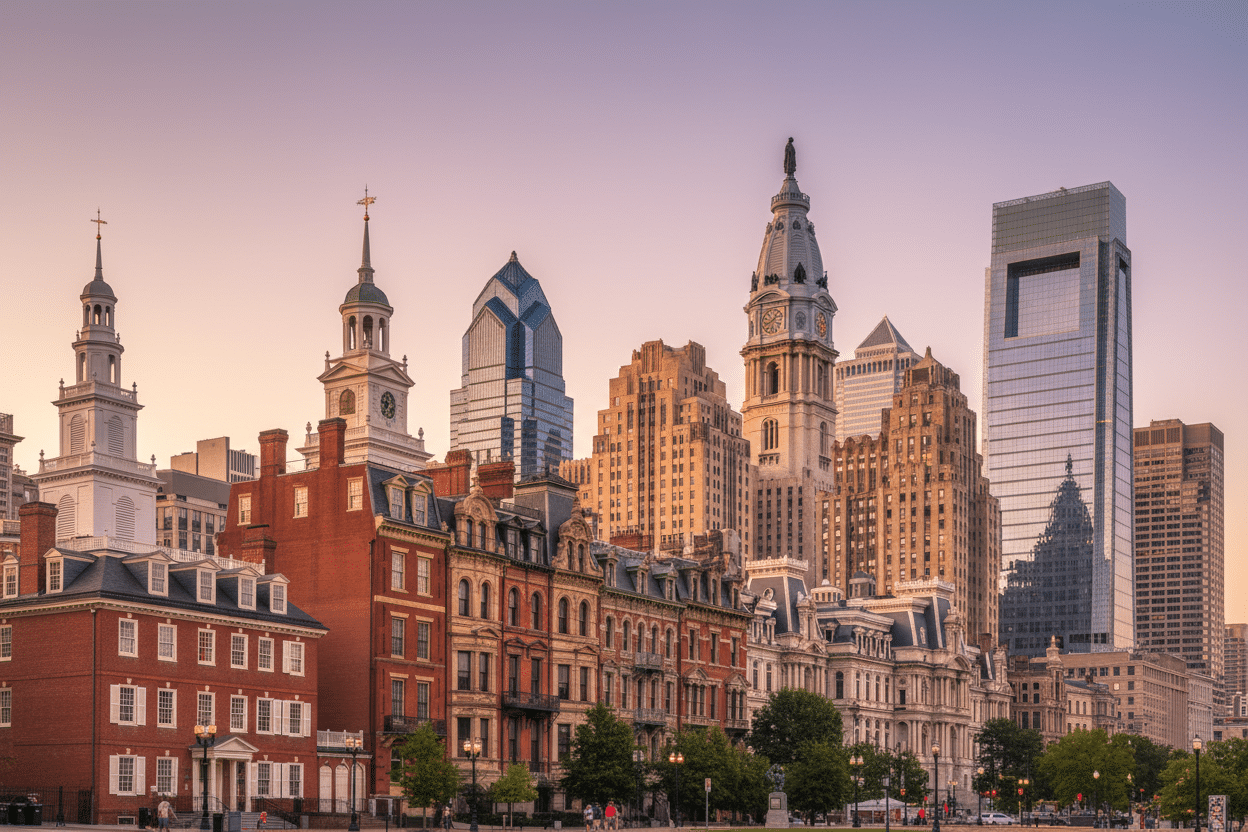
Walking through Philadelphia is like taking a journey through American architectural history. As someone who has spent countless hours wandering these historic streets, I can tell you that few cities offer such a rich tapestry of architectural styles spanning over three centuries. From the red brick Georgian mansions of Society Hill to the gleaming glass towers of Center City, Philadelphia’s buildings tell the story of a nation’s evolution.
This comprehensive guide will take you through Philadelphia’s most significant architectural periods, highlighting the buildings and neighborhoods that define each era. Whether you’re a history buff, architecture enthusiast, or simply curious about the city’s built environment, you’ll discover how Philadelphia’s architecture reflects broader cultural, economic, and social changes throughout American history.
Colonial Architecture: The Foundation of Philadelphia (1680s-1780s)
Philadelphia’s architectural story begins with William Penn’s vision of a “greene countrie towne.” The earliest colonial buildings in Philadelphia were practical structures designed to house a growing population of Quakers, merchants, and craftsmen. These buildings prioritized function over ornamentation, reflecting the Quaker values of simplicity and utility.
The most iconic example of colonial Philadelphia architecture is Independence Hall, originally known as the Pennsylvania State House. Built between 1732 and 1753, this Georgian-style building features the symmetrical facades, multi-pane windows, and red brick construction that would become synonymous with Philadelphia architecture. The building’s clock tower and steeple, added later, create the distinctive silhouette that millions recognize today.
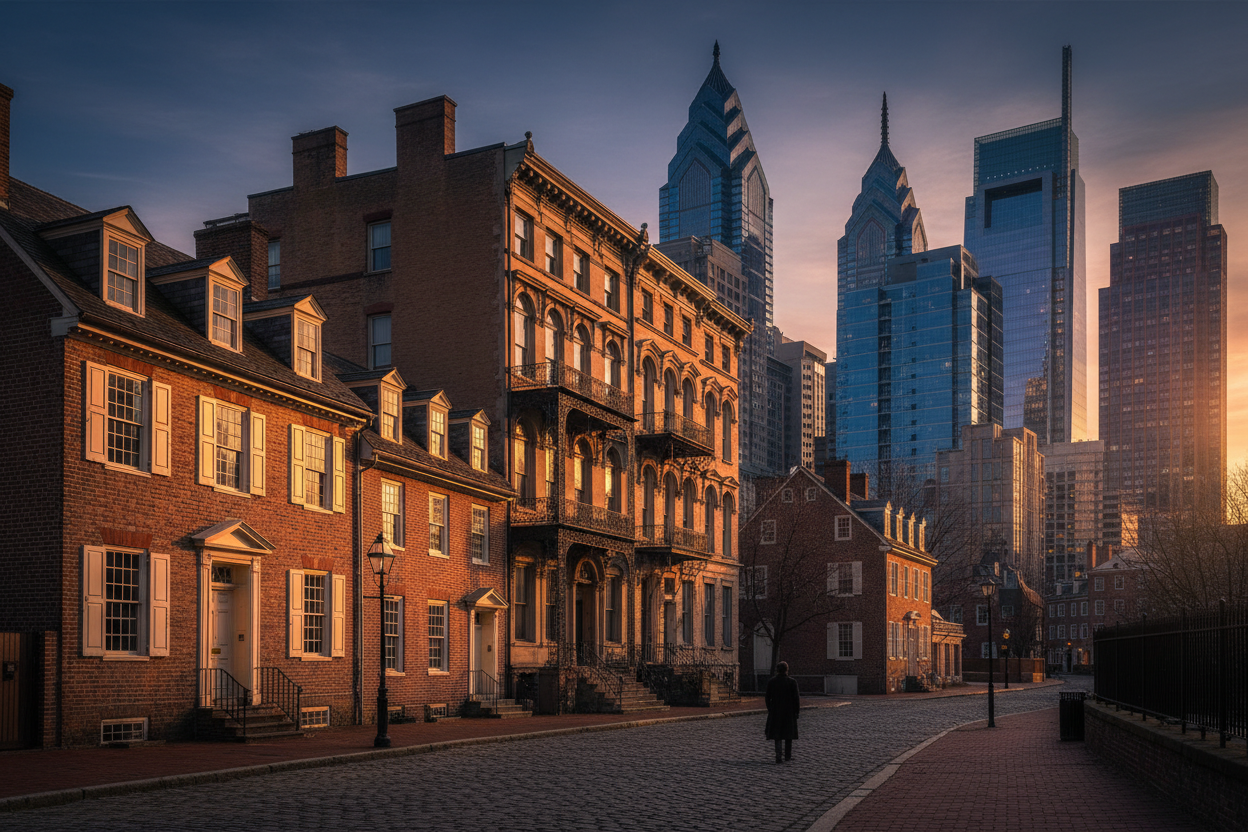
In residential architecture, colonial Philadelphia is best represented by the surviving houses in Society Hill and Old City. These structures typically feature thick brick walls, small-paned windows, and steep-pitched roofs. The Betsy Ross House, though heavily restored, gives visitors a sense of how ordinary Philadelphians lived during the colonial period. The narrow three-story structure with its tiny rooms and low ceilings reflects the practical concerns of urban living in the 18th century.
Christ Church, completed in 1744, represents the height of colonial religious architecture in Philadelphia. Its soaring spire was once the tallest structure in the American colonies, and its interior features the kind of refined woodwork and classical proportions that influenced church design throughout the region.
Federal and Greek Revival Styles: Building a New Nation (1780s-1850s)
As Philadelphia grew into one of America’s most important cities in the early republic, its architecture began to reflect newfound national confidence and prosperity. The Federal style, popular from the 1780s through the 1820s, maintained the symmetry of Georgian architecture while incorporating more refined decorative elements and larger windows.
The Second Bank of the United States, designed by William Strickland and completed in 1824, exemplifies the Greek Revival movement that swept through Philadelphia in the early 19th century. This marble temple, inspired by the Parthenon, reflects the young nation’s identification with ancient Greek democracy. The building’s imposing Doric columns and precise proportions demonstrate the technical skill of Philadelphia’s craftsmen and the city’s growing sophistication.
Strickland also designed the Merchants’ Exchange Building, another Greek Revival masterpiece that showcased Philadelphia’s role as a commercial center. The building’s curved facade and distinctive tower created a new model for commercial architecture that influenced buildings throughout the mid-Atlantic region.
In residential architecture, this period saw the development of Philadelphia’s famous rowhouse tradition. The three-story brick rowhouses of Washington Square and Rittenhouse Square neighborhoods established a building type that would define Philadelphia residential architecture for generations. These houses featured higher ceilings, larger windows, and more elaborate doorways than their colonial predecessors, reflecting growing prosperity and changing lifestyle expectations.
Victorian Era Grandeur: Ornament and Innovation (1850s-1900)
The Victorian era brought unprecedented prosperity to Philadelphia, and the city’s architecture reflected this newfound wealth with increasingly elaborate and diverse building styles. This period saw the rise of several distinct architectural movements, each leaving its mark on the Philadelphia landscape.
Philadelphia City Hall, begun in 1871 and completed in 1901, represents the pinnacle of Second Empire architecture in America. This massive structure, designed by John McArthur Jr., features the characteristic mansard roof, elaborate sculptural decoration, and imposing tower that made it the world’s tallest habitable building upon completion. The building’s 548-foot tower, topped by Alexander Milne Calder’s statue of William Penn, dominated Philadelphia’s skyline for decades and established a tradition that no building would rise higher than Penn’s hat.
The Pennsylvania Academy of the Fine Arts, designed by Frank Furness and completed in 1876, showcases the High Victorian Gothic style that Furness helped popularize in Philadelphia. The building’s polychromatic stonework, pointed arches, and elaborate sculptural decoration created a new model for cultural institutions. Furness’s bold use of color and texture influenced a generation of Philadelphia architects and established the city’s reputation for architectural innovation.
In residential architecture, the Victorian era saw the development of West Philadelphia’s grand mansions and the expansion of rowhouse construction throughout the city. The Italianate and Second Empire mansions along Broad Street and in neighborhoods like Germantown featured elaborate cornices, bay windows, and decorative stonework that demonstrated their owners’ prosperity and taste.
Industrial Architecture: Function Meets Form (1880s-1920s)
Philadelphia’s role as an industrial powerhouse during the late 19th and early 20th centuries produced a remarkable collection of factory buildings, warehouses, and infrastructure that represent some of the finest industrial architecture in America. These buildings prioritized function and efficiency while often achieving remarkable beauty through their honest expression of materials and structure.
The Disston Saw Works in Tacony, built in the 1870s and expanded through the 1920s, exemplifies Philadelphia’s industrial architecture. The complex’s brick buildings feature large windows, heavy timber construction, and minimal ornamentation that reflects the practical concerns of manufacturing while creating spaces of surprising dignity and beauty.
The Reading Terminal, completed in 1893, demonstrates how transportation infrastructure could achieve architectural distinction. The building’s enormous train shed, supported by a network of steel arches, created one of the largest column-free spaces in the world at the time. The attached headhouse, with its Richardsonian Romanesque styling, provided a dignified public face for railroad travel.
Philadelphia’s textile mills, scattered throughout neighborhoods like Kensington and Northern Liberties, represent perhaps the city’s most significant contribution to industrial architecture. These multi-story brick buildings, with their regular fenestration and robust construction, created a building type that influenced factory design throughout America. Many of these buildings have found new life as loft apartments and artist studios, demonstrating the enduring quality of their design and construction.
Art Deco and Modernist Movements (1920s-1960s)
The 20th century brought new architectural movements to Philadelphia, though the city’s conservative building traditions meant that modernist styles were often adapted rather than fully embraced. The Art Deco movement of the 1920s and 1930s produced some of Philadelphia’s most striking commercial buildings.
The PSFS Building, completed in 1932 and designed by George Howe and William Lescaze, represents one of America’s finest examples of early modernist architecture. This 36-story tower broke with Philadelphia’s classical traditions through its clean lines, ribbon windows, and honest expression of its steel frame construction. The building’s distinctive PSFS sign became an iconic part of Philadelphia’s skyline and demonstrated how modernist principles could create buildings of lasting beauty and significance.
The Philadelphia Saving Fund Society Building’s success paved the way for other modernist projects, including Louis Kahn’s Richards Medical Research Laboratories at the University of Pennsylvania. Kahn, a Philadelphia native, became one of the most influential architects of the 20th century, and his work in his hometown includes some of his most important early projects.
Residential architecture during this period saw the development of the Philadelphia suburb, with neighborhoods like Chestnut Hill and Mount Airy featuring houses that adapted modernist principles to traditional Philadelphia building types. These houses often featured flat roofs, horizontal windows, and simplified ornament while maintaining the human scale and material quality that characterized the best Philadelphia architecture.
Contemporary Philadelphia Architecture: Innovation and Preservation
Contemporary Philadelphia architecture reflects the city’s ongoing evolution as it balances preservation of its historic character with the need for new development. The past several decades have seen remarkable projects that demonstrate how new architecture can enhance rather than compete with historic buildings.
The Kimmel Center for the Performing Arts, completed in 2001, exemplifies contemporary Philadelphia’s approach to major cultural projects. The building’s glass barrel vault creates a dramatic public space while respecting the scale and character of the surrounding Avenue of the Arts. The center’s innovative acoustic design and sustainable features demonstrate how contemporary architecture can meet 21st-century performance standards while contributing to Philadelphia’s urban fabric.
Comcast Center, completed in 2008, marked the end of the informal agreement that no building would rise higher than William Penn’s statue atop City Hall. This 58-story tower, designed by Robert A.M. Stern Architects, uses classical proportions and high-quality materials to create a skyscraper that respects Philadelphia’s architectural traditions while meeting contemporary office needs.
In residential architecture, contemporary Philadelphia has seen innovative approaches to the traditional rowhouse type. Projects like the Northern Liberties development and the adaptive reuse of industrial buildings in neighborhoods like Fishtown demonstrate how architects are creating new housing types that respect Philadelphia’s urban character while meeting contemporary lifestyle needs.
Preservation and Adaptive Reuse: Honoring the Past
Philadelphia’s approach to historic preservation has evolved significantly over the past several decades, moving from a focus on individual landmark buildings to a broader understanding of historic districts and cultural landscapes. This evolution has produced some remarkable examples of adaptive reuse that demonstrate how historic buildings can find new life while retaining their architectural integrity.
The conversion of the Reading Terminal into the Reading Terminal Market created one of America’s finest examples of adaptive reuse. The project preserved the building’s spectacular train shed while creating a vibrant public market that serves both tourists and local residents. The market’s success demonstrates how historic preservation can support economic development while maintaining architectural character.
The Navy Yard redevelopment represents one of the most ambitious adaptive reuse projects in American history. This former naval shipyard, with its collection of early 20th-century industrial buildings, is being transformed into a mixed-use development that preserves the site’s historic character while accommodating new uses including offices, research facilities, and recreational amenities.
Conclusion: Philadelphia’s Architectural Legacy and Future
Philadelphia’s architecture tells the story of American urban development from colonial settlement to contemporary metropolis. The city’s buildings reflect changing technologies, evolving social conditions, and shifting aesthetic preferences while maintaining a distinctive character rooted in craftsmanship, human scale, and respect for urban life.
What makes Philadelphia’s architecture particularly significant is not just the individual buildings, but the way these structures work together to create cohesive neighborhoods and districts. The city’s rowhouse tradition, its generous public squares, and its tree-lined streets create an urban environment that supports community life while accommodating change and growth.
As Philadelphia continues to evolve in the 21st century, its architectural heritage provides both inspiration and constraint. New buildings must respect the character of historic neighborhoods while meeting contemporary needs for sustainability, accessibility, and technological infrastructure. The city’s best contemporary architecture demonstrates that this balance is not only possible but can produce buildings that enhance both the urban environment and the daily lives of Philadelphia residents.
For visitors and residents alike, Philadelphia’s architecture offers endless opportunities for discovery and appreciation. Whether you’re admiring the craftsmanship of an 18th-century doorway, marveling at the engineering of a 19th-century factory, or experiencing the spatial drama of a contemporary cultural building, Philadelphia’s built environment rewards careful attention and provides insights into the forces that have shaped American urban life. The city’s commitment to preservation ensures that future generations will be able to experience this architectural heritage while contributing their own chapters to Philadelphia’s ongoing architectural story.