The Untold Stories of Elfreth’s Alley: America’s Oldest Residential Street
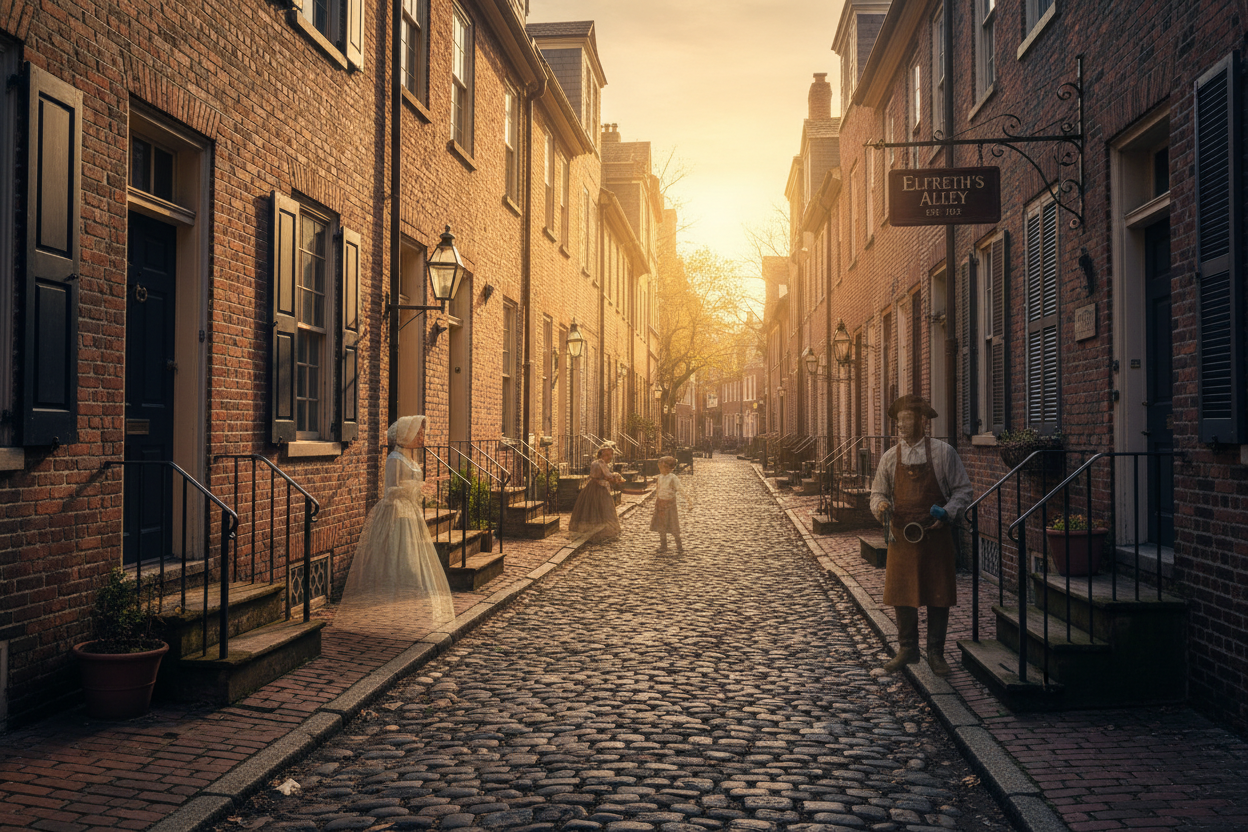
Tucked away in the heart of Philadelphia’s Old City neighborhood lies a narrow cobblestone lane that has witnessed nearly three centuries of American history unfold before its Georgian and Federal-style doorsteps. Elfreth’s Alley, officially recognized as America’s oldest continuously inhabited residential street, stretches just 126 feet long and houses 32 colonial-era homes that have sheltered generations of families, craftsmen, and dreamers since the early 1700s.
While most visitors know this historic gem for its picturesque facade and Instagram-worthy photo opportunities, the real magic lies in the countless untold stories that echo through its brick-lined pathway. These tales of ordinary people living extraordinary lives in extraordinary times reveal the true soul of America’s founding era and beyond.
The Birth of America’s Most Historic Street
The story begins in 1702 when blacksmith Jeremiah Elfreth purchased the land and began developing what would become his namesake alley. Unlike the grand mansions of Philadelphia’s wealthy elite, Elfreth envisioned affordable housing for the city’s growing population of skilled artisans and tradespeople. His vision created a unique microcosm of colonial American life that would endure for centuries.
The original residents weren’t just random settlers seeking shelter. They were the backbone of colonial Philadelphia’s economy: silversmiths hammering intricate designs by candlelight, dressmakers stitching elaborate gowns for society ladies, ship carpenters crafting vessels that would carry goods across the Atlantic, and furniture makers creating pieces that still grace museums today.
What makes Elfreth’s Alley particularly fascinating is how it functioned as both workplace and residence. The ground floors of these narrow homes served as workshops and storefronts, while families lived in the upper floors. The sounds of hammering, sawing, and bustling commerce filled the alley from dawn to dusk, creating a vibrant community where neighbors knew each other’s trades, troubles, and triumphs.
Revolutionary Whispers and Wartime Secrets
During the American Revolution, Elfreth’s Alley transformed into something far more significant than a simple residential street. Its residents found themselves at the epicenter of revolutionary fervor, and many played crucial roles in America’s fight for independence that history books rarely mention.
Consider the story of Mary Smith, a seamstress who lived at number 126. While officially mending clothes and creating household linens, Mary secretly stitched coded messages into seemingly innocent garments for Continental Army soldiers. Her needle became a weapon of war, and her tiny home served as an unofficial intelligence hub where whispered conversations could change the course of battles.
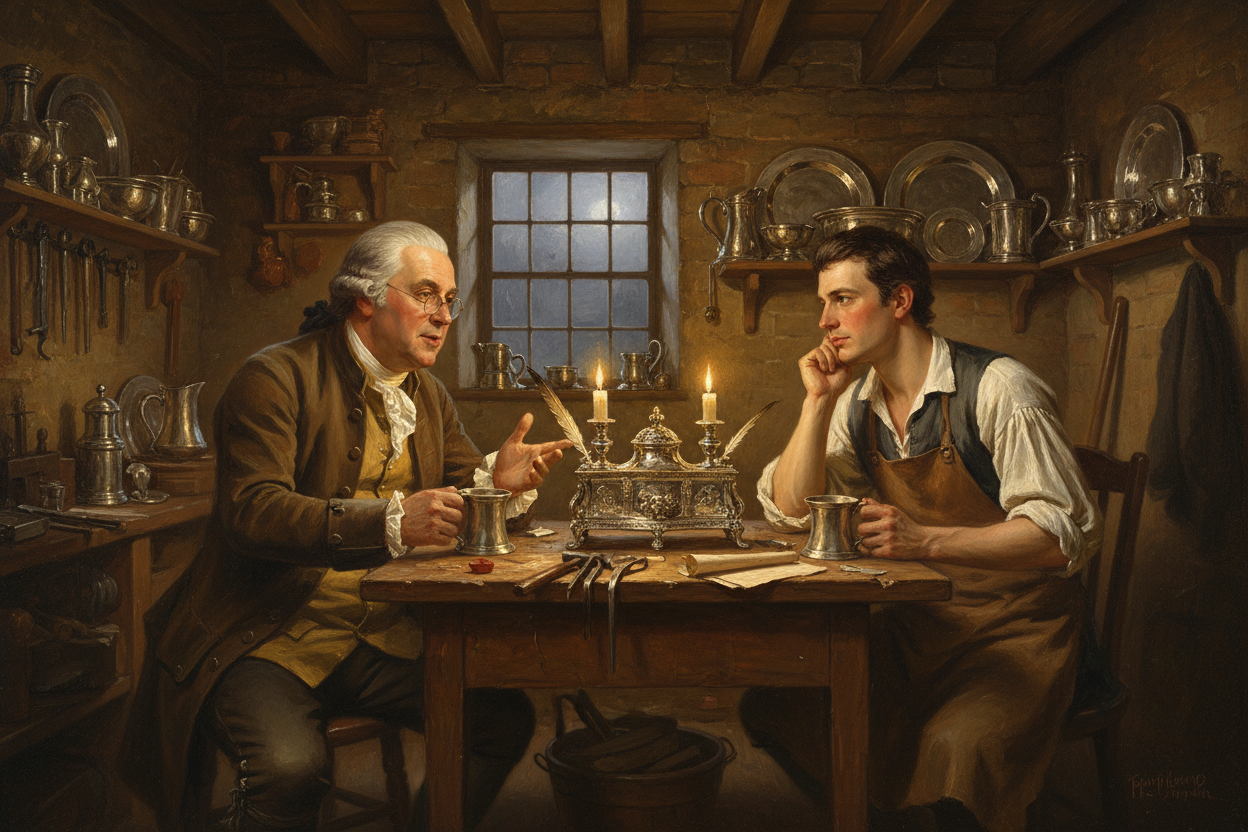
Then there’s the tale of Benjamin Franklin’s frequent visits to the alley. The founding father often stopped by to consult with Philip Syng Jr., a silversmith whose workshop produced the inkstand used during the signing of the Declaration of Independence. Their conversations, conducted over cups of rum punch in Syng’s cramped workshop, helped shape some of the most important documents in American history.
During the British occupation of Philadelphia in 1777-1778, several Elfreth’s Alley residents risked their lives hiding Continental soldiers and smuggling supplies to Washington’s army. The narrow alley’s layout, with its multiple exits and interconnected cellars, made it an ideal location for clandestine activities that helped keep the revolutionary spirit alive during the darkest days of the war.
The Immigrant Experience: Dreams Built on Cobblestones
As America expanded westward in the 19th century, Elfreth’s Alley became a landing pad for waves of immigrants seeking their piece of the American dream. Irish families fleeing the potato famine, German craftsmen pursuing economic opportunities, and Jewish merchants escaping European persecution all found temporary or permanent homes along this historic street.
The O’Brien family’s story exemplifies this immigrant experience. Arriving from County Cork in 1847 with nothing but hope and determination, Patrick O’Brien rented a single room at number 124. Working as a day laborer while his wife Margaret took in washing, they slowly saved enough money to rent an entire house. Within a decade, Patrick had established his own carpentry business, and their children became the first in their family to attend formal school.
Language barriers created unique challenges and solutions along the alley. Neighbors developed an informal translation network, with bilingual residents serving as interpreters for everything from medical emergencies to business transactions. The narrow street fostered an intimacy that broke down cultural barriers, creating a melting pot where German lullabies mixed with Irish folk songs and Italian cooking aromas wafted from open windows.
These immigrant families didn’t just occupy space on Elfreth’s Alley; they transformed it. They brought new trades, foods, customs, and perspectives that enriched the community’s already diverse tapestry. A German baker introduced sourdough bread recipes that became neighborhood favorites, while an Italian stonemason’s decorative techniques influenced architectural details that remain visible today.
Women Who Shaped History from Behind Colonial Doors
Perhaps the most overlooked stories from Elfreth’s Alley belong to the women who called it home. In an era when women’s contributions were rarely documented, the alley’s female residents quietly shaped history through their resilience, ingenuity, and determination.
Sarah Wilson stands out as a particularly remarkable figure. After her husband’s death in 1798 left her with three young children and mounting debts, Sarah transformed her home into Philadelphia’s first unofficial boarding house for traveling merchants. Her business acumen and hospitality skills turned a desperate situation into a thriving enterprise that supported her family for decades.
During the yellow fever epidemics that periodically devastated Philadelphia, the women of Elfreth’s Alley organized informal nursing networks. They shared herbal remedies, cared for orphaned children, and maintained community morale when death seemed to lurk around every corner. Their courage and compassion saved countless lives, yet their heroism was never officially recognized.
The alley also harbored its share of unconventional women who challenged societal norms. Rebecca Foster, a widow who inherited her late husband’s printing business in 1823, became one of Philadelphia’s first female publishers. Operating from her Elfreth’s Alley home, she printed everything from religious pamphlets to political broadsides, wielding influence far beyond what her modest address might suggest.
The Great Preservation Battle: Saving America’s Past
By the early 20th century, Elfreth’s Alley faced its greatest threat: progress. Urban development pressures and changing demographics had transformed many of Philadelphia’s historic neighborhoods beyond recognition. Real estate developers eyed the valuable Old City location, envisioning modern apartment buildings and commercial spaces where colonial homes had stood for centuries.
The fight to save Elfreth’s Alley became one of America’s earliest grassroots historic preservation movements. Led by Dorothy Ottey and a group of determined neighbors, the preservation campaign combined historical research, political lobbying, and public relations savvy that would become a model for similar efforts nationwide.
Ottey’s strategy was brilliant in its simplicity: make people fall in love with the alley’s stories. She organized house tours, published historical pamphlets, and invited journalists to experience the street’s unique atmosphere firsthand. Her efforts culminated in 1960 when Elfreth’s Alley was designated a National Historic Landmark, ensuring its protection for future generations.
The preservation battle revealed fascinating details about the street’s construction and evolution. Archaeological excavations uncovered everything from colonial-era pottery shards to Revolutionary War-era buttons, providing tangible connections to the lives once lived within these walls. Building restoration work revealed hidden architectural features, secret compartments, and structural modifications that told stories of adaptation and survival across multiple centuries.
Modern Life on Ancient Cobblestones
Today, Elfreth’s Alley continues its residential tradition, housing families who have chosen to make their homes within living history. These modern residents face unique challenges: maintaining 300-year-old structures while meeting contemporary living standards, balancing privacy with public curiosity, and preserving authenticity while adapting to modern life.
Current resident Jennifer Martinez, who moved to the alley in 2015, describes the experience as “living inside a museum where the exhibits include your morning coffee routine.” Her 1728 home requires constant attention, from foundation repairs using traditional techniques to installing modern utilities within colonial-era walls. Yet she wouldn’t trade the experience for anything, finding daily inspiration in the knowledge that her morning walk to work follows the same path taken by revolutionary patriots and immigrant dreamers.
The alley’s modern community maintains traditions that connect them to their predecessors. Annual events like Fete Day recreate colonial-era celebrations, complete with period costumes and traditional crafts demonstrations. Neighbors still gather for informal conversations on doorsteps, continuing a tradition of community connection that has survived three centuries of change.
Preserving Stories for Future Generations
As Elfreth’s Alley approaches its fourth century, preservationists and historians work tirelessly to document and share the countless stories that risk being lost to time. The Elfreth’s Alley Association maintains extensive archives, including oral histories from former residents, photographs spanning multiple generations, and artifacts discovered during building renovations.
Modern technology offers new opportunities to preserve and share these stories. Digital archives make historical documents accessible to researchers worldwide, while virtual reality experiences allow visitors to explore recreated colonial-era interiors. Social media platforms help connect descendants of former residents, creating networks that span continents and generations.
Educational programs bring Elfreth’s Alley’s stories to new audiences. School groups learn about colonial crafts and revolutionary history through hands-on activities, while university researchers use the alley as a case study in urban development, historic preservation, and community resilience. These efforts ensure that the lessons embedded in these ancient cobblestones continue inspiring future generations.
Conclusion: Where Past and Present Converge
Elfreth’s Alley represents far more than America’s oldest residential street; it embodies the enduring spirit of community, resilience, and adaptation that defines the American experience. The untold stories hidden within its colonial walls remind us that history isn’t just about famous figures and momentous events, but about ordinary people living extraordinary lives in the face of constant change.
From revolutionary conspirators to immigrant dreamers, from pioneering women to modern preservationists, each generation of Elfreth’s Alley residents has contributed to an ongoing narrative of American life. Their stories challenge us to look beyond surface appearances and discover the rich human experiences that shape our communities.
As you walk along these ancient cobblestones, remember that you’re treading the same path as countless others who sought opportunity, freedom, and community in this narrow Philadelphia lane. Their untold stories continue echoing through time, reminding us that every home has a history, every street has a story, and every community has the power to shape the future while honoring the past.
The next time you visit Elfreth’s Alley, pause for a moment and listen carefully. You might just hear the whispers of history calling from behind those colonial doors, inviting you to become part of America’s oldest residential street’s continuing story.